
Unlocking the Power of Perovskite: A New Era for Solar Energy
Introduction to Perovskite
In the world of renewable energy, a new path has been opened up for producing solar energy at an increasingly lower cost. Scientists are studying Perovskite, a material that is both economical and capable of capturing sunlight while boasting excellent conductivity. This innovative material has been isolated since 1839, successfully combining high efficiency, conductivity, and affordability.
History of Perovskite
Perovskite was first isolated in 1839, marking the beginning of its journey towards becoming a game-changer in the solar energy sector. Despite this long history, it wasn’t until recent years that scientists began exploring its potential as a sustainable energy source.
First Solar Cells Made from Perovskite
The first prototypes of solar cells made from perovskite have been successfully produced, boasting an efficiency of around 15%. Although this percentage may seem low compared to other solar cells, it’s essential to consider that the reduced production costs of these cells could make them more competitive. While other solar cells may offer higher efficiency rates, those based on perovskite are currently leading the way in terms of “efficiency-to-price” ratio.
Advantages of Perovskite Solar Cells
The advantages associated with perovskite solar cells can be attributed to their production process: they require minimal energy and simple treatment processes. In contrast, producing silicon-based solar cells is a more energy-intensive and costly process that requires precise handling. Furthermore, high-purity silicon is necessary for the production of traditional solar cells, which adds another layer of complexity.
Production Process
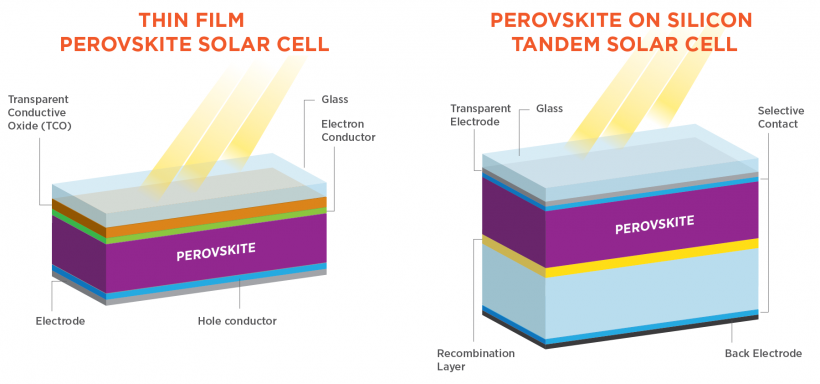
The fabrication of perovskite solar cells involves an application process: the perovskite material is applied to a glass or metal substrate using a spraying technique. This process is remarkably simple and can be compared to painting. The cell can be easily manipulated, with scientists from MIT describing it as “dipping” a surface.
Potential Cost Savings
Perovskite solar cells could finally make solar energy affordable at a cost of 10-20 cents per watt, which is significantly lower than the current cost of solar energy produced by traditional photovoltaic systems (75 cents per watt).
Benefits and Implications
- Lower Production Costs: Perovskite solar cells are easier to produce, requiring minimal energy and simple treatment processes.
- Increased Efficiency: The efficiency of perovskite solar cells is comparable to or even surpasses that of traditional silicon-based solar cells.
- Affordability: With reduced production costs, perovskite solar cells could become more accessible to a wider audience.
Future Directions and Challenges
While perovskite solar cells hold great promise for the future, there are still challenges to be addressed. For example:
- Scalability: Can perovskite solar cells be scaled up while maintaining their efficiency?
- Stability: How long will perovskite solar cells maintain their performance in various environmental conditions?
Conclusion
Perovskite solar cells represent a significant breakthrough in the quest for renewable energy. With lower production costs, increased efficiency, and potential cost savings, they are poised to revolutionize the way we generate and consume energy.
Frequently Asked Questions (FAQs)
- What is perovskite?
- Perovskite is a material that combines high efficiency, conductivity, and affordability.
- How do perovskite solar cells work?
- Perovskite solar cells use the application process to apply the perovskite material to a substrate.
- What are the benefits of perovskite solar cells?
- Perovskite solar cells have lower production costs, increased efficiency, and potential cost savings.
- Can perovskite solar cells be scaled up?
- While challenges exist, researchers are working to develop scalable methods for producing perovskite solar cells.
-
How stable are perovskite solar cells?
- Researchers are exploring ways to improve the stability of perovskite solar cells in various environmental conditions.
-
What is the current cost of perovskite solar cells?
- The current cost of perovskite solar cells is lower than traditional silicon-based solar cells, with a potential cost savings of 10-20 cents per watt.
-
How do perovskite solar cells compare to traditional solar panels?
- Perovskite solar cells have comparable efficiency rates and reduced production costs compared to traditional solar panels.
-
Can perovskite solar cells be used in conjunction with other energy sources?
- While not yet widely adopted, researchers are exploring ways to integrate perovskite solar cells with other renewable energy sources, such as wind power or hydroelectricity.
-
What are the environmental implications of using perovskite solar cells?
- Perovskite solar cells are an environmentally friendly alternative to traditional silicon-based solar cells, reducing the need for rare earth materials and minimizing waste.
-
Are there any potential drawbacks to using perovskite solar cells?
- While minimal, researchers are exploring ways to improve the stability and scalability of perovskite solar cells in various environmental conditions.
As research into Perovskite continues, we can expect significant advancements in the field of renewable energy. With its promising efficiency rates, reduced production costs, and potential for increased accessibility, Perovskite holds great promise for revolutionizing the way we generate and consume energy.


