
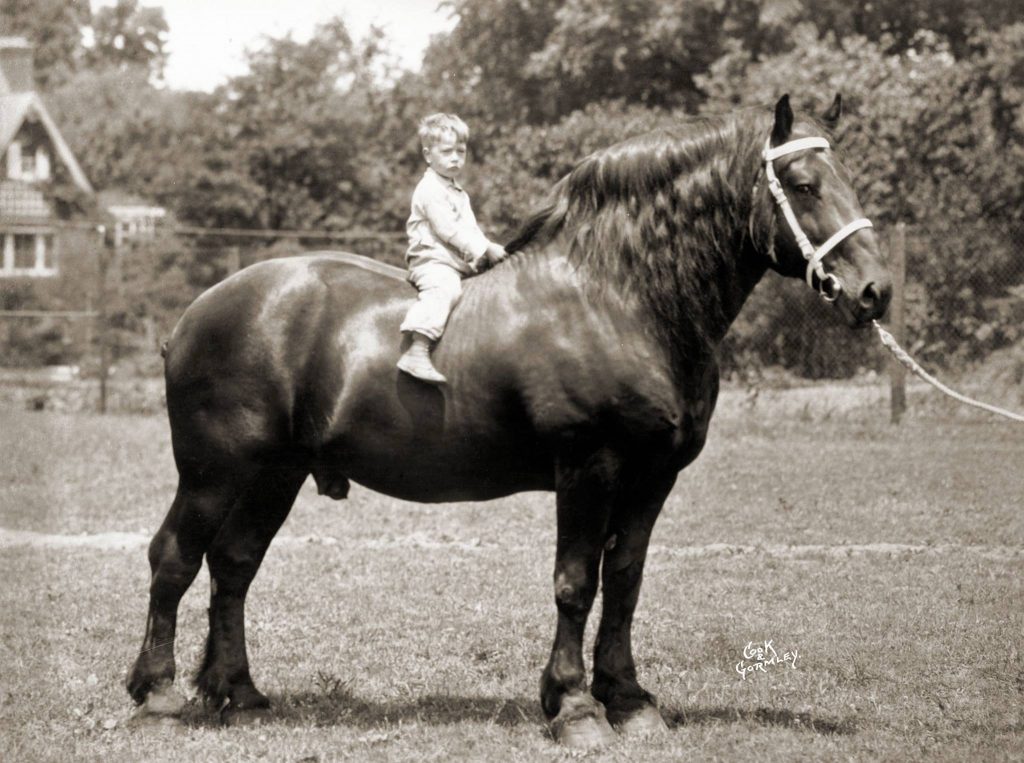
As we explore the world of horses, one breed stands out for its impressive size, strength, and elegance – the Percheron horse. Originating from the region of Perche in northern France, this magnificent animal has a rich history that spans centuries. In this article, we’ll delve into the characteristics, history, uses, and breeding of the Percheron horse, as well as its interesting connections with other breeds.
1. Origins of the Percheron Horse
The Percheron breed takes its name from the precise region in France where it originated, a province located in the north known as Perche. Specifically, this horse was born in the valley of the Huisne river, which flows through the Orne department. From its early days, the Percheron was bred and trained in the surrounding countryside near Paris, particularly in the western and southern parts of the region close to the capital city. Through selective breeding, the Percheron underwent significant changes that enhanced its strength and agility.
The Percheron’s origins can be traced back to the 16th century when it began to emerge as a distinct breed within France. Initially, the breed was used primarily for agricultural purposes, such as plowing fields and hauling heavy loads. As time went on, they were also employed as warhorses during battles, showcasing their strength and endurance.
2. Characteristics of the Percheron Horse
The Percheron is a large and powerful horse, standing out for its impressive size and striking appearance. Its compact head, with a flat profile, prominent forehead, and expressive eyes, sets it apart from other breeds. The ears are not excessively long but are straight and well-defined, while the nose is flat with wide nostrils that are always flared open. A sturdy neck connects the head to the body, which is robust and muscular, especially in its upper body and limbs.
The Percheron’s physical characteristics include:
- A medium-length neck
- A square forehead with a prominent muzzle
- Expressive eyes that are often slightly protruding
- Straight ears
- A flat nose with large, flared nostrils
- Broad shoulders and strong limbs
- Muscular back and well-defined haunches
- An elegant, flowing tail
3. Physical Description of the Percheron
The Percheron’s physique is characterized by its robust build, which includes:
- A sturdy frame
- Strong legs with well-defined joints
- Muscular shoulders and a broad back
- Well-developed hindquarters
- A short, flowing mane and tail
4. Color Variations of the Percheron
The Percheron can display a range of colors, with the most common being:
- Gray (often referred to as “pommled” gray)
- Brown (rarely seen in its purest form; more commonly associated with other breeds)
- Black
- Red (less frequently seen and often combined with white markings)
5. Recognized Color Standards
While the Percheron breed is generally recognized by its various color patterns, there are established standards regarding which colors can be considered “acceptable”:
- In France, gray, black, and red are the accepted colors.
- In contrast, some English breeders consider only gray and chestnut (red) acceptable.
6. The Character of the Percheron Horse
The Percheron is renowned for its calm demeanor and high intelligence, making it an ideal companion for horse owners. It has excellent communication skills with its handler and can be easily trained. Its ability to maintain a tranquil disposition despite its impressive size belies a remarkable vitality.
7. The Connection between Percherons and Augeron Horses
Interestingly, the Percheron breed shares ancestry with another breed known as the Augeron horse (also referred to as Caen or Virois). Originating in France, this smaller-sized horse was reintroduced into the Percheron lineage during the 1960s. The resulting offspring exhibit a beautiful appearance and are often bred for their striking features.
The connection between Percherons and Augerons highlights the importance of selective breeding and genetic diversity within breeds. By understanding the ancestry and relationships between different breeds, we can gain valuable insights into the characteristics and traits that define each breed.
8. Uses of Percherons Today
Historically, Percherons have been used in various roles:
- As a warhorse
- For transportation (especially with the advent of cars)
- For hunting
- Farm work
Today, they continue to be employed for tourism purposes, such as transporting tourists in national parks and nature reserves. In their native France, some Percheron horses are also raised specifically for meat production.
9. Modern Breeding Practices
The majority of Percheron breeders are located in the northern regions of France, particularly in the departments of Nord and Ouest. Some notable breeding centers can be found in Italy as well, showcasing their versatility.
Percheron breeders prioritize genetic diversity, ensuring that each generation exhibits a range of traits and characteristics. This approach helps to maintain the breed’s resilience and adaptability in the face of changing environmental conditions.
10. Conclusion
The Percheron horse is a magnificent example of equine excellence, boasting both stunning appearance and impressive abilities. By exploring its rich history and diverse uses, we gain a deeper appreciation for this remarkable breed.
Frequently Asked Questions (FAQs)
- Q: What are the primary characteristics that define a Percheron horse?
A: The Percheron’s distinctive features include its muscular build, striking appearance, intelligence, calm temperament, and agility.
- Q: Where did the Percheron breed originate?
A: The Percheron originated from the region of Perche in northern France.
- Q: Are there any notable color variations among Percherons?
A: Yes, the Percheron comes in various colors, with gray being the most common, followed by black and red (less frequently).
- Q: How do breed standards for Percherons differ between countries?
A: While France recognizes gray, black, and red as acceptable colors, some English breeders limit their recognition to only these two colors.
- Q: Can you tell me more about the connection between Percheron horses and Augeron horses?
A: The Augeron horse is another French breed that shares ancestry with the Percheron, leading to crossbreeding and further development of this magnificent breed.
- Q: What role do Percherons play in modern society?
A: Today, Percherons continue to be used for tourism purposes (transporting tourists in national parks), meat production, and farming work.
- Q: Are there any notable breeding centers or associations dedicated to the Percheron breed?
A: Yes, many prominent breeding centers are located in northern France and Italy, showcasing their expertise and commitment to preserving this incredible breed.
- Q: How can I learn more about the Percheron horse?
A: There are numerous resources available online and through equine organizations dedicated to promoting the Percheron breed.
- Q: Are there any notable Percheron horses or individuals that have gained recognition or fame?
A: Yes, many Percherons have achieved remarkable feats in competitions, exhibitions, and other areas of equestrian life.
- Q: How can I support the preservation and promotion of this magnificent breed?
A: By engaging with breed associations, visiting equine events, and spreading awareness about the Percheron’s unique characteristics, you can contribute to its continued appreciation and survival.
Breeding and Genetics
Understanding breeding practices and genetics is crucial for maintaining the quality and diversity of the Percheron breed. By recognizing the importance of genetic diversity within breeds, we can better support their preservation and long-term sustainability.
Selective breeding has played a vital role in shaping the characteristics and traits of the Percheron breed over centuries. The goal of selective breeding is to identify and preserve the most desirable traits, ensuring that each generation exhibits a range of characteristics that define the breed.
Conservation and Preservation
Efforts to conserve and preserve the Percheron breed are ongoing, involving collaborations between breeders, researchers, and equine organizations. These initiatives aim to promote genetic diversity, support breeding programs, and raise awareness about the importance of preserving this incredible breed.
Conclusion
The Percheron horse is a magnificent example of equine excellence, boasting both stunning appearance and impressive abilities. By exploring its rich history and diverse uses, we gain a deeper appreciation for this remarkable breed.


