
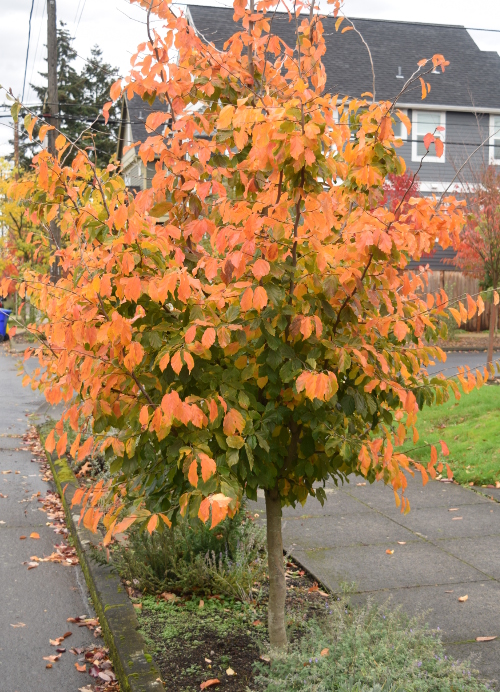
Are you looking for plants to decorate your garden that are unique and special? Look no further than the parrotia persica, a valid alternative to the popular maple tree. The Parrotia persica is a medium-sized tree with a beautiful autumn foliage display, offering warm colors such as orange, yellow, and red.
Origin and Habitat
The Parrotia persica belongs to the Hamamelidaceae family and can be found in extensive forests in its native habitat: Western Asia and the Caucasus region. This deciduous tree grows to an average height of 5-6 meters (16-20 feet) and a diameter of 4-6 meters (13-20 feet). The Parrotia persica is widely distributed across Turkey, Iran, Azerbaijan, and Georgia, where it can be found in various types of forests, including deciduous and mixed forests.
Leaves, Flowers, and Fruits
When cultivated in full sun, the Parrotia persica produces bright red leaves in autumn. The color of the fall foliage varies depending on the exposure to sunlight as well as the type of soil; it thrives in both calcium-rich and slightly acidic soils. It grows well in both well-drained and acidic soils. When the soil is more acidic, the leaves turn a deeper shade.
In the spring and summer colors, the leaves are bright green and shiny. The flowers are red, measuring 1.5-2 cm (0.6-0.8 inches) in diameter and grow in clusters: the Parrotia persica blooms at the end of winter (February-March), before losing its leaves that have fallen between November and December. Following the flowers come small fruits, capsules all along a brownish-red color, measuring less than 1 cm (0.4 inches) long and ripening in late spring.
The unique shape of Parrotia persica makes it an attractive tree to include in any garden design. Its drooping branches create a natural canopy that provides shade for smaller plants or animals. The colorful leaves also attract various birds and insects, adding to the overall beauty of the tree.
Varieties of Parrotia Persica
In addition to the typical species described above, there is also a variety called Pendula with dropping branches; this reaches a maximum height of 2-3 meters (6.6-9.8 feet). The Parrotia persica pendula is often used as an ornamental plant in containers or hanging baskets due to its unique shape and small size.
Growing and Caring for Parrotia Persica
The Parrotia persica can be grown both as a small tree and as a shrub to create an impressive display in the garden; if grown as a bush, it is necessary to trim the tip of the main stem once it reaches 100-150 cm (3.3-4.9 feet) high. This tree tolerates pruning exceptionally well, allowing its foliage to be given a regular and square shape.
To ensure healthy growth and prevent pest infestations, regular watering and fertilization are necessary. Watering should be done moderately during the growing season, avoiding overwatering which can lead to root rot. Fertilizing once or twice a year with balanced fertilizer will provide essential nutrients for optimal growth.
Additionally, Mulching around the base of the tree helps retain moisture in the soil and regulate soil temperature. However, avoid piling mulch against the trunk, as this can create an environment conducive to disease development.
Planting Time
The Parrotia persica can be planted in late autumn or early spring: planting takes place when the plant is bare of leaves and dormant vegetatively. After planting, it’s necessary to water it moderately (only if there are no rainfall). The rest of this tree does not require specific care conditions; it prefers fertile and deep soil.
When selecting a location for your Parrotia persica, consider its mature size and ensure that the area is clear of any overhead obstructions. A full sun to partial shade location will provide optimal growth and color display.
Propagation
Parrotia persica can be propagated through seeds or by layering. Seeds are typically sown in the fall or early spring, and it takes 2-3 years for them to germinate. Layering involves bending a branch down to the ground and securing it with wire or twine, allowing roots to develop before cutting the stem below the root system.
Conclusion
The Parrotia persica is a beautiful addition to any garden. With its stunning autumn colors and unique shape, it’s sure to captivate your visitors. If you’re looking for a low-maintenance tree that will add some excitement to your outdoor space, this might be the perfect choice.
Frequently Asked Questions
- What kind of soil does Parrotia persica thrive in?
Parrotia persica thrives in well-drained and slightly acidic soils. - How often should I water my Parrotia persica?
After planting, it’s necessary to water the tree moderately (only if there are no rainfall). - Can I prune my Parrotia persica regularly?
Yes, this tree tolerates pruning exceptionally well, allowing its foliage to be given a regular and square shape. - Is Parrotia persica suitable for small gardens?
Yes, it can be grown as a bush or a small tree, making it an ideal choice for smaller gardens. - Does Parrotia persica have any specific care conditions?
It prefers fertile and deep soil. - Can I plant Parrotia persica in acidic soils?
This tree grows well in both calcium-rich and slightly acidic soils. - Is Parrotia persica disease-resistant?
Yes, this tree is robust and can resist diseases. - Can I use organic treatments for pests on my Parrotia persica?
There is no need to treat your tree with antiparasitic products since it’s naturally resistant to pests.
By following these care tips and considering the unique characteristics of the Parrotia persica, you can enjoy a beautiful and thriving garden that will provide years of enjoyment for you and your visitors.


