
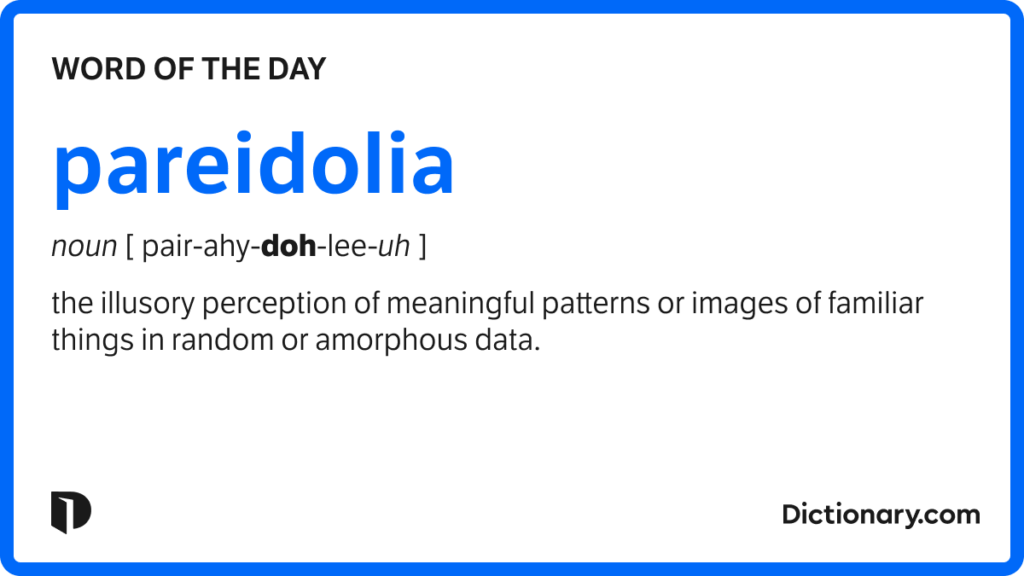
Pareidolia, a term that sounds like it could be from a science fiction novel, is actually a fascinating phenomenon that reveals the intricate workings of our human brains. This psychological phenomenon allows us to perceive patterns and meanings in random or ambiguous stimuli, often leading to creative and intriguing insights.
What is Pareidolia?
Pareidolia is not a disease, but rather a cognitive bias that enables us to recognize meaningful connections between unrelated elements. It’s as if our brain has an internal filter that helps us identify patterns, even when they’re not there. For instance, have you ever looked at clouds and seen shapes resembling animals or faces? This phenomenon is called pareidolia, and it’s a common experience for many people.
A Brief History of Pareidolia
The term “pareidolia” comes from the Greek words “εἴδωλον” (eidolon), meaning “image,” and “παρά” (para), meaning “beside.” This implies that pareidolia is an automatic, instinctual process where we perceive familiar shapes or forms in unexpected places. Research suggests that this phenomenon has been favored by evolution because it allows us to quickly identify potential threats or dangers.
Celebrities and Pareidolia
Pareidolia isn’t just limited to everyday life; celebrities have also experienced its effects. For example, some people believe they’ve seen faces or shapes in the Moon’s surface, while others claim to have spotted human-like figures in clouds or even on Mars (although this might be a misinterpretation of actual geological formations).
Pareidolia: Leonardo da Vinci
One of the most renowned artists who utilized pareidolia was Leonardo da Vinci. In his famous quote, “E questo è…,” he describes how to create art by identifying patterns and shapes in random objects. By doing so, he could recreate entire landscapes, figures, and even battles from memory.
Pareidolia Acustica: The Sound of Patterns
Did you ever find yourself thinking that your phone was ringing or receiving a message when it wasn’t? This can be attributed to pareidolia acustica, which is the cognitive bias that allows us to perceive sounds or patterns in random noises. It’s not an allusion; sometimes our brain simply tricks us into hearing something there.
Pareidolia: A Creative Test
One fun way to explore pareidolia is by using computer-generated art that creates pareidolic illusions. Deep Dream, a Google program, can generate images with intriguing shapes and patterns. While this might seem artificial, it demonstrates how our brain can recognize meaningful connections in unexpected places.
Pareidolia Visiva: Unlocking the Power of Human Perception
Pareidolia visiva is the most common form of pareidolia, where we perceive familiar shapes or forms in ambiguous stimuli. This cognitive bias allows us to engage with art and creativity on a deeper level. By exploring pareidolia, you can unlock your own creative potential and discover new ways to see the world.
The Science Behind Pareidolia
Pareidolia is closely linked to various aspects of human cognition and perception. It’s believed that our brains use pattern recognition as a way to process information more efficiently. When we encounter ambiguous stimuli, our brain attempts to make sense of it by identifying patterns or connections. This can lead to creative insights and new perspectives.
How Pareidolia Affects Our Lives
Pareidolia affects our lives in numerous ways, from art and creativity to self-discovery and personal growth. By recognizing the power of pareidolia, we can:
- Unlock new forms of artistic expression: By identifying patterns and shapes in random stimuli, artists can create innovative and thought-provoking works.
- Improve our problem-solving skills: Pareidolia’s pattern recognition abilities can help us identify solutions to complex problems by spotting connections between seemingly unrelated elements.
- Enhance our self-awareness: By exploring pareidolia, we can gain a deeper understanding of our own cognitive biases and limitations, leading to greater self-awareness and personal growth.
Real-Life Examples of Pareidolia
Pareidolia is not just a theoretical concept; it’s a common experience for many people. Here are some fascinating examples:
- The Moon: Some people claim to have seen faces or shapes in the Moon’s surface, while others believe they’ve spotted human-like figures.
- Clouds: Clouds are a popular subject for pareidolic illusions, with many people spotting shapes resembling animals, faces, or even cities.
- Music: Music lovers often recognize patterns and rhythms in seemingly random noises, which can lead to new insights into the nature of music itself.
Pareidolia in Popular Culture
Pareidolia has made appearances in various forms of media, from literature to film:
- Literature: Authors like Edgar Allan Poe have explored pareidolia in their works, often using it as a metaphor for the human psyche.
- Film: Movies like “The Shining” and “2001: A Space Odyssey” feature pareidolic illusions that challenge our perceptions of reality.
- Music: Musicians like Brian Eno and Aphex Twin have used pareidolia to create innovative music by recognizing patterns in random noises.
Conclusion
Pareidolia is an intriguing phenomenon that highlights the complexity of human perception. By understanding this cognitive bias, we can better appreciate the intricate workings of our brain and unlock its full potential for creativity and self-discovery. Whether it’s seeing shapes in clouds or recognizing patterns in art, pareidolia shows us that there’s always more to reality than meets the eye.
Frequently Asked Questions
- What is pareidolia?
Pareidolia is a cognitive bias where we perceive meaningful connections between unrelated elements, often leading to creative and intriguing insights. - Is pareidolia a disease?
No, pareidolia is not a disease; it’s a psychological phenomenon that can be beneficial in terms of creativity and self-discovery. - Can anyone experience pareidolia?
Yes, pareidolia is a common experience for many people, regardless of age or background. - Is pareidolia limited to visual perception?
No, pareidolia can also occur with sound (pareidolia acustica) and other senses. - Can pareidolia be controlled or avoided?
While we can’t completely eliminate pareidolia, being aware of its effects can help us recognize when our brain is playing tricks on us. - Is pareidolia the same as apophenia?
No, while both phenomena involve perceiving patterns in random stimuli, apophenia typically refers to a more intense or intense experience of pattern recognition. - Can pareidolia be used for creative purposes?
Yes, understanding pareidolia can help artists and creatives unlock new ways to see the world and tap into their imagination. - Is there research on pareidolia?
Yes, researchers have studied pareidolia extensively, and it has been linked to various aspects of human cognition and creativity.
By exploring the fascinating realm of pareidolia, we can gain a deeper understanding of our own creative potential and the intricate workings of our brain. Whether you’re an artist, a scientist, or simply someone curious about human perception, pareidolia is an intriguing topic that’s sure to spark new insights and perspectives.



