
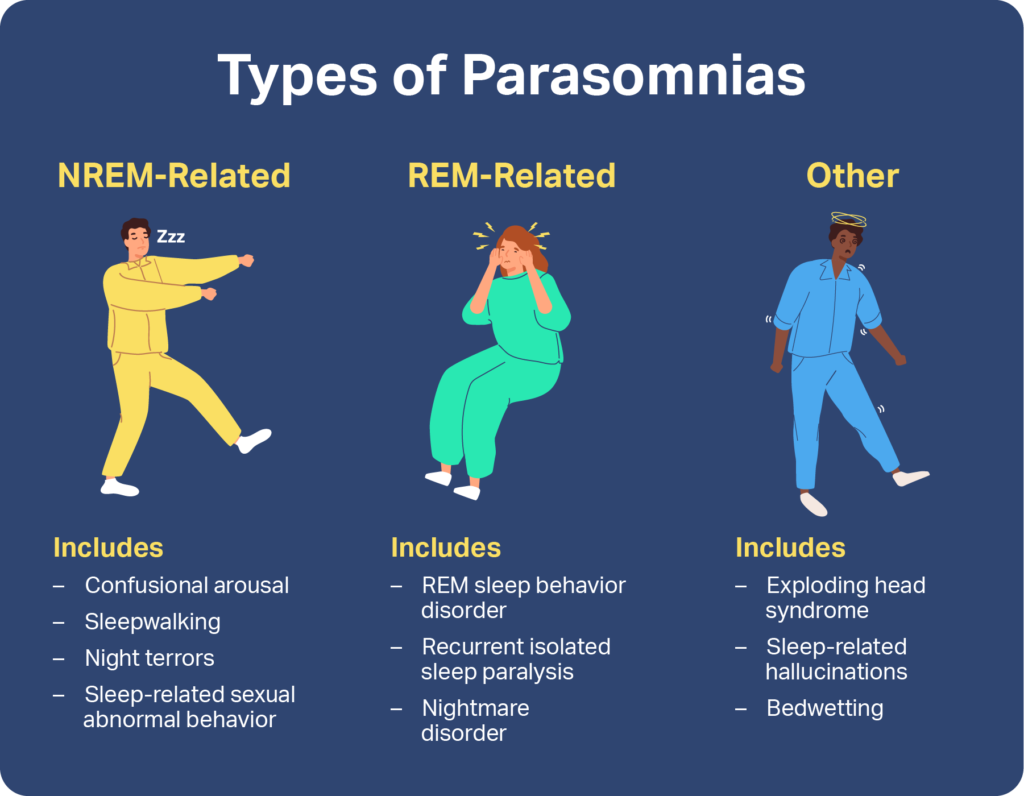
Parasonnies are sleep disorders characterized by various symptoms, often associated with deep sleep or REM sleep. Somnambulism is one of the most well-known forms of parasonnia, commonly linked to urban legends that are not entirely true. In this article, we will delve into the world of parasonnies, exploring their causes, remedies, and implications for children, adults, and newborns.
What are Parasonnies?
Parasonnies encompass a wide range of sleep disorders, including somnambulism, pavor nocturnus, nightmares, nocturnal enuresis, anxiety attacks linked to dreams, morpheic seizures, bruxism, head jerking, familial sleep paralysis, painful night erections, cluster headaches, or migraine onset during sleep. These disturbances often involve the neuromuscular system and/or neurovegetative structures.
Causes of Parasonnies
Several theories attempt to explain the causes of parasonnies. Some experts believe that these disorders occur as a result of partial awakenings, leading to confusion and the manifestation of abnormal behaviors during deep sleep. Other cases may be related to anxiety or tension from the day, which can manifest in various symptoms.
One theory suggests that parasonnies are linked to an imbalance of neurotransmitters, such as serotonin and dopamine, which regulate sleep and wakefulness. Another theory proposes that parasonnies are caused by a genetic predisposition, with some individuals being more prone to these disorders due to their family history.
Remedies for Parasonnies
While there is no single remedy that suits all parasonnies, natural and non-natural approaches can help alleviate symptoms. One universal remedy often recommended for children (and adults) is a white noise machine with 5 levels of sound and night light, along with a timer. This device can be purchased online at €33 on Amazon.
Other remedies include cognitive-behavioral therapy (CBT), relaxation techniques such as deep breathing or meditation, and sleep hygiene practices like establishing a consistent sleep schedule and creating a relaxing bedtime routine.
Parasonnie in Children
Sonnambulism is one of the most common parasonnies among children, affecting approximately 15% of the population, especially boys between 4 and 8 years old. However, it’s essential to note that this disorder is often oversimplified. In reality, many cases involve other symptoms, such as difficulty sleeping or reworking anxiety and tension from the day.
Parasonnies in Newborns
Newborns can also be affected by various parasonnies, including somnambulism, pavor nocturnus, and enuresis. It’s challenging to distinguish normal sleep disturbances from potential signs of a parasonnia during the first few months.
Infants and toddlers are more prone to parasonnies due to their developing brains and nervous systems. Research suggests that these disorders may be linked to genetic factors, as well as environmental influences such as maternal stress or sleep deprivation.
Parasonnie and Depression
Digging deeper into a sleep disorder can sometimes reveal underlying depression, whether temporary or permanent. In such cases, parasonnies may serve as an early warning sign that warrants further investigation with an expert.
Depression is often comorbid with parasonnies, which means that individuals with one condition are more likely to experience the other. This is because both conditions share common underlying mechanisms, such as imbalances in neurotransmitters and stress response systems.
Bruxism in Adults
Among adults, bruxism is one of the most common sleep disorders, characterized by unconscious clenching and grinding of teeth during sleep. This habit can be related to iron deficiency, nutrient deficiencies, or symptoms of varicose veins and peripheral neuropathy.
Bruxism can lead to various complications, such as tooth damage, jaw pain, and headaches. In severe cases, it may also contribute to sleep disorders like insomnia or sleep apnea.
Cluster Headaches
Cluster headaches are a type of parasonnia characterized by excruciating pain on one side of the head, often accompanied by tearing, redness, and swelling of the affected eye. These headaches can be triggered by various factors, such as stress, lack of sleep, or changes in weather.
Morpheic Seizures
Morpheic seizures are a rare form of parasonnia characterized by sudden, brief episodes of paralysis during deep sleep. These seizures can be caused by various factors, including genetic predisposition, head trauma, or brain tumors.
Familial Sleep Paralysis
Familial sleep paralysis is a type of parasonnia that affects individuals with a family history of the disorder. It’s characterized by temporary inability to move or speak during sleep, often accompanied by hallucinations and fear responses.
Nocturnal Enuresis
Nocturnal enuresis, also known as bedwetting, is a common symptom of parasonnies in children. This condition can be caused by various factors, including genetic predisposition, urinary tract infections, or bladder control problems.
Pavor Nocturnus
Pavor nocturnus is a type of parasonnia characterized by intense fear or anxiety during sleep. This disorder can lead to avoidance behaviors, such as waking up in the middle of the night or having difficulty falling asleep due to fear of falling asleep.
Cluster Headaches and Parasonnies
Cluster headaches are often linked to parasonnies, particularly somnambulism. Research suggests that individuals with cluster headaches may be more prone to somnambulism due to shared underlying mechanisms, such as imbalances in neurotransmitters and stress response systems.
Conclusion
Parasonnies are a complex group of sleep disorders that require attention and understanding. By exploring their causes, remedies, and implications for children, adults, and newborns, we can better comprehend the intricacies of these conditions. Whether you’re struggling with somnambulism or experiencing other parasonnies, seeking expert guidance is crucial to uncovering the underlying issues.
FAQs
- What are parasonnies?
Parasonnies refer to a group of sleep disorders characterized by various symptoms, often associated with deep sleep or REM sleep. - What causes somnambulism?
Somnambulism is often linked to partial awakenings, leading to confusion and the manifestation of abnormal behaviors during deep sleep. - Can parasonnies be treated naturally?
Yes, natural approaches such as white noise machines can help alleviate symptoms of parasonnies. - How common are parasonnies in children?
Approximately 15% of children experience somnambulism, especially boys between 4 and 8 years old. - Can parasonnies be a sign of depression?
Yes, digging deeper into a sleep disorder can sometimes reveal underlying depression, whether temporary or permanent. - What are the symptoms of bruxism in adults?
Bruxism is characterized by unconscious clenching and grinding of teeth during sleep, often related to iron deficiency, nutrient deficiencies, or symptoms of varicose veins and peripheral neuropathy. - Can parasonnies be diagnosed correctly?
It’s essential to seek expert guidance to accurately diagnose and treat parasonnies. - How can I prevent parasonnies?
Preventing parasonnies requires addressing underlying issues, such as anxiety or tension from the day, through psychological interventions and lifestyle changes.
By understanding the causes, remedies, and implications of parasonnies, we can take the first step towards managing these complex sleep disorders and improving overall quality of life.



