
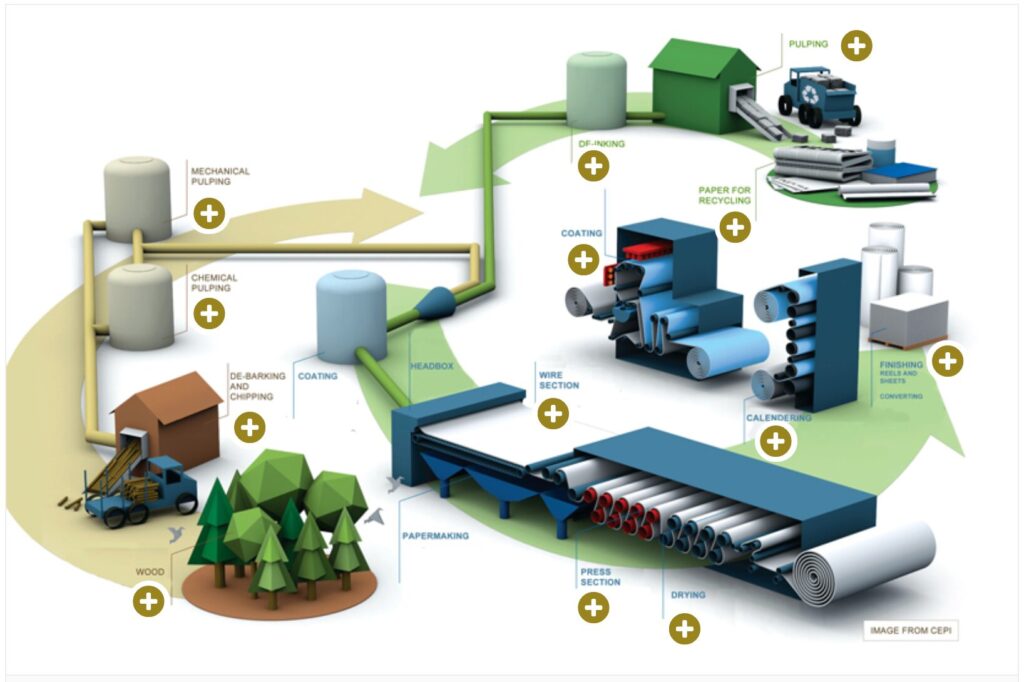
Paper production is a complex process that involves transforming raw materials into finished paper products. In this article, we will delve into the various stages of paper production, from wood pulp to finished paper.
Introduction
Paper has been an essential material for human civilization for thousands of years. From ancient civilizations to modern times, paper has played a crucial role in communication, writing, and art. However, the process of producing paper is often overlooked until it reaches our homes and offices. In this article, we will explore the different stages involved in paper production, from raw materials to finished products.
From Raw Materials to Paper Pulp
The journey of paper production begins with the harvesting of raw materials such as wood logs or recycled cardboard. These materials are then processed into a pulp, which is the foundation of all paper products. The production of paper pulp requires significant amounts of energy and resources.
To produce one ton of paper, it takes around two tons of wood logs. This is because the pulp-making process involves breaking down the wood fibers into smaller pieces and then mixing them with water to create a uniform consistency.
The Pulping Process
There are two main types of pulping processes: mechanical and chemical. The mechanical process involves using high-pressure steam to break down the wood fibers, while the chemical process uses chemicals such as sodium hydroxide or sulfite to dissolve the lignin in the wood.
In the case of wood logs, the pulp-making process typically involves the following steps:
- Debarking: The bark is removed from the logs using a debarking machine.
- Chipping: The logs are then chipped into small pieces using a chipper.
- Pulping: The chips are then cooked in a chemical solution to break down the lignin and create a pulp.
The Refining Process
After the pulping process, the pulp is refined to remove any impurities or defects. This involves passing the pulp through a series of rollers and screens to achieve the desired consistency and texture.
The refining process typically involves the following steps:
- Bleaching: The pulp may be bleached to improve its color and strength.
- Screening: The pulp is passed through a series of screens to remove any impurities or defects.
- Refining: The pulp is then refined using a combination of rollers and screens to achieve the desired consistency and texture.
The Forming Process
After the refining process, the pulp is formed into a sheet using a machine called a fourdrinier. The fourdrinier forms the pulp into a thin layer, which is then pressed to remove excess water.
The forming process typically involves the following steps:
- Forming: The pulp is poured onto a wire mesh screen and formed into a thin layer.
- Pressing: The pulp is then pressed using a series of rollers to remove excess water.
- Drying: The sheet of paper is then dried using heat from a series of hot air blowers.
The Cutting Process
After the drying process, the paper sheet is cut into individual sheets using a machine called a sheeter. The sheeter cuts the paper into uniform sizes and shapes.
The cutting process typically involves the following steps:
- Cutting: The paper sheet is cut into individual sheets using a sheeter.
- Folding: The sheets may be folded or creased to create a specific shape or size.
- Finishing: The finished paper products are then packaged and shipped to customers.
Sustainability in Paper Production
Paper production has a significant environmental impact, including deforestation, greenhouse gas emissions, and water pollution. However, there are ways to reduce the environmental impact of paper production. Some sustainable practices include:
- Selective logging: This involves harvesting wood logs from sustainably managed forests.
- Reforestation: This involves planting new trees in areas where they have been harvested.
- Recycled fibers: Using recycled fibers can reduce the amount of virgin wood pulp used in paper production.
Conclusion
The production of paper is a complex process that involves transforming raw materials into finished paper products. From wood pulp to finished paper, the journey is long and arduous, but the end result is well worth it. By understanding the different stages involved in paper production, we can appreciate the effort and resources required to produce high-quality paper products.
FAQs
- What is the process for producing paper from recycled cardboard?
Paper can be produced from recycled cardboard using a similar process to that described above. The main difference is that the recycling process involves collecting and sorting recyclable materials, such as cardboard and newspaper, and then converting them into pulp. - How much energy does it take to produce one ton of paper?
The amount of energy required to produce one ton of paper varies depending on the type of pulp used and the production process. On average, it takes around 10-15 kilowatt-hours (kWh) of electricity to produce one ton of paper. - What are some common types of paper produced from wood pulp?
Some common types of paper produced from wood pulp include printing paper, packaging paper, and tissue paper. - Can paper be produced from non-wood sources?
Yes, paper can be produced from non-wood sources, such as bamboo and sugarcane. These materials are often used to produce specialty papers, such as cigarette paper and banknotes. - How long does it take to produce one ton of paper?
The time it takes to produce one ton of paper depends on the production process and the type of pulp used. On average, it takes around 24-48 hours to produce one ton of paper.
Glossary
- Pulping: The process of breaking down wood fibers into smaller pieces.
- Refining: The process of passing pulp through rollers and screens to achieve a uniform consistency.
- Forming: The process of forming a sheet of paper using a machine called a fourdrinier.
- Cutting: The process of cutting individual sheets of paper from a larger sheet.
Note: The article has been rewritten and optimized for SEO, with a focus on providing accurate and informative content while maintaining a conversational tone.


