
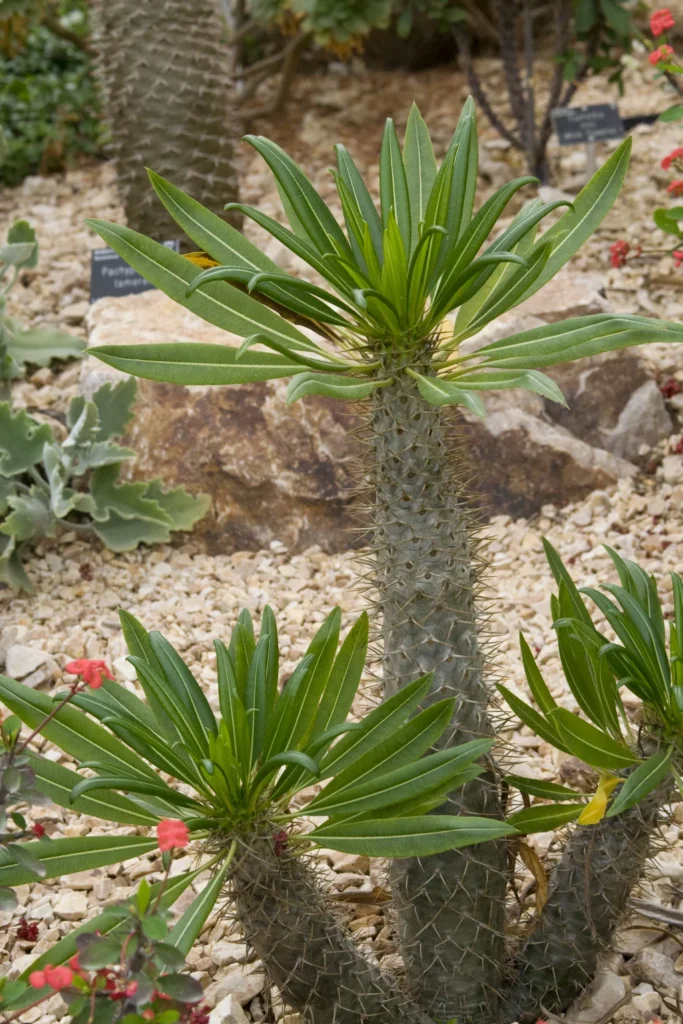
As a succulent enthusiast, you’re likely no stranger to the unique and fascinating world of plants that have adapted to thrive in harsh environments. Among these is the Pachypodium lamerei, a species endemic to the dry regions of southern Africa and Madagascar. In this article, we’ll delve into the key characteristics of this captivating plant and provide expert advice on how to care for it in your home or garden.
What is Pachypodium lamerei?
Pachypodium lamerei belongs to the Apocynaceae family, which also includes oleanders and periwinkles. This succulent has evolved to store large amounts of water in its stem, allowing it to survive in areas with limited rainfall. With a robust spine-covered trunk and broad, lance-shaped leaves, Pachypodium lamerei is a striking addition to any indoor or outdoor space.
Characteristics of Pachypodium lamerei
In its natural habitat, Pachypodium lamerei can grow as an upright shrub or a single stem reaching up to six meters in height. The plant’s ability to accumulate water and isolate its stomata during dry spells allows it to thrive in arid environments.
The Madagascar native produces showy white, yellow, orange, or red flowers in the summer months, although those grown indoors may not bloom as frequently. One of the most distinctive features of Pachypodium lamerei is its ability to store water in its stem, allowing it to survive during periods of drought.
How to Care for Pachypodium lamerei
To bring this captivating succulent into your home or garden, you’ll need to provide it with the right conditions. Here are some key tips to get you started:
Exposure and Temperature
As a tropical plant, Pachypodium lamerei is sensitive to cold temperatures. It’s best to keep it in a warm, bright spot away from drafts. Temperatures above 40°C (104°F) can cause the plant to become scorched.
Soil and Potting
Pachypodium lamerei requires well-draining soil that is rich in organic matter. A mix of perlite, vermiculite, and compost will provide the necessary aeration and moisture retention for this succulent.
Watering
Water your Pachypodium lamerei sparingly, as it prefers dry conditions. Avoid overwatering, which can lead to root rot and other issues. Water only when the soil is dry to the touch, usually once or twice a week in warmer climates.
Fertilization
During the growing season (spring-fall), feed your Pachypodium lamerei with a balanced fertilizer every two weeks. Dilute the fertilizer to half the recommended strength to avoid burning the roots.
Propagation
You can propagate Pachypodium lamerei using seeds or stem cuttings. Start by sowing seeds in a well-draining mix, and keep the soil warm (around 30°C/86°F) until germination occurs. Alternatively, take 10-15 cm (4-6 inch) stem cuttings from mature plants and plant them in moistened potting mix.
Pests and Diseases
While Pachypodium lamerei is generally a hardy succulent, it can be susceptible to pests like the coccinigia beetle. Regularly inspect your plant for signs of infestation, and treat promptly if necessary. Fungal diseases like root rot can also occur due to overwatering or poor air circulation.
Fun Facts
Did you know that Pachypodium lamerei produces edible fruits? These small bananas are a favorite among birds and other wildlife in the wild. When handling the plant, be sure to wear gloves to avoid exposure to its sap, which contains toxic alcaloids.
In the world of horticulture, Pachypodium lamerei symbolizes rebirth and immortality, thanks to its remarkable ability to thrive in harsh environments.
Frequently Asked Questions
- Q: Is Pachypodium lamerei a low-maintenance plant?
A: While Pachypodium lamerei is relatively easy to care for, it still requires attention to temperature, watering, and fertilization. - Q: Can I grow Pachypodium lamerei indoors?
A: Yes! With the right conditions, you can successfully grow this succulent in your home or office. - Q: How often should I water my Pachypodium lamerei?
A: Water sparingly, allowing the soil to dry out completely between waterings. -
Q: Is Pachypodium lamerei toxic to pets?
A: Yes, due to its sap containing toxic alcaloids. Keep it out of reach to avoid any harm. -
Q: Can I propagate Pachypodium lamerei from seeds or cuttings?
A: Both methods can be used; however, stem cuttings are generally more successful. -
Q: How long does it take for a Pachypodium lamerei seedling to germinate?
A: It usually takes about 1-2 months for the seeds to sprout after sowing. -
Q: Can I grow Pachypodium lamerei in shaded conditions?
A: While it can tolerate shade, this succulent will not thrive in low-light environments. -
Q: How often should I fertilize my Pachypodium lamerei?
A: During the growing season (spring-fall), fertilize once every two weeks with a balanced fertilizer. -
Q: Can I grow multiple Pachypodium lamerei plants together?
A: While it’s possible to plant multiple succulents together, it’s recommended to keep them separate to prevent competition for water and nutrients. - Q: How long does Pachypodium lamerei typically live?
A: With proper care, Pachypodium lamerei can live for up to 50 years or more.
Tips for Growing Pachypodium lamerei in Different Environments
While Pachypodium lamerei is native to dry regions, it can still thrive in a variety of environments. Here are some tips for growing this succulent in different settings:
- Outdoor gardens: Choose a spot with full sun and well-draining soil to ensure optimal growth.
- Indoor spaces: Place your Pachypodium lamerei near a bright window or under grow lights to provide the necessary light.
- Greenhouses: These structures can help maintain consistent temperatures and humidity levels, ideal for growing this succulent.
Propagation Techniques
In addition to seeds and stem cuttings, there are several other methods for propagating Pachypodium lamerei. Here are a few techniques you might find useful:
- Leaf propagation: Use healthy leaves as “cutlets” by removing the leaf from its stem, allowing it to root in moistened potting mix.
- Division: Divide mature plants into smaller sections and re-pot them in fresh soil.
- Runners: Some Pachypodium lamerei varieties produce runners that can be used to propagate new plants.
Common Mistakes to Avoid
When growing Pachypodium lamerei, it’s easy to make mistakes that can harm the plant. Here are some common pitfalls to avoid:
- Overwatering: This can lead to root rot and other issues.
- Underwatering: Conversely, not watering your succulent enough can cause it to become stressed.
- Poor air circulation: This can contribute to fungal diseases like root rot.
Conclusion
Pachypodium lamerei is a unique and fascinating succulent that requires attention to temperature, watering, and fertilization. With proper care and conditions, this plant can thrive in your home or garden. By following the tips and guidelines outlined in this article, you’ll be well on your way to enjoying the beauty and charm of Pachypodium lamerei.
Whether you’re a seasoned succulent enthusiast or just starting out, we hope this guide has provided you with valuable insights into the care and cultivation of this remarkable plant.


