
Introduction
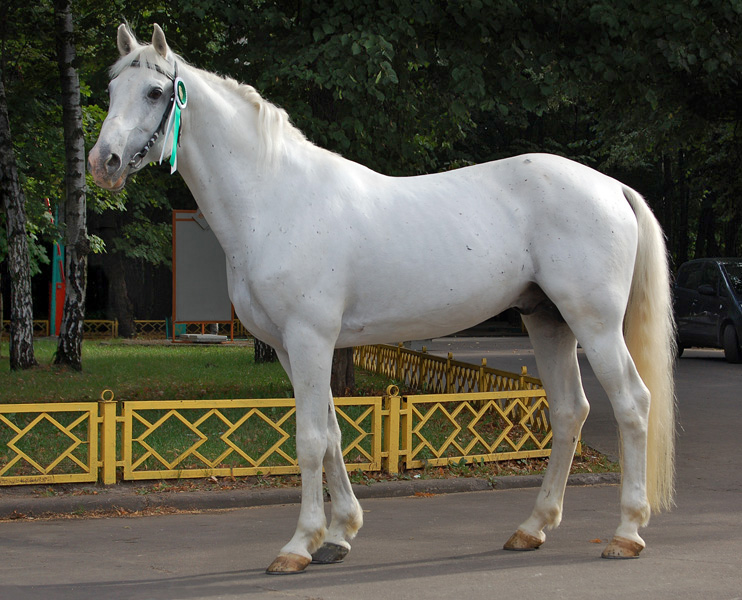
The Orlov horse is a rare breed from Russia, known for its captivating appearance and unique characteristics. Despite being challenging to find outside of its native country, this magnificent animal has won the hearts of many with its impressive physique and noble demeanor.
In recent years, there has been an increasing interest in the Orlov horse breed due to its rich history, versatility, and exceptional athletic ability. As we delve deeper into the world of equine breeding, it is essential to understand the origins, characteristics, and attitudes surrounding this magnificent creature.
Origins
Uncovering the origins of the Orlov horse is a complex task, as its history is deeply intertwined with that of the region where it was born. The breed was developed by Count Alexis Grigorievitch Orlov in the late 18th century, who began experimenting with crossing the white stallion Arabo Smetanka, received from the Sultan of Turkey, with the best mares from Denmark, Holland, and Arabia.
After several years of trial and error, Count Orlov moved his breeding program to Khrenov, a village in the Voronezh province, where he continued to refine the breed alongside his expert director, V.I. Shishkin. Through repeated crossings, they discovered that the most impressive, athletic, and resilient horses were those resulting from combining Arabs with Danish and Dutch mares.
One such stallion, Bars I, became the foundation of the Orlov breed, inheriting a noble lineage as a descendant of Smetanka and Polkan I. Bars I was then paired with a Danish mare, Hartsdraver, prized for her robust stifle and harmonious structure, allowing her to move freely and with great energy.
Characteristics
The Orlov horse is known for its impressive size, standing between 160-165 centimeters (63-65 inches) tall and weighing up to 550 kilograms (1,212 pounds). Despite not being perfectly proportioned, the breed is highly regarded due to its well-proportioned physique. The head is relatively small and simple in shape, with sometimes slightly long limbs and a narrow underbelly.
However, one of the most significant drawbacks of the Orlov horse is its weak tendon, which it inherits from Dutch mares. This can lead to various health issues, such as lameness and joint problems. Additionally, the breed’s versatility means that individual characteristics may vary depending on the breeding program they come from.
Interestingly, the best Orlov horses are often said to originate from Khrenov, with those from Perm in the Ural Mountains standing out for their exceptional beauty and athleticism. Conversely, Tula and Dubrov horses tend to be more suited for agricultural purposes.
Breeding Program
Despite its challenges, the Orlov horse has been the subject of extensive breeding programs aimed at improving its characteristics. Scientists have sought to enhance the breed’s speed, height, and elegance by experimenting with new crossings and genetic improvements.
These efforts have led to the development of high-performance horses used in various disciplines, such as the Trottatore Russo (a type of Russian trotter). The Orlov horse has played a significant role in shaping these breeds, making it an invaluable asset for equine breeders worldwide.
Attitudes
The Orlov horse is known for its good trotting ability, although it still lags behind some American breeds that excel in this discipline. In the past, extensive breeding programs were undertaken to improve its performance, ultimately leading to the development of the Trottatore Russo.
Between 1890 and 1917, 156 stallions and 220 mares from American trotting stock were imported into Russia, giving rise to a new generation of hybrid horses. The subsequent interbreeding between these hybrids and existing Russian horses resulted in the creation of the Trottatore Russo as a distinct breed.
Italian Presence
It is almost impossible to find an Orlov horse breeding program in Italy, due to the scarcity of this breed even in Russia. Currently, there are approximately 30,000 Orlov horses in the former Soviet Union, compared to around 3,000 breeding programs before the Russian Revolution.
However, some Italian breeders have expressed interest in importing Orlov mares or stallions to establish breeding programs in their country. This could potentially lead to an increase in the availability of this rare breed outside of Russia.
Conclusion
The Orlov horse is a majestic and unique breed that has captured the hearts of many with its regal demeanor and impressive characteristics. While challenging to find outside of Russia, it remains an essential component of equine heritage and breeding programs worldwide.
As we continue to explore the world of equine breeding, it is crucial to understand the origins, characteristics, and attitudes surrounding this magnificent creature. By doing so, we can appreciate the Orlov horse’s significance in shaping the equine industry and its potential for future growth and development.
Frequently Asked Questions (FAQs)
- What is the origin of the Orlov horse?
The Orlov horse was developed by Count Alexis Grigorievitch Orlov in the late 18th century through careful breeding and crossing of various mares from different regions. - How tall are Orlov horses?
Orlov horses typically stand between 160-165 centimeters (63-65 inches) tall, although some may be slightly taller or shorter depending on their lineage. - What is the average weight of an Orlov horse?
The average weight of an Orlov horse can range from 450 to 550 kilograms (992-1,212 pounds), with some individuals reaching even greater weights. - Is the Orlov horse a good trotter?
While not as fast as some American breeds, the Orlov horse has demonstrated impressive trotting ability and agility in various breeding programs. - Can Orlov horses be used for other disciplines besides trotting?
Yes, due to their exceptional athleticism and adaptability, Orlov horses have been successfully employed in a range of equine sports and activities beyond trotting. - Where can I find an Orlov horse breeding program?
Due to the scarcity of this breed outside of Russia, it is difficult to locate an Orlov horse breeding program in Italy or elsewhere, except perhaps through specialized equine associations and clubs. - How many Orlov horses are currently bred worldwide?
Approximately 30,000 Orlov horses can be found in the former Soviet Union, although their numbers have fluctuated over time due to various factors such as breeding programs, disease outbreaks, and changing market demand. - What is the future of the Orlov horse breed?
As equine breeders continue to experiment with new crossings and genetic improvements, it remains to be seen whether the Orlov horse will become a more prominent player in global equine markets or retain its relatively rare status as a heritage breed.
Additional Resources
- The Russian Horse Breeders Association (RHA) is a valuable resource for information on the Orlov horse breed.
- The International Stud Book Committee (ISC) maintains an official stud book for the Orlov horse, providing detailed records of breeding and registration data.
- The Equine Heritage Foundation (EHF) is a non-profit organization dedicated to promoting and preserving equine heritage breeds, including the Orlov.
Final Thoughts
The Orlov horse breed has captivated the hearts of many with its unique characteristics and impressive athleticism. As we continue to explore the world of equine breeding, it is essential to appreciate the history, significance, and potential of this magnificent creature.
By supporting responsible breeding programs and promoting awareness about the Orlov horse breed, we can ensure its continued survival and success in an ever-changing equine industry landscape.


