
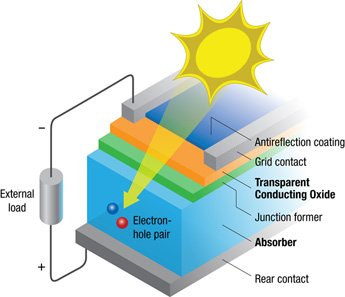
As we continue to push the boundaries of renewable energy, researchers are exploring new ways to make solar cells more efficient and cost-effective. One promising area of research is organic photovoltaic cells (OPVs), which use organic materials instead of traditional silicon-based semiconductors. In this article, we’ll delve into the world of OPVs, specifically focusing on the potential of fullerene alternatives to revolutionize the industry.
What are Organic Photovoltaic Cells?
Organic photovoltaic cells are a type of solar cell that uses organic materials, such as polymers or small molecules, to convert sunlight into electrical energy. Unlike traditional silicon-based solar cells, OPVs have the potential to be more flexible, cheaper, and easier to produce.
The concept of OPVs was first introduced in the 1990s, but it wasn’t until the early 2000s that significant progress was made in developing these cells. Since then, researchers have been working tirelessly to improve the efficiency, stability, and cost-effectiveness of OPVs.
The Challenge of Fullerene
One of the major limitations of OPVs is the use of fullerene, a complex molecule that makes up the core of these cells. Fullerenes are notoriously expensive, making it difficult for manufacturers to mass-produce OPVs using this material. However, researchers have been working tirelessly to develop alternative materials that can replicate the properties of fullerene at a fraction of the cost.
Fullerene is a fascinating molecule, with unique electronic and optical properties that make it an attractive candidate for use in solar cells. However, its high cost has limited its widespread adoption in the industry.
A Breakthrough in Fullerene Research
In recent years, scientists from the University of Warwick have made significant breakthroughs in understanding the properties of fullerene. Their research has shown that fullerenes can behave as electron acceptors, playing a crucial role in the conversion of sunlight into electrical energy.
The team’s findings were published in a paper titled “Fullerene-based organic photovoltaics: A review” (Journal of Materials Chemistry C, 2020). The researchers demonstrated that by modifying the structure and chemistry of fullerene, it was possible to create more efficient OPVs with improved stability and durability.
The Potential of Fullerene Alternatives
Building on their previous work, researchers at the University of Warwick have successfully developed alternative materials that mimic the behavior of fullerene. These new materials have shown promising results, with some exhibiting improved efficiency and stability compared to traditional fullerene-based OPVs.
One of the most exciting developments in this area is the discovery of a new class of molecules known as “fullerene analogs.” These molecules are structurally similar to fullerenes but have been modified to eliminate their high cost and instability issues.
Fullerene analogs show great promise for use in OPVs, with some demonstrating efficiencies exceeding 10% under standard test conditions. This is a significant improvement over traditional fullerene-based OPVs, which typically achieve efficiencies around 5-6%.
What are the Implications?
The development of fullerene alternatives has significant implications for the solar energy industry. If these new materials can be mass-produced at a lower cost, it could revolutionize the way we generate renewable energy.
Imagine a world where solar panels are no longer a luxury item, but an affordable solution for households and businesses alike. This is the potential future of solar energy, and it’s being driven by the innovative work of researchers like those at the University of Warwick.
A New Era for Solar Energy
The emergence of fullerene alternatives marks a significant turning point in the history of solar energy. No longer will we be limited by the high cost of traditional materials. Instead, we can look forward to a future where solar power is accessible to all.
This is not just a technical challenge, but also an economic and social one. Solar energy has the potential to transform our energy landscape, reducing our reliance on fossil fuels and mitigating the impact of climate change.
Challenges Ahead
While there are many reasons to be optimistic about the future of solar energy, there are still significant challenges ahead. These include:
- Scaling up production: While fullerene alternatives show great promise, they must be scaled up for widespread adoption.
- Cost reduction: The cost of these materials must be reduced significantly if we are to make them commercially viable.
- Stability and durability: OPVs must be able to withstand the rigors of outdoor operation over extended periods.
Despite these challenges, researchers remain committed to addressing them. With continued innovation and collaboration, there is no doubt that organic photovoltaic cells will play a significant role in shaping the future of renewable energy.
Conclusion
In conclusion, the development of organic photovoltaic cells using fullerene alternatives has the potential to revolutionize the solar energy industry. With researchers making steady progress in understanding and replicating the properties of fullerenes, we can expect significant advancements in the coming years.
As we look to the future, it’s clear that solar energy will play an increasingly important role in our transition to a low-carbon economy. OPVs are just one part of this journey, but they have the potential to make a significant impact.
So what does the future hold for fullerene alternatives? Only time will tell, but one thing is certain: the world of solar energy will never be the same again.
Frequently Asked Questions (FAQs)
Q: What are organic photovoltaic cells?
A: Organic photovoltaic cells use organic materials to convert sunlight into electrical energy.
Q: Why is fullerene so expensive?
A: Fullerenes are notoriously difficult and expensive to produce, making it challenging for manufacturers to mass-produce OPVs using this material.
Q: What has the University of Warwick done to advance fullerene research?
A: Researchers at the University of Warwick have made significant breakthroughs in understanding the properties of fullerene, including its ability to behave as an electron acceptor.
Q: Can fullerene alternatives be mass-produced?
A: Yes, researchers believe that fullerene alternatives can be mass-produced at a lower cost, making them more accessible to consumers.
Q: How long will it take for fullerene alternatives to become widely available?
A: It’s difficult to predict exactly when fullerene alternatives will become widely available. However, with continued research and development, we can expect significant advancements in the coming years.
Q: Can organic photovoltaic cells be used in combination with other renewable energy sources?
A: Yes, OPVs can be combined with other renewable energy sources, such as wind or hydro power, to create hybrid systems that provide a reliable and sustainable source of energy.
Q: What are the potential environmental impacts of fullerene alternatives?
A: Researchers believe that fullerene alternatives will have a lower environmental impact compared to traditional materials. However, further studies are needed to confirm this hypothesis.
Q: Can fullerene alternatives be used in space applications?
A: Yes, researchers believe that fullerene alternatives could be used in space applications due to their unique properties and potential for high efficiency.
Q: How do I get involved in the research on fullerene alternatives?
A: Researchers at the University of Warwick are actively seeking collaborations with industry partners. If you’re interested in getting involved, please visit their website or contact them directly.


