
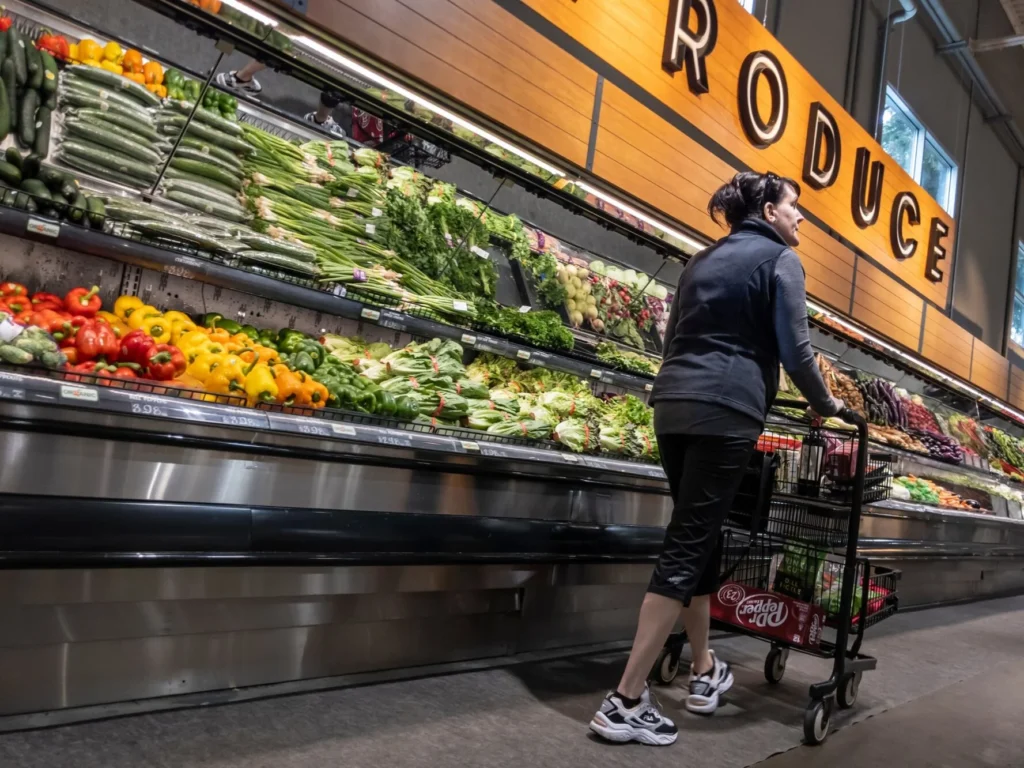
The Rise of Organic Food: A Growing Market in Europe
The organic food market is booming, not just for consumers but also for the economy. In Italy, the total sales of organic foods exceeded €2 billion in 2012, a 7% increase from the previous year, and today Italy is ranked fourth in the EU for organic food consumption.
But the organic food market is not just limited to food; it’s also expanding into other areas. In the European Union, the consumption of organic products (food and non-food) generates a business of €21.8 billion and has been growing steadily. The data from 2014, provided by BÖLW – Bund Ökologische Lebensmittelwirtschaft, show that the trend is on the rise.
Organic foods come from an agriculture that, in turn, increases the use of natural methods instead of chemical pesticides and fertilizers. According to Nomisma’s data, which presents annual market research on organic food in collaboration with SANA fair in Bologna, 9% of Italy’s agricultural land is dedicated to organic farming (2012). Additionally, Italy covers 10% of the European Union’s total organic farmland area and 3% globally.
However, growth rates vary depending on the crop. Some crops are increasing in popularity, such as olives (+16%), citrus fruits (+15%), and grains (+14%). On the other hand, some crops are decreasing in demand, including ‘other seeds’ (-52%), root vegetables (-36%), and industrial farming (-15%).
In Italy, the organic food supply chain consists of approximately 50,000 operators, including farmers, manufacturers, distributors, and importers. The increase in employment has been a significant growth, with a 3% rise from 2011 to 2012.
When it comes to organic foods, specifically the food sector, the global market has grown by an astonishing 251% since 2000 to 2011. The United States accounts for 44%, the European Union for 41%, Canada for 4%, small Switzerland alone for 3%, Japan for 2%, and the remaining 6% when divided among other countries.
In Europe, sales of organic foods and bio products are increasing in all countries except the UK, where consumption has declined by 9% from 2009 to 2011. In France, it increased by +24%, in Italy by +15%, and in Germany (the leading European market), by +14%.
In Italy, organic foods represent 1.45% of total food consumption and 2.22% of packaged food sold through the large distribution channel. The data on packaged bio products sold through organized distribution is one of the most interesting because it highlights a growing trend beyond initial markets such as shopping groups, markets, etc.
Who consumes organic foods in Italy?
According to Nomisma’s research, 32.4% of the population consumes organic foods daily, at least once a week, 31.5%, and at least once a month, 20.7%, and 15.4% less frequently. The frequency of consumption increases with higher education levels, income, and is more prevalent in the center-north region compared to the south.
Why do people choose organic foods?
Looking at the motivations for purchasing organic foods, 71% say they are considered safer. However, there has also been an increase in consumers responding that they consider them ‘good’ (25.4%), a sign of improvement in biodynamic production from a taste perspective. The percentage of those who prefer organic because they are good increases among frequent buyers.
Key Takeaways:
- Organic food sales have grown significantly, with Italy being the fourth-largest consumer in Europe.
- Organic agriculture reduces the use of chemical pesticides and fertilizers.
- In Italy, 9% of agricultural land is dedicated to organic farming.
- Some crops are increasing in demand, while others are decreasing.
- The organic food market is expanding beyond food products into other areas.
- Consumers prefer organic foods due to their perceived safety and taste.
In conclusion, the rise of organic food has not only transformed consumers’ choices but also significantly impacted the global economy. As more countries embrace sustainable agriculture methods, it’s clear that this trend will continue to grow in the future.
Moreover, the increasing demand for organic products presents opportunities for entrepreneurs and small business owners who are willing to adapt their strategies to meet consumer needs. From packaging to production processes, there is a wide range of areas where innovation can be applied to meet growing consumer expectations.
As the market continues to expand, it’s crucial for policymakers and regulatory bodies to establish clear guidelines and standards that promote sustainability while also ensuring fair competition among producers. By doing so, they can create an environment that fosters growth and supports the development of a more sustainable food system.
Ultimately, the future of organic foods in Europe holds immense potential for both economic growth and environmental sustainability. As consumers become increasingly aware of the benefits of sustainable agriculture practices, it’s clear that this market will continue to thrive for years to come.


