
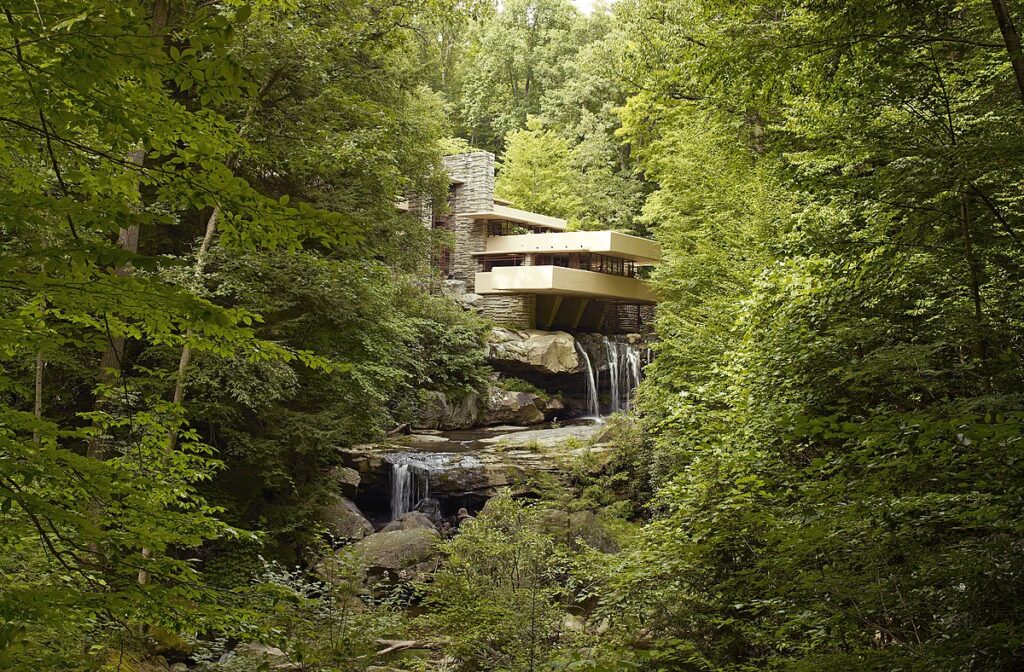
As the world becomes increasingly aware of its impact on the environment, architecture is evolving to become more harmonious with nature. Organic architecture is a branch of modern architecture that focuses on creating balance between humans and the natural world. It’s not just about aesthetics; it’s also about using materials and energies sustainably.
What is Organic Architecture?
Organic architecture seeks to create a new way for humans to coexist with nature, achieving equilibrium between built environment and natural surroundings. This approach uses both artificial and natural elements, combining them to create harmony. It opposes the idea of seeking aesthetic value alone and strives for independence from traditional classicism.
Principles of Organic Architecture
The concept of organic architecture is closely linked to that of a holistic society. The goal is to create a new balance between humans and their environment by modifying construction methods and lifestyles. In the context of architecture, there are clear guiding principles:
- Reduce partitions to create harmony between buildings and surroundings
- Ensure logical proportions for internal and external openings
- Avoid combining different materials and incorporate building systems organically into the structure
Architectural elements should become part of the building’s fabric, not just separate components.
Frank Lloyd Wright: The Father of Organic Architecture
Frank Lloyd Wright is widely regarded as the pioneer of organic architecture. His philosophy was that “form and function are one.” He envisioned buildings that grow from within to outside, in harmony with their surroundings, rather than being imposed upon them. Wright believed that a building should be designed for its own sake, not just for external purposes.
Organic Architecture in Italy
While Frank Lloyd Wright is the most prominent figure associated with organic architecture, other architects, such as Paolo Soleri, have made significant contributions to this field. In Italy, architects like Bruno Zevi and Giovanni Michelucci have also explored the principles of organic architecture through their work.
Fungi-Based Construction: A Novel Approach
A recent example of organic architecture is the use of fungi in building design. A student from Brunel University, UK, proposed using fungi as a construction material. Fungi were shaped and worked to create long tubes and structural forms that could be used to build structures with the help of architectural studies.
This unconventional approach not only showcases the potential of organic architecture but also highlights the importance of exploring new materials and methods for sustainable building practices.
Organic Architecture: Examples
To illustrate this concept, let’s look at some examples:
- Prairie Houses by Frank Lloyd Wright
- Bio-Inspired Design
- Sustainable Building Practices
These examples demonstrate how organic architecture is evolving and being applied in various ways to create more harmonious relationships between humans and the natural world.
Examples of Organic Architecture
Here are a few notable examples of organic architecture:
- Prairie Houses by Frank Lloyd Wright: These houses, built in the early 20th century, showcase Wright’s vision for buildings that grow from within to outside. Examples include Fallingwater and Hollyhock House.
- Bio-Inspired Design: This design approach uses natural forms and patterns as inspiration for building designs. For example, the Lotus Temple in India features a bio-inspired design with a series of interconnected domes.
- Sustainable Building Practices: Buildings like the Bullitt Center in Seattle, designed by Miller Hull Partnership, demonstrate how organic architecture can be applied to create sustainable and environmentally friendly buildings.
Organic Architecture: A Sustainable Future
As we move forward into an increasingly environmentally conscious future, organic architecture will play a vital role in shaping our built environment. By incorporating natural elements, using sustainable materials, and designing buildings that grow from within to outside, architects can create more harmonious relationships between humans and the natural world.
Frequently Asked Questions
- What is the main goal of organic architecture?
- To create balance between humans and their environment
- Which architect is considered the father of organic architecture?
- Frank Lloyd Wright
- What are some key principles of organic architecture?
- Reduce partitions, ensure logical proportions, avoid combining different materials
- How can organic architecture be applied in real-world building projects?
- By incorporating natural elements and sustainable design principles
- Can organic architecture be used for both residential and commercial buildings?
- Yes, it can be applied to various types of buildings and projects
- What role does fungi play in organic architecture?
- Fungi are being explored as a potential building material due to their unique properties and sustainability benefits
- How can architects balance human needs with environmental concerns through organic architecture?
- By incorporating natural elements, using sustainable materials, and designing buildings that grow from within to outside
- What are some examples of organic architecture in practice?
- Prairie Houses by Frank Lloyd Wright, bio-inspired design, sustainable building practices
In conclusion, organic architecture is a rapidly evolving field that seeks to balance human needs with environmental concerns. By exploring new materials, methods, and design principles, architects can create buildings that are not only aesthetically pleasing but also sustainable and environmentally friendly.
The Future of Organic Architecture
As the world continues to evolve, we can expect to see more innovative applications of organic architecture in various fields. For example:
- Sustainable cities: Cities like Copenhagen and Singapore are already incorporating organic architecture principles into their urban planning, creating more livable and sustainable environments for residents.
- Natural disaster resilience: Buildings designed with organic architecture principles can be more resilient to natural disasters, such as earthquakes and hurricanes, by incorporating flexible structures that adapt to changing conditions.
- Biotechnology: The use of fungi and other organisms in construction is becoming increasingly popular, offering new opportunities for sustainable building practices.
As we move forward into an increasingly complex and interconnected world, organic architecture will play a vital role in shaping our built environment and creating more harmonious relationships between humans and the natural world.


