
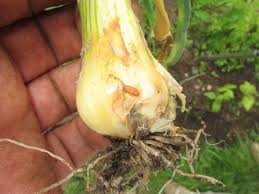
As a gardener or farmer, you’re no stranger to the importance of maintaining healthy crops. However, one pest can have a devastating impact on your onion harvest: the onion fly. In this article, we’ll delve into the world of these pesky insects, exploring what they are, how they harm onions, and most importantly, how to control them.
What is an Onion Fly?
The onion fly passes its winter in the soil as a pupa, which resembles a small, brownish-gray oval. When temperatures rise in spring, the pupae hatch into adult flies that emerge in late May or early June. These adults are grayish in color and resemble common houseflies, except for their larger size and narrower abdomens.
How Do Onion Flies Harm Onions?
Onion flies lay eggs on the roots of newly planted onion seedlings, which hatch into larvae within a few days. The larvae feed on the onion plant’s tissues, causing damage that can lead to reduced yields or even complete crop failure. If left unchecked, these larvae can cause significant harm to onion crops.
Understanding the Life Cycle of Onion Flies
The life cycle of onion flies is complex and involves multiple stages:
- Egg Stage: Female onion flies lay eggs on the roots of newly planted onion seedlings.
- Larval Stage: The eggs hatch into larvae, which feed on the onion plant’s tissues.
- Pupal Stage: After several weeks, the larvae pupate in the soil and transform into adult flies.
- Adult Stage: Adult flies emerge in late May or early June and begin the cycle anew.
Identifying Onion Fly Damage
Onion fly damage can be identified by:
- Yellowing Leaves: Infested plants often display yellowing leaves, which may drop prematurely.
- Root Rot: Over time, the larvae can cause root rot, leading to plant decline or death.
- Dented Bulbs: If the flies lay eggs on mature onion bulbs, they may become deformed or discolored.
Controlling Onion Flies
To effectively control onion flies, it’s essential to employ a combination of techniques:
- Crop Rotation: Rotate your onion crop every year to break the life cycle of the fly.
- Soil Preparation: Prepare the soil properly before planting onions by adding organic matter and controlling weeds.
- Planting Density: Plant onions at a suitable density to prevent overcrowding, which can lead to increased vulnerability to flies.
- Insecticides: Apply insecticides granularly to the soil or use row covers to protect young onion plants from adult flies.
- Biological Control: Encourage natural predators, such as parasitic wasps and ground beetles, by creating a diverse ecosystem.
Using Integrated Pest Management (IPM) Strategies
IPM strategies involve combining different techniques to manage pest populations effectively. Here are some additional IPM strategies that can be used to control onion flies:
- Cultural Controls: Use cultural controls such as adjusting planting dates, pruning onions regularly, and removing weeds to reduce the attractiveness of the crop to onion flies.
- Physical Barriers: Install physical barriers around your onion crops, such as fine-mesh screens or row covers, to prevent adult flies from reaching the plants.
- Resistant Varieties: Plant resistant varieties of onions that are less susceptible to damage by onion fly larvae.
Using Chemical Controls
Chemical controls can be used in conjunction with other control methods to manage onion fly populations effectively. Here are some common chemical controls that can be used:
- Insecticides: Insecticides such as pyrethroids and neem oil can be applied granularly to the soil or used as foliar sprays to kill adult flies.
- Bacillus thuringiensis (Bt): Bt is a naturally occurring bacterium that produces a toxin that kills onion fly larvae. It can be applied as a foliar spray or incorporated into the soil.
Using Biological Controls
Biological controls involve using living organisms to manage pest populations effectively. Here are some biological controls that can be used:
- Parasitic Wasps: Parasitic wasps, such as Trichogramma and Aphidius, prey on onion fly larvae and can be encouraged by creating a diverse ecosystem.
- Ground Beetles: Ground beetles, such as the ground beetle (Pterostichus spp.), feed on onion fly larvae and can be encouraged by creating a diverse ecosystem.
Preventing Onion Fly Damage
To prevent onion fly damage, it’s essential to take steps during the pre-harvest phase:
- Monitor for Eggs: Monitor your onion crops regularly for eggs and remove any infested plants.
- Remove Weeds: Remove weeds from around your onion crops to reduce the attractiveness of the crop to onion flies.
- Use Cultural Controls: Use cultural controls such as adjusting planting dates, pruning onions regularly, and removing weeds to reduce the attractiveness of the crop to onion flies.
By understanding the life cycle, damage patterns, and control methods of onion flies, you can take steps to protect your onion crops and enjoy a bountiful harvest.
Frequently Asked Questions
Q: How do I identify onion fly eggs?
A: Onion fly eggs are small, white, and resemble tiny specks on the roots of young onion plants.
Q: Can onion flies infest mature onions?
A: Yes, adult onion flies can lay eggs on mature onions, causing damage to the bulbs and reducing their quality.
Q: Are there any natural methods to control onion flies?
A: Yes, using a combination of crop rotation, soil preparation, planting density, insecticides, and biological control can help manage onion fly populations effectively.
Q: Can I use neem oil to control onion flies?
A: Neem oil can be used as part of an integrated pest management strategy, but its effectiveness may vary depending on the specific circumstances.


