
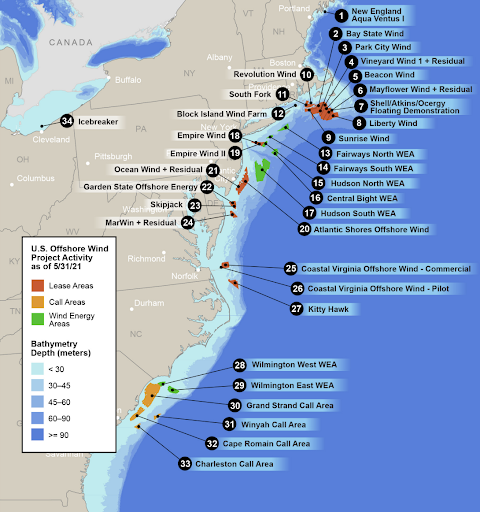
Introduction to Offshore Wind Energy
Offshore wind energy has been gaining significant attention in recent years, and for good reason. The potential economic benefits are staggering, with estimates suggesting that it could unlock up to $200 billion in investment opportunities. As we explore this emerging industry, it’s essential to understand the challenges and opportunities that come with harnessing the power of the ocean.
The Power of Offshore Wind
Offshore wind farms have the potential to generate a massive amount of electricity, with estimates suggesting that 1,300 gigawatts of capacity could be achieved along the coastlines of the United States. This is not only a game-changer for the energy sector but also provides a promising solution to reduce greenhouse gas emissions and mitigate climate change.
Why Offshore Wind Matters
Unlike traditional onshore wind farms, which tend to generate electricity during the morning hours when winds are typically stronger, offshore wind turbines can harness the strongest gusts of wind in the late afternoon. This is particularly beneficial for cities like Boston and New York, which rely heavily on electricity demand during these hours.
The Stanford University Study
A study conducted by the Stanford University team sheds light on the potential of offshore wind energy. The researchers estimate that the eastern coast of the United States could produce between 965 to 1,372 terawatt-hours (TWh) of electricity annually. This amount is sufficient to meet the energy needs of a third of the country.
Challenges and Opportunities
Despite the promising prospects, there are several challenges associated with offshore wind development. The primary concern revolves around selecting suitable locations for installation, as well as addressing concerns about costs. Currently, the cost of developing an offshore wind farm is significantly higher than that of onshore projects, making it a significant hurdle to overcome.
The Role of Floating Turbines
One potential solution to this problem involves the use of floating turbines, which can be deployed in deeper waters and reduce installation costs. However, these turbines also require specialized foundation designs, which can add complexity to the development process.
Strategic Placement for Maximum Impact
To maximize the effectiveness of offshore wind farms, it’s crucial to strategically place them along coastlines. This approach not only helps to mitigate transmission costs but also reduces the need for new transmission lines, a contentious issue in many regions.
Unlocking the Potential of Offshore Wind
By addressing the challenges and leveraging the opportunities presented by offshore wind energy, we can unlock its full potential. The Stanford University study provides valuable insights into the feasibility of large-scale offshore wind development, highlighting the importance of careful planning and strategic placement.
Case Study: The Block Island Wind Farm
The Block Island Wind Farm off the coast of Rhode Island is a prime example of successful offshore wind development. This 3-megawatt project was completed in 2016 and provides enough electricity to power approximately 1,000 homes. The project’s success has paved the way for future offshore wind developments along the East Coast.
Addressing Concerns About Costs
One of the primary concerns surrounding offshore wind development is the high cost of installation. However, as technology advances and more projects are developed, costs are expected to decrease significantly. For example, a study by the National Renewable Energy Laboratory (NREL) estimates that the cost of offshore wind energy could drop by up to 70% over the next decade.
Benefits Beyond Electricity Generation
Offshore wind farms also offer numerous benefits beyond electricity generation, including:
- Job Creation: Offshore wind development is expected to create thousands of jobs in the United States, both during construction and maintenance phases.
- Economic Growth: The offshore wind industry is projected to generate billions of dollars in economic activity each year, contributing significantly to local economies.
- Reduced Carbon Emissions: Offshore wind energy is a clean and renewable source of electricity, reducing greenhouse gas emissions and mitigating climate change.
Conclusion
Offshore wind energy has the potential to revolutionize the way we generate electricity, providing a cleaner, more sustainable alternative to traditional fossil fuels. As the industry continues to evolve, it’s essential that policymakers, developers, and stakeholders work together to address the challenges and capitalize on the opportunities presented by this emerging sector.
Frequently Asked Questions
- What is the estimated economic potential of offshore wind energy in the United States?
The estimated economic potential of offshore wind energy in the United States is $200 billion.
- How much electricity could be generated from offshore wind farms along the eastern coast of the United States?
Estimates suggest that 965 to 1,372 terawatt-hours (TWh) of electricity could be generated annually.
- What are some of the challenges associated with developing offshore wind farms?
The primary challenge is selecting suitable locations for installation, as well as addressing concerns about costs.
- How do floating turbines help address the cost issue in offshore wind development?
Floating turbines can reduce installation costs by being deployed in deeper waters.
- What role does strategic placement play in maximizing the effectiveness of offshore wind farms?
Strategic placement is crucial to mitigate transmission costs and reduce the need for new transmission lines.
- How do researchers at Stanford University contribute to the understanding of offshore wind energy?
The Stanford University team conducts studies that shed light on the potential of offshore wind energy, including its economic benefits and technical feasibility.
- What are some of the potential solutions to address the challenges associated with offshore wind development?
Potential solutions include using floating turbines, strategic placement, and addressing concerns about costs through innovative financing models.
- How can policymakers support the growth of the offshore wind industry in the United States?
Policymakers can create favorable policies, provide incentives for developers, and invest in research and development to drive innovation and reduce costs.
Recommendations for Future Research
To further unlock the potential of offshore wind energy, researchers should focus on:
- Advances in Floating Turbine Technology: Developing more efficient and cost-effective floating turbine designs that can be deployed in deeper waters.
- Improved Transmission Infrastructure: Investing in high-voltage direct current (HVDC) transmission systems to reduce transmission losses and increase the efficiency of offshore wind farms.
- Innovative Financing Models: Exploring new financing structures and incentives to reduce costs and make offshore wind energy more competitive with traditional fossil fuels.
By addressing these challenges and leveraging the opportunities presented by offshore wind energy, we can unlock its full potential and create a cleaner, more sustainable future for generations to come.


