
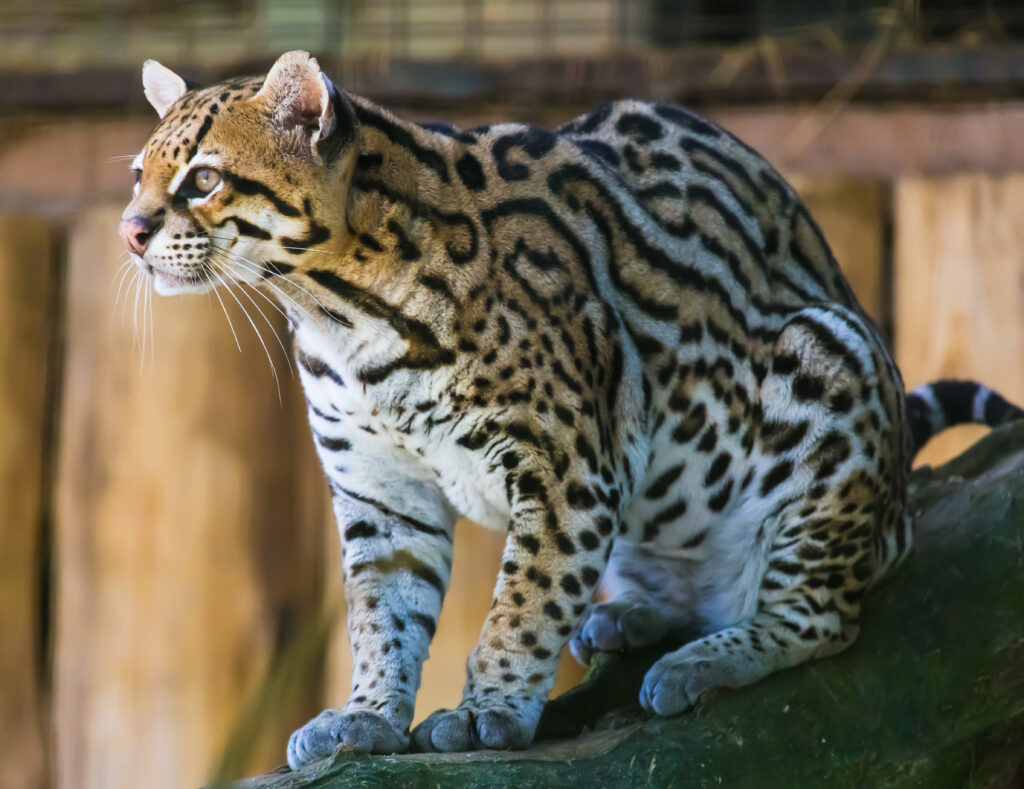
As we gaze into the eyes of an ocelot, it’s hard not to be captivated by their unique charm. These elusive cats are often misunderstood, with many viewing them solely as a source of luxury fur. However, this article aims to shift our perspective, delving into the fascinating world of ocelots, exploring their characteristics, habits, and conservation status.
What is an Ocelot?
The ocelot (Leopardus pardalis) is a member of the Felidae family, closely related to domestic cats like the Ocicat and Margay. Native to Central and South America, as well as parts of Mexico, these wildcats thrive in tropical environments, such as rainforests, dry forests, and mountainous regions.
Ocelot Characteristics: A Striking Appearance
Measuring between 1-2 meters in length, ocelots are agile and stealthy predators. Their distinctive coat features black and brown markings, with rosettes on the belly and white spots on the face, neck, and legs. The striking pattern of stripes and spots serves as camouflage, allowing them to ambush prey undetected.
Their fur is incredibly soft and thick, making it a highly sought-after commodity in the fashion world. However, this has led to extensive hunting and poaching, resulting in ocelots being listed as vulnerable on the IUCN Red List from 1972 to 1996.
Ocelot Pelts: A Treasure Trove of Soft Fur
The value of an ocelot’s fur lies not only in its softness but also in its rarity. The thick undercoat and long guard hairs make it difficult for hunters to obtain undamaged pelts, leading to a significant increase in poaching attempts. In response, many organizations have implemented anti-poaching efforts, working with local communities to educate them about the importance of preserving ocelot habitats.
Ocelot Cuddles: Raising Next-Generation
After a gestation period of approximately 80 days, litters typically consist of one or two young. The mother takes primary care, feeding and socializing the cubs during their first six weeks. As they grow, the cubs begin to accompany their mother on hunting trips, learning essential survival skills.
The mother’s role in raising her offspring is crucial, as she teaches them how to hunt, avoid predators, and navigate their territory. She also plays a vital part in maintaining social bonds within the family group, often grooming and cuddling with her kittens.
Ocelot Parenting: A Solo Act
Unlike some other big cats, ocelots are not particularly social animals. After a few months, the young ones venture out on their own, establishing territories and forging their own paths. This solitary lifestyle allows them to maintain independence and avoid potential conflicts with other individuals.
However, there have been instances where orphaned or injured ocelot cubs have been rehabilitated by conservation centers. These efforts aim to provide a safe environment for the cubs to grow and develop, eventually releasing them back into the wild when they are old enough.
The Challenges of Ocelot Allevement
Due to their wild nature and nocturnal habits, it’s challenging to keep ocelots as pets. These cats require large spaces to roam freely, and their hunting instincts make them prone to attacking other animals, including humans.
In addition to the practical difficulties, there are also ethical concerns surrounding the keeping of exotic pets. Ocelots have complex social and spatial needs that cannot be met in a domestic setting, making it essential to prioritize their welfare over human desires for ownership.
Conservation Efforts: Protecting the Ocelot’s Future
Thanks to animal welfare organizations and conservation groups, the ocelot’s status has improved over time. However, continued protection is essential to ensure the long-term survival of this magnificent species.
Some notable conservation initiatives include:
- Habitat preservation: Organizations are working to protect and restore ocelot habitats, including the creation of wildlife corridors and sustainable land-use practices.
- Anti-poaching efforts: Governments and NGOs are collaborating to combat poaching, using a combination of law enforcement, education, and community engagement.
- Research and monitoring: Scientists are studying ocelot behavior, population dynamics, and habitat needs to inform conservation strategies.
Frequently Asked Questions
- What is the average lifespan of an ocelot in the wild?
Ocelots can live up to 12 years in their natural habitat, although mortality rates tend to be higher among younger individuals. - Why are ocelots endangered?
Hunting for their fur and habitat destruction contribute to the decline of ocelot populations, with deforestation and urbanization posing significant threats to their habitats. - Can I have an ocelot as a pet?
It is not recommended due to their wild nature, territorial behavior, and hunting instincts, making it essential to prioritize their welfare over human desires for ownership. - What do ocelots primarily feed on?
Their diet consists mainly of small mammals, birds, reptiles, amphibians, and insects, which they hunt using stealth and agility. - How do ocelots communicate with each other?
They use vocalizations, scent marking, and visual displays to convey messages, often employing complex strategies to maintain social bonds within their family groups. - Can ocelots swim?
Yes, they are excellent swimmers and often hunt near water sources, using their agility and stealth to catch prey in aquatic environments. - Are ocelots social animals?
While not typically considered social, they do interact with their cubs and occasionally engage in play-fighting, demonstrating a complex social dynamic within the species. - What is the main threat to ocelot populations?
Habitat loss and fragmentation due to deforestation, agriculture, and urbanization pose significant threats to ocelot habitats, fragmenting their territories and reducing their access to resources.
By shedding light on these fascinating creatures, we can work together towards a future where ocelots continue to thrive in their natural habitats. As we strive for conservation success, it’s essential to prioritize the welfare of these magnificent animals, protecting their habitats, preventing poaching, and educating communities about the importance of preserving biodiversity.


