
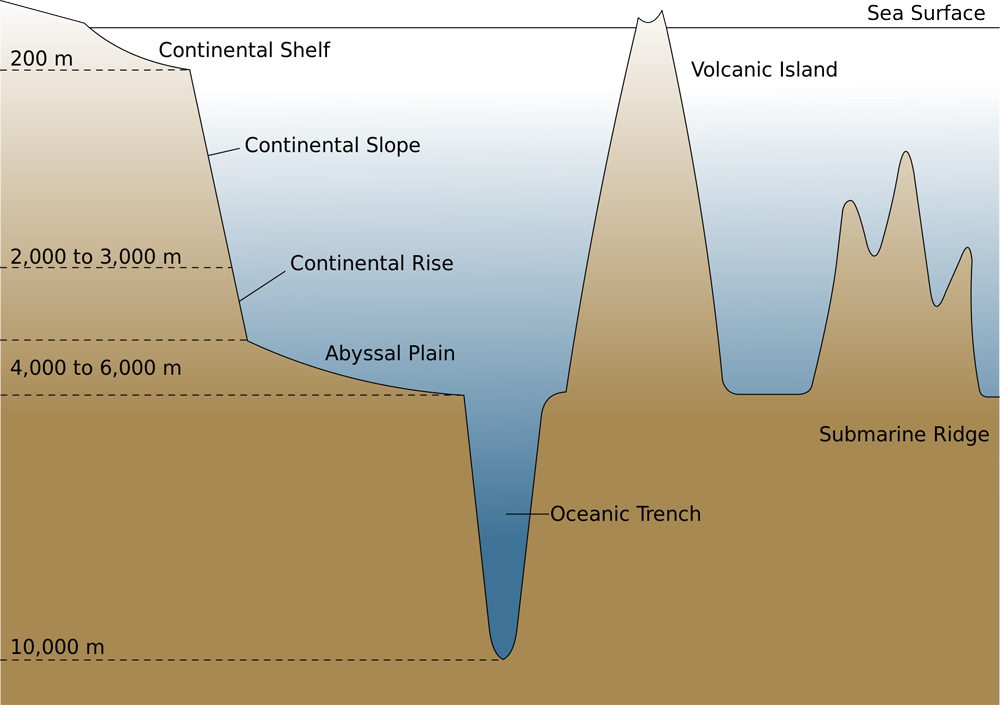
Imagine a vast, deep chasm in the middle of the ocean, stretching for thousands of kilometers and plunging into darkness. This is the oceanic trench, a phenomenon that has fascinated scientists and explorers alike for centuries. In this article, we will delve into the world of the oceanic trench, exploring its definition, characteristics, and the latest discoveries.
What is an Oceanic Trench?
An oceanic trench is a deep-sea depression in the ocean floor, typically formed as a result of plate tectonics. It can be thousands of kilometers long and reach depths of over 11,000 meters, making it one of the most extreme environments on Earth.
The term “trench” was first used by geologists to describe these deep-sea depressions, which were thought to be formed as a result of erosion or other geological processes. However, in recent years, scientists have come to realize that oceanic trenches are often the result of plate tectonics, where one plate sinks beneath another, creating a deep trough in the ocean floor.
The Deepest Oceanic Trench: The Mariana Trench
Located in the Pacific Ocean, the Mariana Trench is widely considered the deepest oceanic trench in the world. With a depth of approximately 10,994 meters, it is also the lowest point on our planet. This natural wonder was first explored by the Challenger Expedition in 1872-1876, which mapped the trench and discovered its extreme depths.
The Mariana Trench is a remarkable example of geological processes at work, where the Pacific plate has been subducted beneath the Philippine Sea plate, creating a deep depression in the ocean floor. The trench is characterized by steep slopes and a narrow valley, with the Challenger Deep being the lowest point in the trench.
Characteristics of Oceanic Trenches
Oceanic trenches are typically found near the boundary between two tectonic plates. They can be formed through a process called subduction, where one plate sinks beneath another, creating a deep trough in the ocean floor. The Mariana Trench, for example, is located near the boundary between the Pacific and Philippine Sea plates.
Other characteristics of oceanic trenches include:
- Extreme depths: Oceanic trenches are characterized by extreme depths, often exceeding 11,000 meters.
- High pressures: The pressure at the bottom of an oceanic trench can be crushing, reaching levels of over 1,000 times that of sea level.
- Limited visibility: The darkness and cold temperatures at the bottom of an oceanic trench make it difficult for humans to explore without specialized equipment.
- Unique ecosystems: Oceanic trenches are home to unique ecosystems that have adapted to the extreme conditions found in these environments.
Exploration of Oceanic Trenches
Over the years, several expeditions have explored the oceanic trenches, using advanced technology to map their depths and discover new species. In 2009, a robot named Nereus measured a depth of 10,902 meters in the Mariana Trench, while a sonar survey in 2011 estimated the depth at 10,994 ± 40 meters.
In 2012, an Australian team conducted a further expedition to explore the Mariana Trench. Led by explorer James Cameron, the expedition used a submersible vehicle called the Deepsea Challenger to reach depths of over 10,000 meters.
The Deep-Sea Challenger Expedition
James Cameron’s expedition to the Mariana Trench was a groundbreaking achievement in deep-sea exploration. The expedition aimed to explore the deepest point on Earth and collect data on the oceanic trench’s ecosystems and geological features.
On March 26, 2012, Cameron descended into the Challenger Deep in the Deepsea Challenger submersible vehicle. During his dive, he reached a depth of 10,908 meters, setting a new record for the deepest solo dive in history.
Oceanic Trenches and the Surrounding Environment
The oceanic trenches are home to unique ecosystems that have adapted to the extreme conditions found in these environments. Scientists have discovered new species, such as the deep-sea fish Pseudoliparis swirei, which can survive pressures of up to 1,600 times that of sea level.
Other examples of deep-sea creatures that thrive in oceanic trenches include:
- Giant tube worms: These worm-like creatures can grow up to 2 meters long and live in the oxygen-poor environments found near hydrothermal vents.
- Deep-sea fish: Species such as the anglerfish and the viperfish have evolved to live in the extreme conditions of the oceanic trenches.
Conclusion
In conclusion, the oceanic trenches are a fascinating and largely unexplored region of our planet. Through continued exploration and research, we can gain a deeper understanding of these extreme environments and the life forms that call them home.
As scientists continue to explore the oceanic trenches, they will likely discover new species and ecosystems that have adapted to the unique conditions found in these environments. The oceanic trenches are a reminder of the awe-inspiring diversity of life on Earth and the importance of preserving our planet’s natural resources for future generations.
Frequently Asked Questions (FAQs)
- What is an oceanic trench?
An oceanic trench is a deep-sea depression in the ocean floor, typically formed as a result of plate tectonics.
- Which is the deepest oceanic trench?
The Mariana Trench is widely considered the deepest oceanic trench in the world, with a depth of approximately 10,994 meters.
- How are oceanic trenches formed?
Oceanic trenches are typically formed through the process of subduction, where one plate sinks beneath another, creating a deep trough in the ocean floor.
- What is the deepest fish species found in an oceanic trench?
The Pseudoliparis swirei, also known as the “pink salmonfish,” is a deep-sea fish that has been discovered in the Mariana Trench, capable of surviving pressures of up to 1,600 times that of sea level.
- How do scientists explore oceanic trenches?
Scientists use advanced technology, such as submersible vehicles and sonar surveys, to map the depths of oceanic trenches and discover new species.
- What is the importance of studying oceanic trenches?
Studying oceanic trenches can provide valuable insights into the Earth’s geology and the life forms that call these extreme environments home.
- Can humans explore oceanic trenches safely?
While it is possible for humans to explore oceanic trenches, it requires specialized equipment and technology, as well as careful planning and preparation to ensure safety.
- What are the challenges of exploring oceanic trenches?
Exploring oceanic trenches poses several challenges, including extreme depths, high pressures, and limited visibility, which require advanced technology and specialized equipment.


