
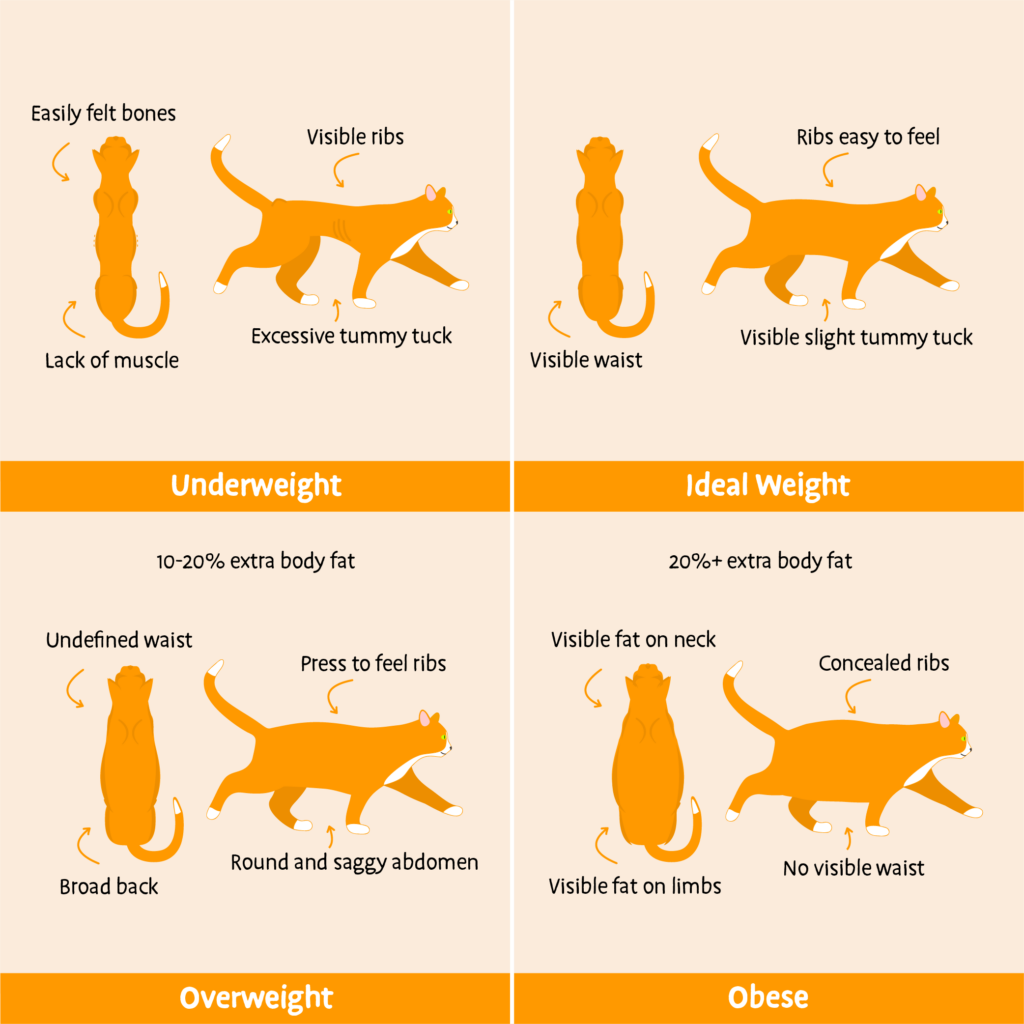
As a responsible cat owner, it’s natural to wonder how you can help your feline friend shed those extra pounds. Unfortunately, many cats have become obese due to factors such as poor diet, lack of exercise, and domestic habits that perpetuate unhealthy eating habits.
The Link Between Obesity and Health Issues
Research shows that one in four cats is now overweight or obese, leading to serious health problems and a reduced lifespan. This is not just an aesthetic issue; obesity can increase the risk of cardiovascular disease, diabetes, arthritis, and liver damage. It’s essential to take action before it’s too late.
Calculating Your Cat’s Ideal Weight
Determining your cat’s ideal weight can be challenging, as it depends on factors such as age, sex, breed, and body structure. However, a good rule of thumb is to weigh your cat compared to its expected size. Consult with your veterinarian to determine the ideal weight for your cat.
What Constitutes Obesity in Cats?
If your cat’s weight exceeds 40% of its ideal weight, it may be considered obese. To measure your cat’s weight accurately, take it in your arms and weigh yourself simultaneously. Subtracting your combined weights will give you an accurate measurement.
Causes of Feline Obesity
Several factors contribute to obesity in cats:
- Sedentary lifestyle: Cats that spend most of their time indoors may not get enough exercise.
- Poor diet: Feeding your cat table scraps, human food, or overfeeding can lead to weight gain.
- Lack of discipline: Allowing your cat to graze throughout the day can perpetuate unhealthy eating habits.
Consequences of Obesity in Cats
Obesity can have severe consequences for your feline friend’s health, including:
- Cardiovascular disease
- Diabetes
- Arthritis
- Liver damage
- Decreased lifespan
Lifestyle Changes to Help Your Cat Lose Weight
To help your cat achieve a healthy weight, make the following lifestyle changes:
- Increase Exercise: Engage your cat in playtime activities such as chasing toys or laser pointers for at least 10-20 minutes daily.
- Adjust Diet: Feed your cat a balanced, nutrient-rich diet with portion control. Avoid overfeeding and table scraps.
- Play with Interactive Toys: Use interactive toys to stimulate your cat’s natural hunting instinct and encourage physical activity.
- Limit Treats: Limit treats to avoid overfeeding and maintain a healthy weight.
Consulting Your Veterinarian
If you suspect your cat is overweight or obese, consult with your veterinarian for personalized advice on how to help your feline friend achieve a healthy weight. A well-balanced diet, regular exercise, and portion control can make all the difference in maintaining a healthy lifestyle.
FAQs
- Q: How do I know if my cat is obese?
- Consult with your veterinarian for an accurate assessment.
- Q: What are some ways to encourage physical activity in my cat?
- Engage your cat in playtime activities, use interactive toys, and provide plenty of vertical space for climbing.
- Q: Can I help my obese cat lose weight at home?
- Yes, by making lifestyle changes such as adjusting diet, increasing exercise, and limiting treats.
- Q: What are some common health problems associated with feline obesity?
- Cardiovascular disease, diabetes, arthritis, liver damage, and decreased lifespan.
By understanding the causes of feline obesity and making simple lifestyle changes, you can help your cat achieve a healthy weight and reduce the risk of associated health issues.



