
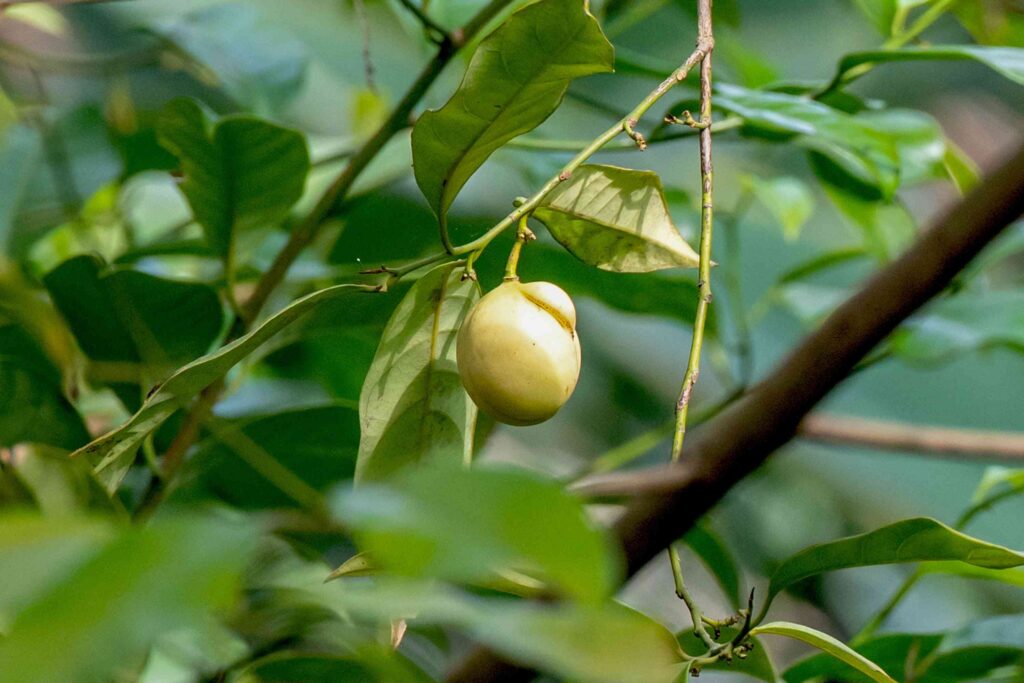
1. Introduction to Myristica fragrans
Myristica fragrans, commonly known as the nutmeg tree, is a plant species native to the Moluccas in Indonesia. This evergreen tree can grow up to 20 meters tall and has distinctive characteristics that make it an interesting subject for study.
The nutmeg tree has been a prized commodity for centuries, with its aromatic seeds used to flavor food, create medicines, and even perfume. However, beyond its culinary and medicinal uses, the nutmeg tree holds secrets about its cultivation, benefits, and risks.
2. Characteristics of Myristica fragrans
The nutmeg tree is dioecious, meaning that male and female flowers are found on different trees. This unique characteristic makes it easy to cultivate this plant, as farmers can identify which trees produce fruit and plan accordingly.
Additionally, the nutmeg tree has a distinctive shape with long, dark green leaves and small yellow flowers that bloom throughout the year. These flowers eventually develop into the noce moscata, also known as the nutmeg seed.
3. History of Myristica fragrans
The nutmeg tree is believed to have originated in the Moluccas, an archipelago in Indonesia. It was first cultivated by the Portuguese around 1500, and its popularity spread throughout Europe during the 16th century. Today, it is widely grown in tropical regions such as China, Taiwan, India, and South America.
The nutmeg tree has a rich history, with various cultures utilizing its seeds and bark for different purposes. In traditional medicine, the nutmeg seed was used to treat a range of ailments, from digestive issues to respiratory problems.
4. Cultivation Challenges
Cultivating the nutmeg tree in Italy is not feasible due to the country’s temperate climate. The plant requires a warm and humid environment, making it difficult to grow indoors without specialized equipment like greenhouses.
Growing conditions for Myristica fragrans are typically optimal in tropical regions with high humidity and temperatures between 20-30 degrees Celsius. Farmers must also ensure that the soil is well-draining and fertile, as the nutmeg tree is susceptible to root rot if the soil is too wet or dry.
5. Growing Conditions for Myristica fragrans
To successfully cultivate the nutmeg tree, you’ll need:
- A large, well-ventilated greenhouse
- A fertile, well-draining soil
- Full sun exposure
- Patience (germination takes around 1-3 months)
Growing conditions can vary depending on the specific region and climate. In some areas, farmers may use techniques like mulching or irrigation to create a more favorable environment for the nutmeg tree.
6. Benefits of Myristica fragrans
The nutmeg tree offers several benefits:
- Provides a source of income for farmers through the sale of spices and essential oils
- Offers medicinal properties, including pain relief and anti-inflammatory effects
- Can be used as a natural pest repellent
In addition to its practical uses, the nutmeg tree has been associated with various cultural and spiritual practices. In some African cultures, the nutmeg seed is believed to possess spiritual significance.
7. Oils and Spices Derived from Myristica fragrans
The nutmeg tree is a rich source of various oils and spices:
- Essential Oil: Extracted from the seeds and bark, this oil has antimicrobial and antifungal properties.
- Nutmeg Spice: The dried seed of the tree, often used in baking and cooking.
- Macis: The aril surrounding the seed, rich in antioxidants.
These oils and spices can be used in a variety of ways, from culinary applications to traditional medicine. However, they should always be handled with care, as excessive consumption can lead to adverse effects.
8. Effects on Human Health
Research suggests that Myristica fragrans may have several health benefits:
- Antimicrobial properties to combat infections
- Anti-inflammatory effects for pain relief
- Antioxidant properties for overall well-being
However, more research is needed to fully understand the potential health benefits and risks associated with the nutmeg tree.
9. Risks and Side Effects
While the nutmeg tree has several benefits, it can also cause:
- Allergic reactions in some individuals
- Overdose of essential oil or spices, leading to adverse effects
It is essential to handle the nutmeg tree and its products with care, as excessive consumption can lead to serious health issues.
10. Future Research Directions
Further research is needed to fully understand the potential benefits and risks associated with Myristica fragrans. This includes:
- Studying the antimicrobial properties of the essential oil
- Investigating the anti-inflammatory effects of the nutmeg spice
- Exploring the antioxidant properties of the macis


