
Understanding the Science Behind the Phenomenon
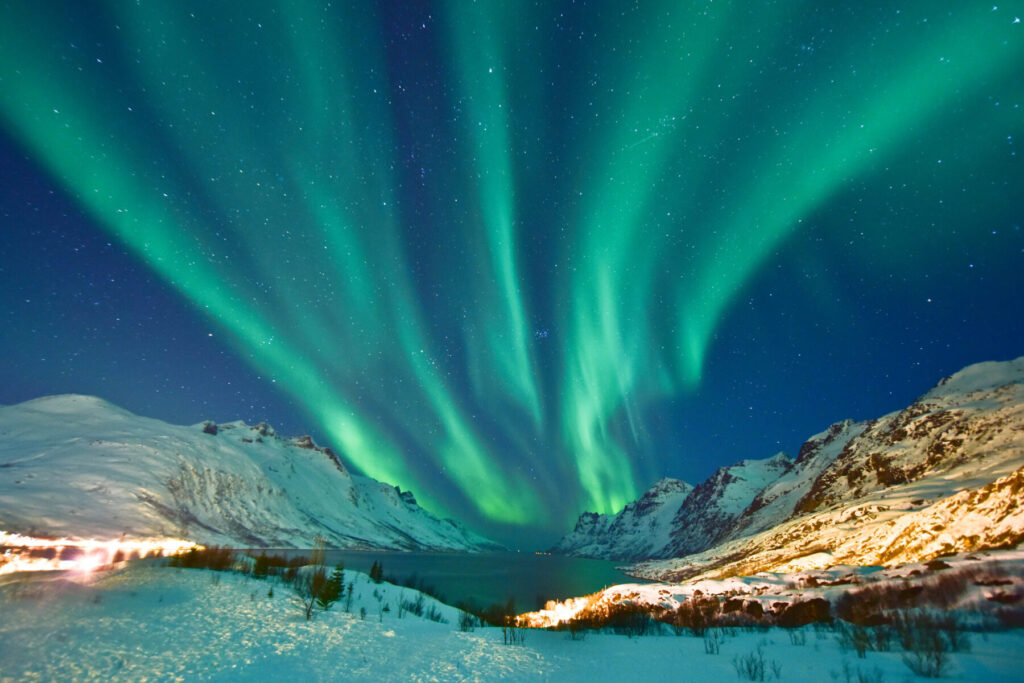
Aurora boreale, also known as the northern lights, is a breathtaking natural phenomenon that appears in the sky as colorful displays of light. It has been a source of fascination for centuries, with various cultures and legends attempting to explain its origins. In this article, we will delve into the science behind the aurora borealis and explore the best locations and times to witness this spectacular display.
Aurora Boreale: A Lucid Description
Imagine witnessing a celestial show of lights that dance across the sky, with colors ranging from green to blue, purple, and even yellow. The aurora borealis appears as a spectacle in the night sky, leaving onlookers in awe. However, it’s not just a matter of chance; there are scientific explanations for this phenomenon.
When massive solar explosions occur, they release an abundance of charged particles that interact with our planet’s magnetic field. These interactions cause the atoms and molecules in the Earth’s atmosphere to become excited, resulting in the emission of light. This process creates the breathtaking displays we witness as the aurora borealis.
The Solar Cycle: A Key Factor in Aurora Borealis
The solar cycle is a crucial factor in determining the frequency and intensity of aurora borealis sightings. The solar cycle refers to the 11-year periodicity of sunspot activity, which affects the amount of charged particles emitted by the Sun. During periods of high solar activity, more charged particles are released into space, increasing the likelihood of an aurora borealis.
The Earth’s Magnetic Field: A Shield Against Solar Charges
The Earth’s magnetic field acts as a shield against solar charges, protecting our planet from the harmful effects of charged particles. However, this shield also plays a crucial role in the formation of the aurora borealis. When solar charges interact with the Earth’s magnetic field, they cause the atoms and molecules in the atmosphere to become excited, leading to the emission of light.
Atmospheric Conditions: Affecting the Color and Intensity of Aurora Borealis
The color and intensity of the aurora borealis are affected by atmospheric conditions. Green is the most common color, produced by collisions between oxygen atoms and solar charges. Red is produced by collisions between oxygen atoms and solar charges at higher altitudes. Blue is produced by collisions between nitrogen molecules and solar charges.
Best Locations for Viewing Aurora Borealis
The aurora borealis can be seen in various parts of the world, but some locations are more favorable than others. In general, it is visible in the Northern Hemisphere during the winter months, particularly around the equinoxes in February and March.
Some of the best locations for viewing the aurora borealis include:
- Lapland (Finland/Sweden/Norway): The northernmost parts of these countries offer some of the best views of the aurora borealis.
- Alaska: This state in the United States offers excellent opportunities to see the aurora borealis, especially in the winter months.
- Canada: The provinces of Quebec and Ontario are among the best places to witness this phenomenon.
- Iceland: Known for its unique landscapes, Iceland is also a popular destination for viewing the aurora borealis.
Tips for Viewing the Aurora Borealis
To increase your chances of witnessing the aurora borealis, consider the following tips:
- Travel during peak season: The best time to see the aurora borealis is between September and April, when the nights are longest.
- Head north: Places near the Arctic Circle offer the best views of the aurora borealis.
- Find a dark location: Get away from city lights to increase your chances of spotting this phenomenon.
- Be prepared for late nights: The aurora borealis is typically most active around midnight.
Aurora Borealis: A Magical Experience
Viewing the aurora borealis is an experience that few people can put into words. It’s a feeling of awe and wonder, as if witnessing a celestial ballet in the sky. If you ever have the chance to see this phenomenon firsthand, take it – it’s an experience you’ll never forget.
Aurora Borealis in Popular Culture
The aurora borealis has been featured in various forms of popular culture, including literature, music, and art. The northern lights have also inspired numerous myths and legends throughout history.
- Norse Mythology: In Norse mythology, the aurora borealis was believed to be caused by the goddess Freyja’s necklace, Brisingamen.
- Alaskan Folklore: In Alaskan folklore, the aurora borealis is often referred to as “the great lights” or “the dancing lights”.
- Literature: The aurora borealis has been featured in numerous literary works, including Walt Whitman’s poem “Auroral Song”.
Conclusion
The aurora borealis is a breathtaking natural phenomenon that continues to captivate audiences around the world. By understanding the science behind this spectacle and learning about the best locations and times to view it, anyone can experience the magic of the northern lights.
Whether you’re a seasoned astronomer or simply someone who appreciates the beauty of nature, the aurora borealis is sure to leave you in awe. So next time you have the chance to witness this phenomenon firsthand, don’t hesitate – take the opportunity to experience one of the most spectacular displays of light in the natural world.


