
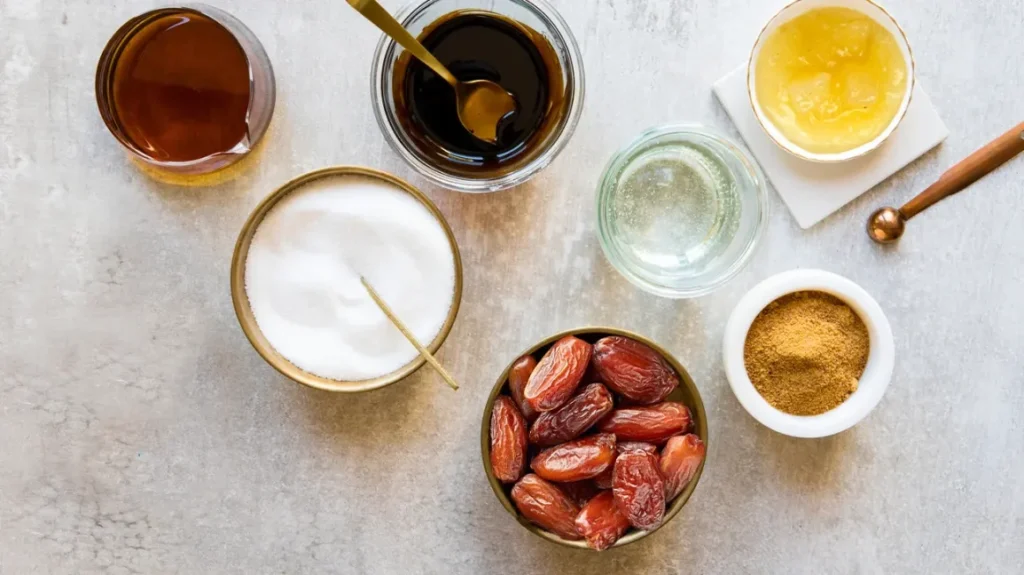
Before we dive into the world of natural sweeteners, let’s talk about why it’s essential to choose alternatives to refined sugar. Refined sugar, also known as white sugar, is often made from sugarcane or beets and undergoes a filtering process that removes its beneficial nutrients. This processing also increases the sugar’s empty calorie count, making it detrimental to our health.
Alternatives to Refined Sugar
Here are some natural sweeteners you can consider:
1. Unrefined Sugars: The Good, the Bad, and the Ugly
- Refined Sugars: Refined sugars like white sugar and high-fructose corn syrup are highly processed and stripped of their beneficial nutrients.
- Unrefined Sugarcane and Beets: Unrefined sugarcane and beets contain more minerals than refined sugar but still have a similar calorie count.
2. Stevia: The Zero-Calorie Superstar
Stevia is one of the most popular natural sweeteners, with a sweetness level 250 times that of sugar. It’s also zero-calorie and has no impact on blood sugar levels.
Benefits of Stevia
- Zero Calories: Stevia is a zero-calorie sweetener, making it an excellent option for those watching their calorie intake.
- Blood Sugar Control: Stevia has no impact on blood sugar levels, making it suitable for individuals with diabetes or those who want to manage their blood sugar levels.
- Antioxidant Properties: Stevia contains antioxidants that can help protect the body against free radicals and oxidative stress.
How to Use Stevia
- Start Small: Begin with a small amount of stevia (about 1/4 teaspoon) and adjust to taste, as it can be quite sweet.
- Choose High-Quality Stevia: Opt for high-quality stevia products that are free from additives and fillers.
3. Coconut Sugar: A Nutrient-Rich Alternative
Coconut sugar is made from the sap of coconut trees and contains more minerals than refined sugar. However, it still has a similar calorie count to white sugar.
Benefits of Coconut Sugar
- Mineral Content: Coconut sugar contains more minerals like iron, zinc, and potassium compared to refined sugar.
- Lower Glycemic Index: Coconut sugar has a lower glycemic index than refined sugar, making it suitable for those who want to manage their blood sugar levels.
- Rich in Antioxidants: Coconut sugar is rich in antioxidants that can help protect the body against free radicals and oxidative stress.
How to Use Coconut Sugar
- Replace Refined Sugar: Replace refined sugar with coconut sugar in your favorite recipes, keeping in mind that it has a slightly different flavor profile.
- Choose High-Quality Coconut Sugar: Opt for high-quality coconut sugar products that are free from additives and fillers.
4. Maple Syrup: The King of Natural Sweeteners
Maple syrup is made from the sap of maple trees and contains a wealth of nutrients like vitamins and minerals. It’s also high in antioxidants and has antimicrobial properties.
Benefits of Maple Syrup
- Rich in Nutrients: Maple syrup is rich in nutrients like manganese, zinc, and potassium.
- Antioxidant Properties: Maple syrup contains antioxidants that can help protect the body against free radicals and oxidative stress.
- Antimicrobial Properties: Maple syrup has antimicrobial properties that can help soothe digestive issues.
How to Use Maple Syrup
- Use Moderation: Use maple syrup in moderation, as it is high in calories. Start with a small amount (about 1/4 teaspoon) and adjust to taste.
- Choose High-Quality Maple Syrup: Opt for high-quality maple syrup products that are free from additives and fillers.
5. Honey: The Golden Nectar
Honey is a natural sweetener made by bees from the nectar of flowers. It contains antibacterial and antifungal properties, making it a great addition to your diet.
Benefits of Honey
- Antibacterial Properties: Honey has antibacterial properties that can help soothe digestive issues.
- Antioxidant Properties: Honey is rich in antioxidants that can help protect the body against free radicals and oxidative stress.
- Prebiotic Properties: Honey contains prebiotics that can help support gut health.
How to Use Honey
- Use Moderation: Use honey in moderation, as it is high in calories. Start with a small amount (about 1/4 teaspoon) and adjust to taste.
- Choose High-Quality Honey: Opt for high-quality honey products that are free from additives and fillers.
6. Date Sugar: The Sweetest Alternative
Date sugar is made from dried dates and contains more minerals than refined sugar. However, it still has a similar calorie count to white sugar.
Benefits of Date Sugar
- Mineral Content: Date sugar contains more minerals like potassium and magnesium compared to refined sugar.
- Lower Glycemic Index: Date sugar has a lower glycemic index than refined sugar, making it suitable for those who want to manage their blood sugar levels.
- Rich in Antioxidants: Date sugar is rich in antioxidants that can help protect the body against free radicals and oxidative stress.
How to Use Date Sugar
- Replace Refined Sugar: Replace refined sugar with date sugar in your favorite recipes, keeping in mind that it has a slightly different flavor profile.
- Choose High-Quality Date Sugar: Opt for high-quality date sugar products that are free from additives and fillers.
7. Molasses: The Dark Horse of Natural Sweeteners
Molasses is a thick, dark liquid made from refining sugar cane or sugar beets. It’s high in iron and other minerals, making it a great addition to your diet.
Benefits of Molasses
- High in Iron: Molasses is rich in iron, which can help prevent anemia.
- Mineral Content: Molasses contains more minerals like potassium and magnesium compared to refined sugar.
- Antioxidant Properties: Molasses is rich in antioxidants that can help protect the body against free radicals and oxidative stress.
How to Use Molasses
- Use Moderation: Use molasses in moderation, as it is high in calories. Start with a small amount (about 1/4 teaspoon) and adjust to taste.
- Choose High-Quality Molasses: Opt for high-quality molasses products that are free from additives and fillers.
8. Agave Nectar: The Low-Calorie Superstar
Agave nectar is a low-calorie sweetener made from the agave plant. It’s also zero-calorie and has no impact on blood sugar levels.
Benefits of Agave Nectar
- Zero Calories: Agave nectar is a zero-calorie sweetener, making it an excellent option for those watching their calorie intake.
- Blood Sugar Control: Agave nectar has no impact on blood sugar levels, making it suitable for individuals with diabetes or those who want to manage their blood sugar levels.
- Antioxidant Properties: Agave nectar contains antioxidants that can help protect the body against free radicals and oxidative stress.
How to Use Agave Nectar
- Start Small: Begin with a small amount of agave nectar (about 1/4 teaspoon) and adjust to taste, as it can be quite sweet.
- Choose High-Quality Agave Nectar: Opt for high-quality agave nectar products that are free from additives and fillers.
9. Yacon Syrup: The Sweetest Alternative to Sugar
Yacon syrup is a sweetener made from the root of the yacon plant. It contains prebiotic fibers, making it a great addition to your diet.
Benefits of Yacon Syrup
- Prebiotic Properties: Yacon syrup contains prebiotics that can help support gut health.
- Antioxidant Properties: Yacon syrup is rich in antioxidants that can help protect the body against free radicals and oxidative stress.
- Low Glycemic Index: Yacon syrup has a low glycemic index, making it suitable for those who want to manage their blood sugar levels.
How to Use Yacon Syrup
- Use Moderation: Use yacon syrup in moderation, as it is high in calories. Start with a small amount (about 1/4 teaspoon) and adjust to taste.
- Choose High-Quality Yacon Syrup: Opt for high-quality yacon syrup products that are free from additives and fillers.
10. Lucuma Powder: The Superfood of Natural Sweeteners
Lucuma powder is made from the lucuma fruit and contains a wealth of nutrients like vitamins and minerals. It’s also high in antioxidants and has antimicrobial properties.
Benefits of Lucuma Powder
- Rich in Vitamins and Minerals: Lucuma powder is rich in vitamins and minerals like vitamin C, potassium, and magnesium.
- Antioxidant Properties: Lucuma powder contains antioxidants that can help protect the body against free radicals and oxidative stress.
- Antimicrobial Properties: Lucuma powder has antimicrobial properties that can help soothe digestive issues.
How to Use Lucuma Powder
- Use Moderation: Use lucuma powder in moderation, as it is high in calories. Start with a small amount (about 1/4 teaspoon) and adjust to taste.
- Choose High-Quality Lucuma Powder: Opt for high-quality lucuma powder products that are free from additives and fillers.
By incorporating these natural sweeteners into your diet, you can enjoy the benefits of improved health, reduced sugar intake, and a lower risk of chronic diseases.


