
As we go about our daily lives, it’s not uncommon to experience discomfort in our teeth. Sensitive teeth can be a real nuisance, making us hesitant to indulge in the foods and drinks we love. But what causes tooth sensitivity, and are there any natural remedies that can help alleviate the problem?
Understanding Tooth Sensitivity
Tooth sensitivity is a common issue that affects millions of people worldwide. It’s characterized by pain or discomfort when teeth come into contact with hot or cold temperatures, sweet or sour tastes, or even breathing air through the teeth. This sensitivity can be caused by worn-out enamel, tooth decay, improper use of dental tools like toothbrushes and interdental floss, or even gingival diseases.
But what’s interesting is that tooth sensitivity isn’t always a sign of a serious problem like tooth decay. In many cases, it’s just a minor issue that can be easily resolved with some simple remedies.
When to Seek Professional Help
If you’re experiencing persistent or severe tooth sensitivity, it’s essential to consult a dentist as soon as possible. Tooth decay is often the underlying cause of sensitive teeth, and ignoring this problem can lead to more serious issues down the line.
In fact, if you notice any of the following symptoms, you should make an appointment with your dentist:
- Severe pain or discomfort
- Discoloration or swelling of the gums
- A bad taste in the mouth
- Bad breath
Risk Factors for Tooth Sensitivity
While anyone can experience tooth sensitivity, some people are more prone to it than others. Here are some common risk factors that may increase your chances of developing sensitive teeth:
- Age: As we age, our enamel naturally wears away, making us more susceptible to sensitivity.
- Diet: Consuming foods and drinks high in acidity can erode tooth enamel and lead to sensitivity.
- Genetics: Some people may be more prone to sensitivity due to their genetic makeup.
- Tooth decay: Untreated cavities can cause sensitive teeth, so regular dental check-ups are essential.
- Gingivitis diseases: Periodontal disease can cause inflammation and irritation of the gums, leading to sensitivity.
Natural Remedies for Sensitive Teeth
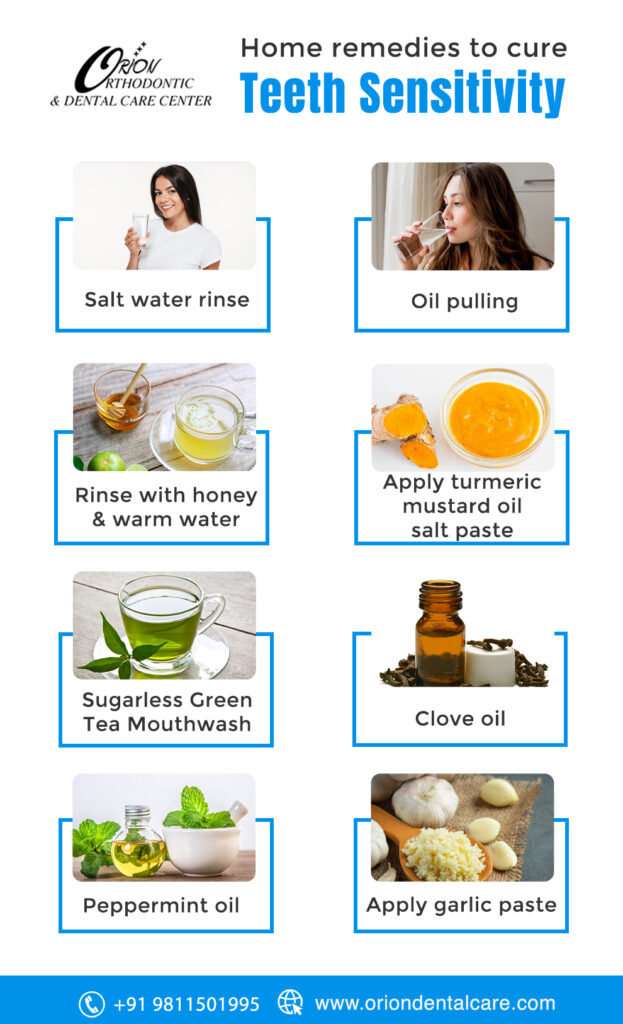
If your tooth sensitivity is not related to tooth decay, don’t worry! There are several natural remedies that can help alleviate the problem. Here are some effective ones:
Essential Oils
One popular remedy for sensitive teeth is using essential oils. Peppermint oil and cinnamon oil are two of the most recommended essential oils for this purpose. Simply massage a few drops onto your teeth, three times a week, to reduce sensitivity.
For more information on these essential oils, including their benefits, uses, and where to buy them, be sure to check out our dedicated pages:
- Peppermint Oil
- Cinnamon Oil
Sensitive Teeth Toothpaste
Using a toothpaste specifically designed for sensitive teeth can also help alleviate the problem. Some toothpastes even contain ingredients like thyme oil, which is known for its antibacterial properties.
When shopping for a toothpaste, look for one that contains these natural ingredients and avoid using regular toothpaste with harsh chemicals.
Saltwater Gargle
Saltwater gargling has been a long-standing remedy for sensitive teeth. Simply dissolve two teaspoons of salt in warm water, mix well, and gargle twice a day to reduce sensitivity.
Baking Soda
Just like salt, baking soda is another ancient homemade remedy for sensitive teeth. Mix 1/4 teaspoon of baking soda with 1/4 cup of water to create a solution that can help neutralize acid and reduce sensitivity.
Salivation
Good salivation can do wonders for your teeth! Masticating sugar-free chewing gum can stimulate saliva production, which helps to protect your teeth from acid attacks and sensitivity.
Interdental Floss
Using interdental floss correctly and regularly is also crucial in preventing gingivitis diseases and sensitive teeth. For more information on how to use interdental floss effectively, check out our dedicated page:
- How to Use Interdental Floss
Other Natural Remedies for Sensitive Teeth
In addition to these natural remedies, there are other ways to alleviate tooth sensitivity:
- Desensitizing Toothpaste: Look for toothpastes containing ingredients like potassium nitrate or strontium chloride, which can help block the dentinal tubules and reduce sensitivity.
- Fluoride Mouthwash: Using a fluoride mouthwash can also help strengthen tooth enamel and reduce sensitivity.
- Avoiding Trigger Foods: Identify and avoid foods that trigger sensitivity, such as those high in acidity or sugar.
Preventing Tooth Sensitivity
While natural remedies can help alleviate tooth sensitivity, it’s essential to take preventive measures to avoid this problem altogether:
- Regular Dental Check-Ups: Regular dental check-ups can detect any issues early on, preventing sensitive teeth from developing.
- Good Oral Hygiene: Brushing and flossing regularly can prevent plaque buildup and gingivitis diseases, which can lead to sensitivity.
- Avoiding Hard or Sharp Foods: Avoid biting or chewing hard foods like ice, nuts, or hard candy, which can damage your enamel.
Conclusion
Tooth sensitivity can be a frustrating issue, but with the right natural remedies and a bit of self-care, you can alleviate the problem and enjoy your favorite foods and drinks without discomfort. Remember to consult a dentist if your symptoms persist or worsen over time.
By understanding the causes of tooth sensitivity and incorporating these natural remedies into your daily routine, you can take control of your oral health and say goodbye to sensitive teeth for good!


