
As we step into the Italian countryside, we find ourselves amidst a treasure trove of untouched landscapes, diverse ecosystems, and breathtaking vistas. From the snow-capped mountains to the crystal-clear lakes and coastlines, Italy is home to 25 incredible national parks that showcase the country’s rich natural heritage.
In this article, we’ll delve into the world of Italian national parks, exploring their unique characteristics, features, and attractions. We’ll also examine the role these parks play in preserving Italy’s environmental and cultural heritage for future generations.
What are National Parks in Italy?
National parks in Italy are areas designated by the State due to their exceptional environmental and naturalistic value. These protected regions boast intact ecosystems, diverse wildlife, and unique geological formations that are a testament to the country’s rich biodiversity. By preserving these national parks, we ensure that future generations can continue to enjoy and appreciate Italy’s natural beauty.
A List of 25 National Parks in Italy
Below is a comprehensive list of all 25 national parks in Italy, along with links to individual park profiles featuring stunning photos and videos:
- Parco Nazionale d’Abruzzo, Lazio e Molise
- Parco Nazionale dell’Alta Murgia
- Parco Nazionale dell’appennino Lucano – Val d’Agri-Lagonegrese
- Parco Nazionale dell’Appennino Tosco-Emiliano
- Parco Nazionale dell’Arcipelago di La Maddalena
- Parco Nazionale dell’Arcipelago Toscano
- Parco Nazionale dell’Asinara
- Parco Nazionale dell’Aspromonte
- Parco Nazionale del Cilento, Vallo di Diano e Alburni
- Parco Nazionale delle Cinque Terre
- Parco Nazionale del Circeo
- Parco Nazionale delle Dolomiti Bellunesi
- Parco Nazionale delle Foreste Casentinesi, Monte Falterona e Campigna
- Parco Nazionale del Gargano
- Parco Nazionale del Gran Paradiso
- Parco Nazionale del Gran Sasso e Monti della Laga
- Parco Nazionale del Golfo di Orosei e del Gennargentu
- Parco Nazionale della Majella
- Parco Nazionale dei Monti Sibillini
- Parco Nazionale del Pollino
- Parco Nazionale della Sila
- Parco Nazionale dello Stelvio
- Parco Nazionale della Val Grande
- Parco Nazionale del Vesuvio
- Parco Nazionale dell’Isola di Pantelleria
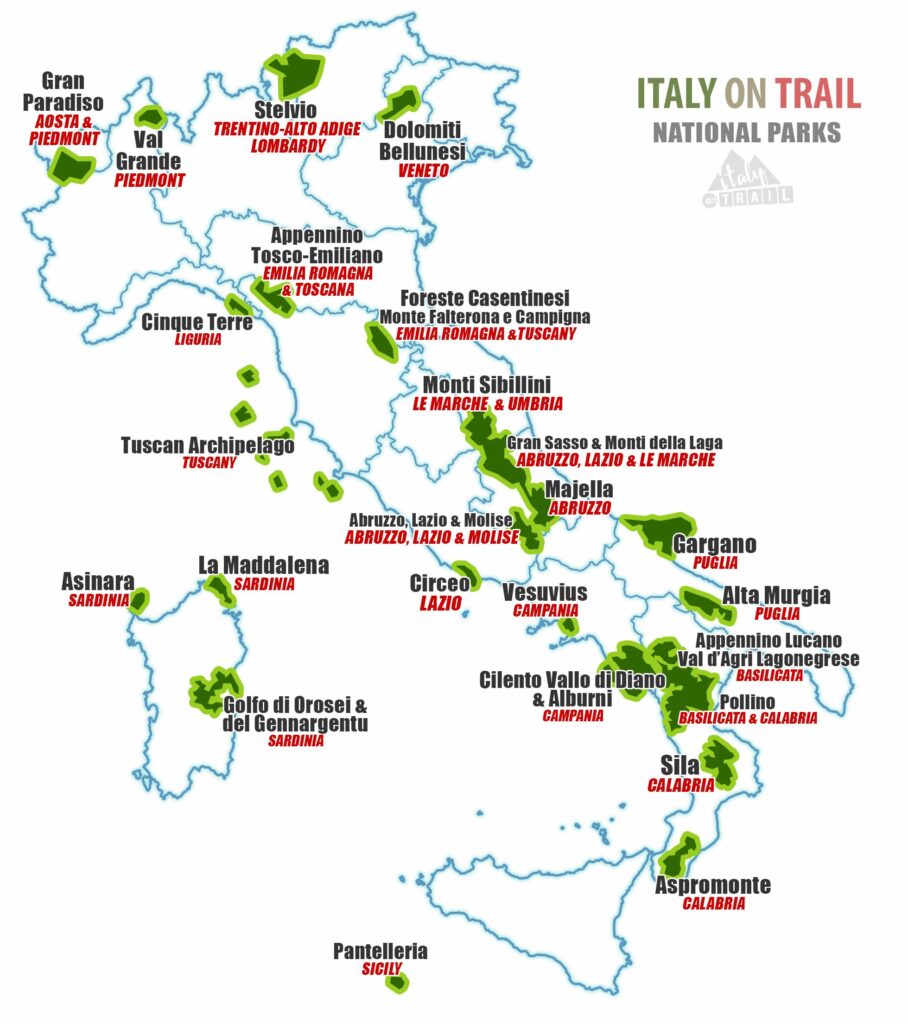
Map of the National Parks in Italy
The map below, provided by the Ministry of Environment, allows you to visualize the location and proximity of each national park to major Italian cities.
[Insert map]
Videos on the National Parks in Italy
We invite you to explore some of these incredible parks through our selection of videos featuring stunning landscapes, wildlife, and unique geological formations:
[Insert video links]
Marine Protected Areas and Natural Reserves in Italy
In addition to the 25 national parks, Italy boasts an impressive network of marine protected areas and natural reserves. These protected regions cover approximately 222,000 hectares of coastline and sea, providing a safe haven for marine life and promoting sustainable tourism.
Some notable marine protected areas include:
- Cetacean Sanctuary: Covering parts of Liguria, Tuscany, north Sardinia, Corsica, and the eastern Mediterranean coastline
- Torre del Cerrano Marine Nature Reserve (Calabria)
- Capo Rizzuto Marine Nature Reserve (Campania)
These marine protected areas regulate human activities that could harm the environment, such as entry with polluting vehicles, recreational or professional fishing, and submarine dives.
Superregional Marine Protected Areas
Below is a list of superregional marine protected areas in Italy:
- Cetacean Sanctuary
- Torre del Cerrano Marine Nature Reserve
- Capo Rizzuto Marine Nature Reserve
- Punta Campanella Marine Nature Reserve
- Regno Marino della Cinque Terre (Cinque Terre Marine Reserve)
- Portofino Marine Nature Reserve
- Isola di Bergeggi Marine Nature Reserve
History of Italian National Parks
The concept of national parks in Italy dates back to the early 20th century, with the establishment of the first protected areas in the Dolomites and the Gran Paradiso mountains.
In the 1960s and 1970s, the Italian government expanded its network of protected regions, establishing new parks and reserves across the country. This expansion was driven by concerns about environmental degradation, urbanization, and the loss of natural habitats.
Today, Italy’s national parks are recognized as some of the most important protected areas in Europe, providing a safeguard for biodiversity and promoting sustainable tourism.
Conservation Efforts in Italian National Parks
Italian national parks play a crucial role in conservation efforts, protecting not only the environment but also cultural heritage sites, archaeological ruins, and unique geological formations.
Some notable conservation projects include:
- Wildlife preservation: Italian national parks are home to a wide range of wildlife, including endangered species such as the brown bear, wolf, and lynx.
- Ecological restoration: Many parks have implemented ecological restoration projects, aimed at restoring degraded habitats and promoting biodiversity.
- Cultural heritage conservation: Italian national parks often include cultural heritage sites, such as ancient ruins and medieval towns, which are protected for their historical significance.
Economic Benefits of Italian National Parks
Italian national parks not only provide environmental benefits but also contribute significantly to the local economy through tourism.
Some notable economic benefits include:
- Job creation: National parks employ thousands of people in the hospitality, tourism, and conservation sectors.
- Local development: Park-based tourism initiatives promote local development, supporting small businesses and community projects.
- Sustainable livelihoods: Parks provide sustainable livelihoods for local communities through eco-tourism, sustainable agriculture, and forestry practices.
Challenges Facing Italian National Parks
Despite the many benefits of Italian national parks, these protected regions face several challenges, including:
- Human impact: Human activities such as urbanization, agriculture, and infrastructure development can lead to habitat destruction and pollution.
- Climate change: Climate change poses a significant threat to Italian national parks, with rising temperatures, droughts, and extreme weather events affecting ecosystems and wildlife habitats.
- Funding constraints: National parks often face funding constraints, limiting their ability to implement conservation projects and maintain park infrastructure.
Conclusion
Italy’s national parks are a treasure trove of natural wonders, showcasing the country’s rich biodiversity and cultural heritage. By exploring these protected regions, we can appreciate the importance of preserving our environment for future generations.
As we conclude this article, we hope to have inspired you to visit one of Italy’s incredible national parks and experience the magic of nature firsthand.
Frequently Asked Questions (FAQs)
- What are the most popular national parks in Italy?
Some of the most visited national parks in Italy include Parco Nazionale delle Cinque Terre, Parco Nazionale del Cilento, Vallo di Diano e Alburni, and Parco Nazionale della Sila.
- How many people visit Italian national parks each year?
According to official statistics, over 10 million visitors enter Italian national parks annually.
- What are the most endangered species in Italian national parks?
Some of the most endangered species in Italian national parks include the brown bear, wolf, lynx, and Asiatic black bear.
- How much funding do Italian national parks receive each year?
According to official statistics, Italian national parks receive approximately €100 million per year from the government for conservation projects and park maintenance.
- What are the most common threats facing Italian national parks?
The most common threats facing Italian national parks include habitat destruction, pollution, climate change, human impact, and funding constraints.


