
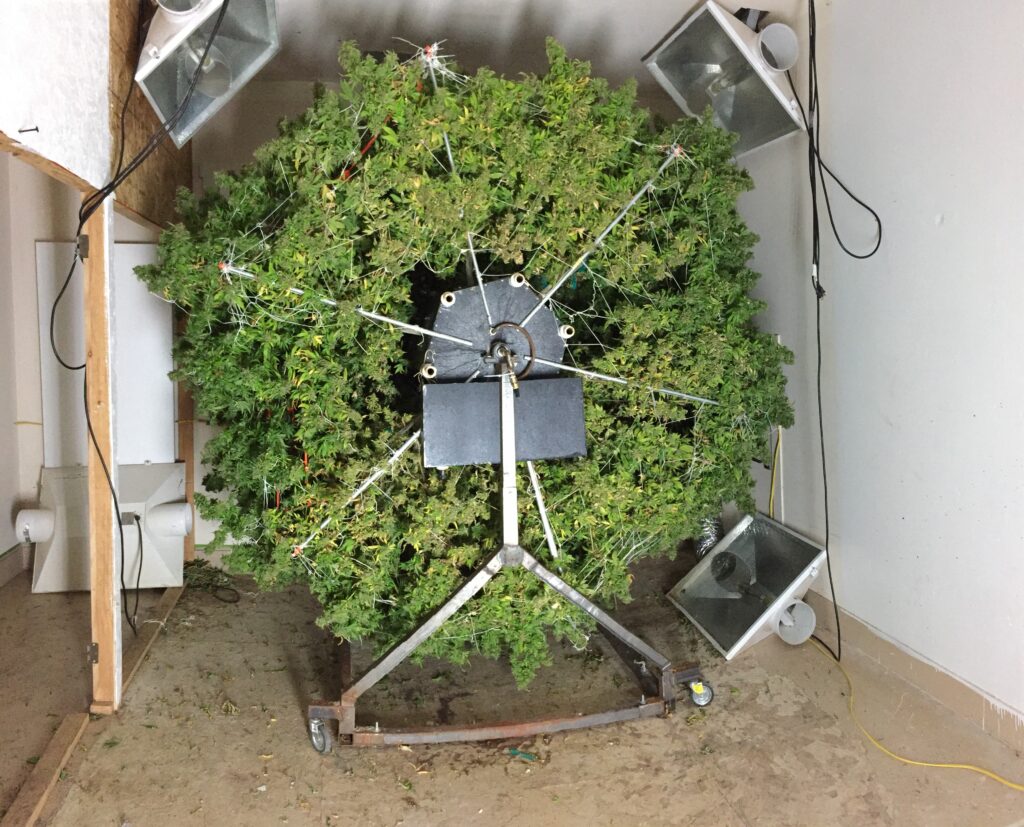
As the residents of Washington and Colorado have recently voted in favor of recreational marijuana legalization, a new industry has emerged that involves agriculture. This shift marks a significant challenge for American farmers, who are now focusing on growing high-quality cannabis products to meet the demand from both legal and black markets.
The Rise of Hydroponic Cannabis Farming
In this context, various research groups have begun exploring ways to cultivate marijuana using hydroponics. The National Aeronautics and Space Administration (NASA) has been at the forefront of developing innovative agricultural methods for space exploration. Their work on controlled-environment agriculture (CEA) aims to produce food in closed systems, where sunlight, water, and soil are scarce.
The Challenge of Growing Cannabis
Cannabis cultivation is unique compared to traditional farming methods. It requires a controlled environment with precise temperature, humidity, and light conditions. Hydroponics offers a promising solution for cannabis farmers to optimize growth while minimizing resources.
NASA’s Contributions to Hydroponic Agriculture
Dale Chamberlain, a NASA engineer turned agricultural expert, has developed extensive knowledge of hydroponic systems for space applications. His expertise has been instrumental in designing and building closed-growth chambers for CEA experiments on the International Space Station (ISS). Now, he is applying his expertise to help local farmers adopt hydroponic methods for growing cannabis.
The Importance of Climate Control
In Colorado, Amendment 64 requires all marijuana cultivation operations to take place within sealed environments. Dale Chamberlain sees this as an opportunity to introduce hydroponics to the local agricultural scene. By using controlled-environment agriculture, farmers can regulate temperature, humidity, and light levels to optimize cannabis growth.
The Benefits of Hydroponic Cannabis Farming
Hydroponic systems provide several advantages for cannabis farming, including:
- Increased yields: Hydroponics allows farmers to optimize nutrient delivery and water usage, resulting in higher crop yields.
- Water conservation: By using hydroponics, farmers can conserve water and reduce their environmental impact.
- Reduced land use: Hydroponics enables farmers to grow more crops on less land, reducing the need for large-scale agricultural operations.
- Improved crop quality: Hydroponic systems allow farmers to control temperature, humidity, and light levels, resulting in higher-quality crops.
Dale Chamberlain and other pioneers in hydroponic agriculture are organizing workshops and seminars to educate farmers on the principles of CEA, system selection, and optimal growing cycles for maximum yields.
The Future of Cannabis Farming
As the demand for cannabis products continues to grow, innovative farming methods like hydroponics will play a crucial role in meeting this demand. By embracing NASA technology, American farmers can create sustainable, high-quality cannabis products that benefit both the local economy and the environment.
Conclusion
The intersection of cannabis farming and NASA technology is an exciting area of research and development. As the industry continues to evolve, we can expect to see more innovative solutions emerge, leading to a brighter future for sustainable agriculture and cannabis production.
Frequently Asked Questions
- What is hydroponic agriculture?
Hydroponic agriculture involves growing crops in nutrient-rich water rather than soil. - Why is NASA involved in cannabis farming?
NASA’s expertise in controlled-environment agriculture (CEA) and hydroponics has been applied to the cannabis industry, providing valuable insights for farmers. - How does hydroponic cannabis farming differ from traditional farming methods?
Hydroponic systems require precise temperature, humidity, and light conditions, which can be challenging to replicate in outdoor environments. - What are the benefits of using hydroponics for cannabis cultivation?
Hydroponics offers increased yields, water conservation, reduced land use, and improved crop quality compared to traditional farming methods. - Can anyone adopt hydroponic agriculture for their cannabis farm?
Farmers will need to invest in specialized equipment and expertise to successfully implement hydroponics on a large scale. - How does climate control impact cannabis growth?
Climate control is crucial for optimal cannabis growth, as it allows farmers to regulate temperature, humidity, and light levels. - What role do NASA experts like Dale Chamberlain play in the development of hydroponic agriculture?
Experts like Dale Chamberlain provide valuable knowledge and experience, helping to introduce innovative methods like hydroponics to local farmers.
Sources:
- National Aeronautics and Space Administration (NASA)
- Colorado Amendment 64
- University of Colorado Boulder


