
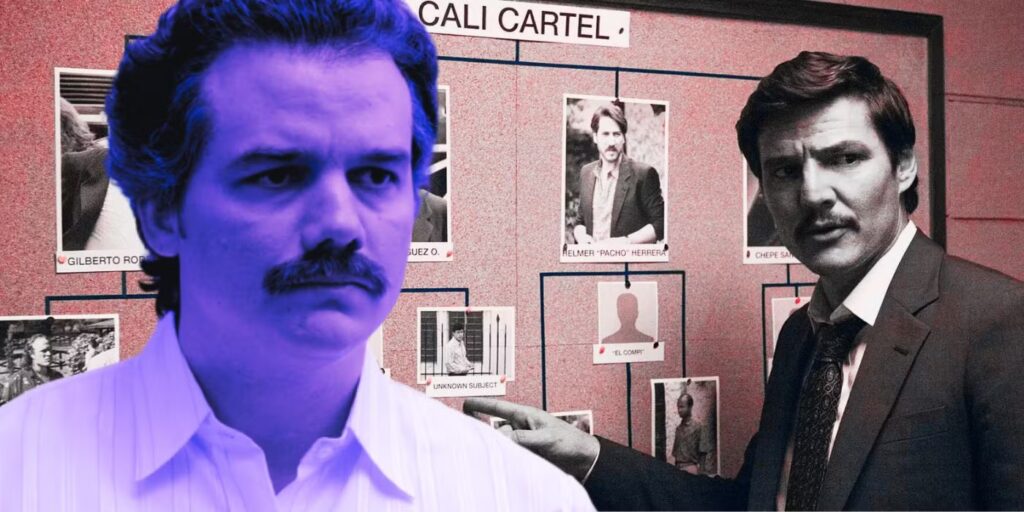
The Netflix series “Narcos” captivated audiences with its gripping portrayal of the drug trade in Colombia, interweaving personal stories with the relentless pursuit of power and wealth. But how much of this dramatic narrative is rooted in reality? In this article, we’ll dive deep into the historical context of the series, analyze the true events depicted, and explore the characters that inspired the show. Join us as we decode the fact and fiction behind “Narcos,” and understand its impact on the perception of drug-related crime and Colombia’s history.
The Genesis of “Narcos”
Released in 2015, “Narcos” first chronicled the life of infamous drug lord Pablo Escobar, whose Medellín cartel became a global powerhouse in the cocaine trade during the late 20th century. The show is narrated by DEA agent Steve Murphy (played by Boyd Holbrook), who presents a unique perspective on the war on drugs as witnessed through his own eyes.
The show’s creator, Chris Brancato, in collaboration with Eric Newman and José Padilha, sought to portray the complexity of the drug trade, including its socio-economic ramifications. Notably, “Narcos” stands out among crime dramas for its documentary-like approach. The use of real news footage, authentic locations, and historical events provides viewers a semblance of reality woven into the fictional plotlines.
A Historical Overview of the Drug Trade in Colombia
To appreciate the historical context of “Narcos,” it is essential to understand the landscape of Colombia in the late 20th century. Following years of political turmoil, corruption, and economic strife, Colombia emerged as a key player in the global drug trade. By the 1980s, various cartels vied for control over the production and distribution of cocaine, leading to a bloody turf war.
Pablo Escobar’s Medellín cartel became the most notorious of these groups. At its zenith, Escobar controlled approximately 80% of the cocaine smuggled into the United States. His operation was marked by violence, innovation, and a twisted sense of loyalty, which also extended to the everyday people of Medellín, where he funded schools, hospitals, and sports facilities to gain public favor.
Key Characters and Their Real-Life Counterparts
Pablo Escobar
Javier Bardem’s captivating portrayal of Pablo Escobar is central to “Narcos.” While the show presents a dramatized account of Escobar’s life, many key events are accurate. We witness his rise, often depicted in stark contrast to his ruthless tactics, which included bribery, intimidation, and violence.
Escobar’s wealth and influence were formidable, but so were his enemies, including the Colombian government and competing cartels. His downfall, which culminated in a violent confrontation with Colombian authorities in 1993, is documented with surprising fidelity in the series, aligning closely with real-life events.
Steve Murphy and Javier Peña
The central narrative of “Narcos” is supported by real-life DEA agents Steve Murphy and Javier Peña. Murphy’s firsthand accounts serve as a backbone for the storyline, authenticating many of the events showcased. Peña continued his work in the drug enforcement arena, leading the investigation into the Cali cartel, which gained prominence after Escobar’s demise.
While the interactions and personal moments are sometimes fictionalized for dramatic effect, the overarching story remains true. The strategies, challenges, and operational methods employed by Murphy and Peña are depicted with a surprising attention to detail.
Other Noteworthy Characters
The series showcases various figures from Colombian history, both real and fictional. Characters like Gustavo Gaviria, Escobar’s cousin and partner in crime, and Jorge Ochoa, one of the formidable founders of the Medellín cartel, highlight the collaborative nature of the drug trade. While their fates may be dramatized, the essential elements of their lives and activities are drawn from authentic historical accounts.
Was the Violence Exaggerated?
One of the most frequent critiques of “Narcos” concerns its depiction of violence. The series doesn’t shy away from showcasing the brutal violence of the drug trade—the assassinations, bombings, and widespread terrorism. Critics argue that the level of violence might have been sensationalized for entertainment purposes. Although it’s true that the drug wars caused significant chaos and led to the deaths of thousands, the show’s representation can amplify certain events while simplifying others for narrative flow.
Real-life statistics indicate that the assassination rate in Colombia rose dramatically during Escobar’s reign. The violent tactics used during this era were horrifying, but the series may not convey the complete spectrum of impacts on civilian lives and communities affected by gang violence.
[amazon box=”B08XLLF3PG”]
Cultural and Social Representations
Another aspect where “Narcos” veers into dramatization is its portrayal of Colombian culture. While the series endeavors to showcase the socio-economic context of drug trafficking, it often simplifies complex issues into a binary of good versus evil.
Some critics argue that the show reinforces stereotypes about Colombia being solely a drug-infested hellhole, overlooking the rich culture, literature, and history that define the nation. The series does provide glimpses into Colombian life, yet it could be accused of focusing predominantly on crime and violence.
The Impact of “Narcos” on Perception
Since its debut, “Narcos” has had a profound impact on public perception of drug violence and Colombia itself. For many viewers, the show not only entertains but also educates about the intricate world of drug cartels. However, it’s essential to differentiate between fact and drama.
In the United States, “Narcos” has seemingly romanticized the figure of Pablo Escobar, creating a cult of personality around him. Merchandise featuring Escobar’s image, such as T-shirts and mugs, has surfaced online, indicating that, for some, the portrayal has overshadowed the very real tragedy and loss caused by his actions.
Conversely, some Colombians feel misrepresented. They argue that the focus on drug traffickers like Escobar perpetuates a narrative that reduces a vibrant country to its criminal elements. While many understand the importance of acknowledging this dark chapter in history, they also wish to showcase the resilience and beauty of Colombia beyond the drug trade.
What’s Next for the “Narcos” Franchise?
Following the initial success of “Narcos,” the franchise expanded to include “Narcos: Mexico,” which explores the rise of the Guadalajara cartel in the 1980s and the impact of drug trafficking on Mexican society. This spinoff series has opened new discussions around the complexities of the drug trade across borders and the interconnectedness of drug-related violence throughout Latin America.
As the series continues to evolve, its creators are faced with the challenge of accurately portraying the nuances of these criminal enterprises while balancing the entertainment value. Fans anxiously await how the story of the Mexican cartels will unfold in future seasons.
Conclusion: Fact, Fiction, and Interpretation
“Narcos” presents a tantalizing mix of fact and fiction that undoubtedly resonates with viewers. While many characters and events are grounded in reality, the series also indulges in dramatization and narrative liberties to sustain engagement.
Ultimately, the portrayal of Pablo Escobar and the violent world of drug trafficking serves as a vehicle for storytelling, albeit one anchored in historical facts that can be both enlightening and misleading. For anyone interested in the complexities of drug wars, “Narcos” offers a fascinating, albeit dramatized, glimpse into a turbulent era, sparking deeper conversations about ethics, representation, and understanding the broader implications of drug-related violence in society.
As we continue to navigate the line between entertainment and education, it’s vital for viewers to engage critically with the narratives presented in series like “Narcos.” This engagement allows for a richer understanding of not just the historical events, but also the ongoing impacts of the drug trade in Colombia and beyond. As we might ask ourselves, how do stories shape our understanding of history, and how can we appreciate the nuanced realities they reflect? The answers might not be simple, but they are essential to the ongoing dialogue surrounding this deeply complex issue.


