
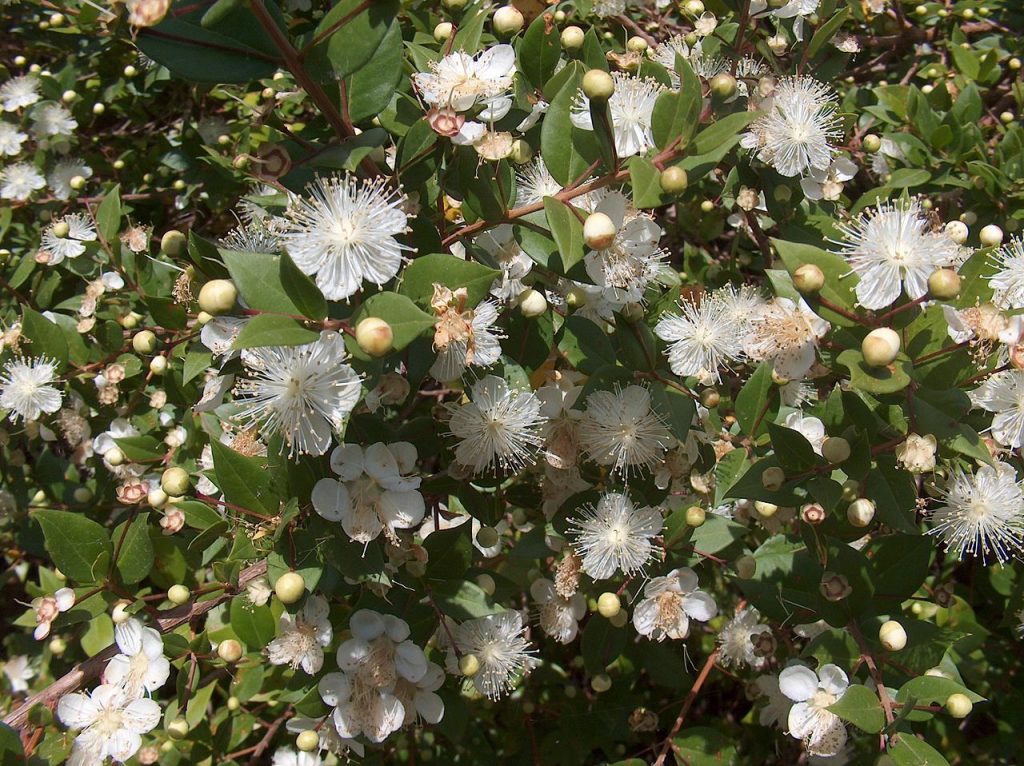
Mirto, also known as Myrtus communis, is a fragrant plant belonging to the Myrtaceae family. It’s widely used in Italy, particularly in the Mediterranean region, where it thrives as a common shrub in macchia environments. In fact, you can find even wild examples of this plant growing in parts of the country. One notable example is the “Orto del Mirto” in Pisa, which houses some of the oldest specimens of Myrtus communis alongside 140 other medicinal plants.
The Ancient Connection
In ancient times, Mirto was considered sacred to Venus, as it was said to have provided her with refuge within a thicket of mirtos. This plant has been revered for its aromatic properties and has been used in traditional medicine for centuries. The ancient Greeks believed that the leaves and flowers of Mirto could be used to treat various ailments, including wounds, fever, and rheumatism.
Physical Characteristics
Mirto is a medium-sized shrub that can grow up to 3 meters tall, with a compact, bushy appearance and thin branching stems. The bark is reddish-brown, while the leaves are dark green, lance-shaped, and aromatic. In summer, it produces small white flowers and numerous tiny berries, which are edible and used to produce the famous Mirto liqueur.
Mirto Bianco (White Mirto)
Some varieties of Mirto have yellow or golden berries, known as Mirto Bianco, while others have larger flowers or smaller plants. These variations are often grown for ornamental purposes, making them popular choices for gardens and vases. Mirto Bianco is also used in traditional medicine to treat various conditions, including digestive issues and respiratory problems.
The Truth About Mirto
Despite its many uses, there is only one species of Mirto: Myrtus communis. The difference between the red and white versions lies in their origin, not their botanical classification. For instance, a specimen from Algeria represents a remnant of the ancient vegetation that once covered the Sahara Desert.
Medicinal Properties
Mirto has been used for centuries in traditional medicine due to its balsamic, anti-inflammatory, astringent, and slightly antibacterial properties. The essential oil extracted from the plant contains mirtenol, geraniol, and other active compounds. Mirto is often used to treat digestive issues and respiratory problems by infusing its leaves and flowers.
Mirto in Sardinia
In Sardinia, Mirto is deeply rooted in local traditions and daily life. In autumn, you can find the fruit ripe for distillation into the famous liqueur. If you’re planning a trip to Sardinia, consider trying a bottle of Mirto Rosso Zedda Piras, a high-quality red Mirto.
Mirto Bio
For those looking for an organic option, look for Mirto Bio, which is grown without synthetic pesticides or fertilizers. This version is also available in bottles, offering the same benefits as its traditional counterpart.
Growing Mirto at Home
If you’re interested in growing Mirto on your balcony or in a container, choose a compact variety like the “Orto del Mirto” specimen (18 cm diameter pot). With proper care, it should thrive and provide you with white flowers and black berries for your favorite liqueur.
Making Mirto Liqueur
To make Mirto liqueur, start by collecting ripe fruit, washing it thoroughly, and letting it steep in alcohol for a few days. Then, let the mixture sit in a dark container for about 40 days to allow for maceration. Strain the liquid and mix it with a sugar syrup made from equal parts of sugar and water. Finally, filter the mixture through paper filters and bottle the liqueur.
Using Mirto Beyond Liqueur
Mirto is not only used to make liqueur; its branches can also be used as aromatics in cooking, particularly when preparing meats like roast chicken or rabbit. Additionally, you can find Mirto-infused honey, which adds a unique flavor to desserts and drinks.
Other Uses for Mirto
In addition to its culinary and medicinal uses, Mirto has been used in traditional folk medicine for centuries. The essential oil extracted from the plant is also used in perfumes and fragrances due to its sweet, floral scent.
Mirto in Beauty Products
Mirto’s essential oil has also been found to have beneficial effects on skin health, making it a popular ingredient in various beauty products, including creams, lotions, and face masks. The oil’s antibacterial properties can help reduce acne and other skin issues.
Conclusion
In conclusion, Mirto is more than just a plant with aromatic properties – it’s an integral part of Italian culture and history. From its sacred connections to ancient Venus to its modern uses in cooking, medicine, and beauty products, this versatile shrub has captured the hearts and palates of many.
FAQs
- Q: What is the main difference between Mirto Rosso (red) and Mirto Bianco (white)?
A: The color variation lies in the origin, not their botanical classification. - Q: Can I grow Mirto at home?
A: Yes, you can! Choose a compact variety like “Orto del Mirio” and follow proper care instructions. - Q: How do I make Mirto liqueur?
A: Collect ripe fruit, steep it in alcohol for 40 days, then mix it with sugar syrup and filter the liquid before bottling. - Q: What are some of the medicinal properties of Mirto?
A: Mirto has balsamic, anti-inflammatory, astringent, and antibacterial properties due to its essential oil content. - Q: Can I use Mirto for cooking?
A: Yes! Its branches can be used as aromatics in various dishes like roast chicken or rabbit. - Q: Where is Mirto commonly found?
A: Mirto thrives in the Mediterranean region, particularly in Italy and Sardinia. - Q: What is the history behind Mirto’s connection to Venus?
A: According to ancient myths, Mirto provided refuge for Venus within a thicket of mirtos. - Q: Is there only one species of Mirto?
A: Yes, despite some variations like Mirto Bianco (white) and Mirto Rosso (red).


