
At first glance, a moth may seem like an ordinary insect, but in reality, it presents unique characteristics and behaviors that set it apart from its butterfly cousin. We’re talking about moths, an enigmatic insect that has fascinated humans for centuries.
What are Moths?
Moths belong to the same order of insects as butterflies, known as Lepidoptera. However, there are significant differences between the two. Most moths are nocturnal, while butterflies are primarily diurnal.
One of the primary differences between moths and butterflies lies in their antennae shape. Butterflies have small projections at the end of their antennae, whereas moths have a wide range of antenna shapes, including cylindrical, filamentous, feathered, or forked antennae.
Coloration
Moths are also distinguished by their coloration, which is often duller and more muted than that of butterflies. While some species may exhibit vibrant colors, many others display shades of gray, brown, black, or a combination of these colors.
Adaptations for Camouflage
One of the most fascinating adaptations of moths is their ability to camouflage themselves in plain sight. Their wings are often patterned with intricate designs that help them blend in with their surroundings. By day, they tend to rest on trunks, leaves, or walls, where they can avoid detection by predators.
Metabolic Rate
Moths are unique in that they are cold-blooded, meaning they rely on external sources of heat to regulate their body temperature. During the day, they often perch on surfaces to absorb warmth from the sun. To generate heat internally, moths vibrate their wings, which creates a warm air current around their bodies.
Defense Mechanisms
In addition to camouflage, moths have developed various defense mechanisms to protect themselves from predators. Some species can secrete liquids that deter predators like ants and birds.
Lifespan and Diet
The lifespan of moths varies greatly, with some species living only a few days or weeks, while others can live up to 14 years. One remarkable example is the Gynaephora groenlandica moth, which produces a specialized winter coat that allows it to survive extreme cold temperatures for up to seven years.
Food Sources
Moths are diverse in their dietary habits, with some species feeding on plant material like leaves or stems, while others feed on nectar from flowers. Some moths even parasitize plants, consuming the sap and wood of trees.
Deterrents and Control Methods
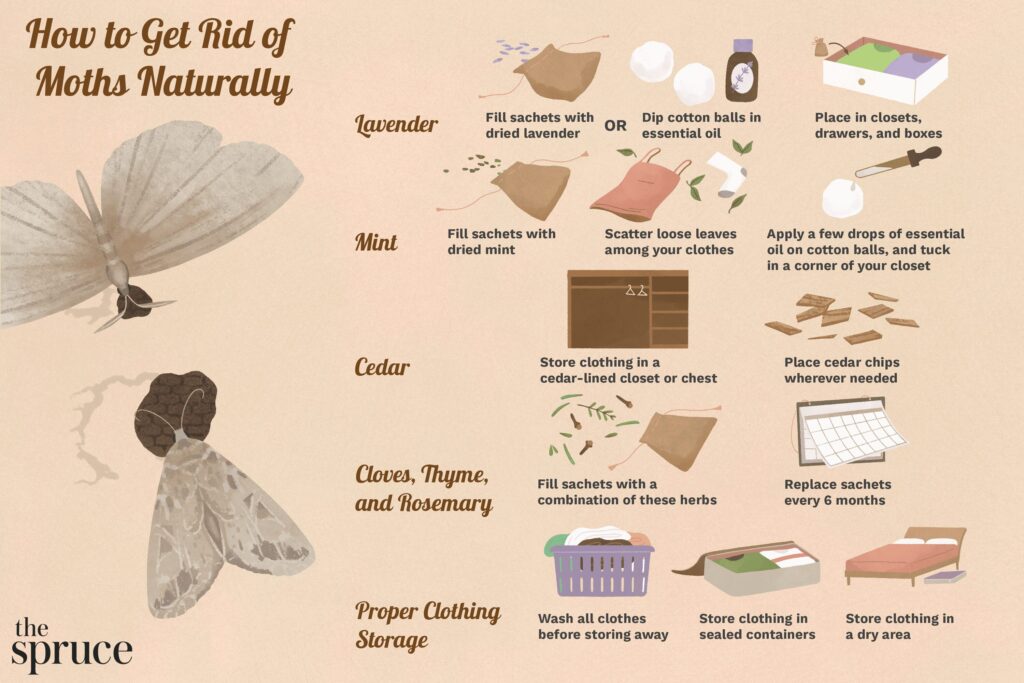
While moths can be a nuisance, particularly during warm months when they swarm indoors, there are ways to deter them without harming them. Simple methods include using window screens, reducing light sources, and placing sticky traps with fragrances like geranium or citrus.
Myth-Busting: Are Moths Poisonous?
Contrary to popular belief, most moth species do not secrete venom or irritants that can harm humans. While some moths may feed on blood, the only species known to do so is the Calyptra thalictri, also known as the “vampire moth.” This species does not target humans.
Cultural Significance: Myth and Legend
In many cultures, moths have been imbued with symbolic meanings. In ancient Spanish traditions, moths were believed to predict weather patterns, agricultural yields, and even marriages. Native American tribes saw moths as a symbol of transformation and regeneration. Despite these cultural associations, some myths surrounding moths persist, such as the notion that they carry pollen or that their caterpillars cause damage to crops.
Spiritual Significance: The Symbolism of Moths
In some spiritual traditions, moths are seen as messengers between the physical and spiritual worlds. Their ability to navigate in the dark, using only their senses, has led some to associate them with intuition and inner guidance.
Conclusion
Moths may seem like ordinary insects at first glance, but they possess unique characteristics that set them apart from other creatures. By understanding their behavior, adaptations, and cultural significance, we can appreciate these fascinating insects for what they truly are: a window into the natural world’s intricate web of life.
Frequently Asked Questions (FAQs)
- What is the average lifespan of a moth?
The average lifespan of a moth varies greatly depending on the species, ranging from a few days to several years. - Are moths poisonous to humans?
Most moth species are not venomous or irritants, and some may even feed on blood without posing a threat to humans. - Can I get rid of moths in my home without harming them?
Yes, there are simple methods like using window screens, reducing light sources, and placing sticky traps with fragrances to deter moths without harming them. - Do all moths have the same coloration?
No, moth coloration varies greatly depending on the species, ranging from vibrant colors to dull grays and browns. - Can I feed my pets or children moths?
It’s generally not recommended to handle moths with your pets or children, as they may trigger allergic reactions or other health issues. - Are moths considered pests?
While some moth species can be considered pests due to their feeding habits on crops or plants, many others are harmless and beneficial to the environment. - Can moths carry diseases?
Some moths, like those that feed on decaying matter, may carry diseases or pathogens. However, this is relatively rare and typically only affects specific species.
Additional Information
Moths are also known for their incredible diversity, with over 160,000 known species worldwide. Some of the most interesting moth species include:
- The Atlas Moth (Attacus atlas), which has a wingspan of up to 24 cm (9.4 in) and is one of the largest moths in the world.
- The Hummingbird Hawk-moth (Macroglossum stellatarum), which can mimic the flight pattern of hummingbirds, allowing it to feed on nectar from flowers.
- The Luna Moth (Actias luna), whose caterpillars can grow up to 10 cm (3.9 in) long and have distinctive white stripes.
In addition to their fascinating characteristics, moths also play a vital role in the ecosystem. Some species of moths are important pollinators or seed dispersers, while others serve as food sources for other animals.
Interesting Moth-Related Facts
- The world’s largest moth collection is housed at the Natural History Museum in London, with over 3 million specimens.
- Some moth species can fly at speeds of up to 60 km/h (37 mph), making them some of the fastest flying insects on record.
- In ancient Greece, moths were associated with the goddess Artemis, who was revered for her protection of young women.
Conservation Efforts
Due to habitat loss and climate change, many moth species are facing extinction. As a result, conservation efforts have been put in place to protect these fascinating creatures. Some organizations are working to:
- Restore habitats and preserve natural ecosystems.
- Develop new technologies for detecting and monitoring moth populations.
- Educate the public about the importance of moths and the threats they face.
By understanding more about moths and their role in the ecosystem, we can work to protect and conserve these incredible insects.


