
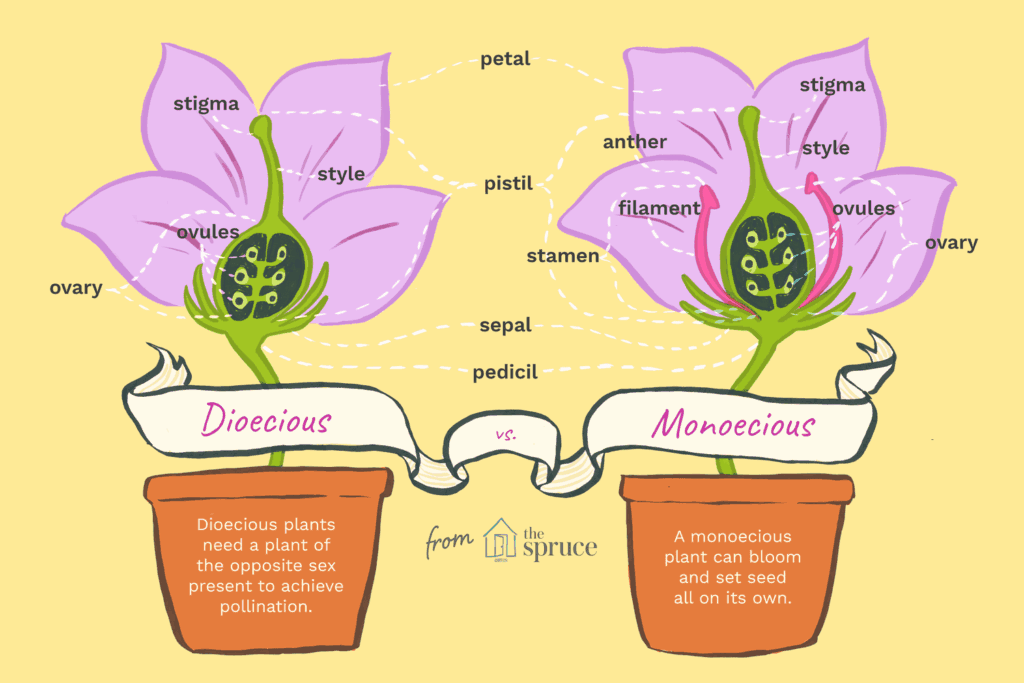
As we walk through a garden or forest, it’s easy to overlook the differences between monoecious and dioecious plants. Both types of plants can seem identical at first glance, but they have distinct characteristics when it comes to reproduction. In this article, we’ll delve into the world of plant reproduction, exploring the differences between monoecious and dioecious plants, and providing examples of each.
What is Monoic Reproduction?
Monoic reproduction refers to a type of asexual reproduction where both male and female reproductive organs are present on the same individual. This means that the plant produces gametes (sperm or egg cells) on its own, without relying on another plant for pollination. In monoecious plants, the male reproductive organs are called stamens, while the female reproductive organs are called pistils.
What is Dioecious Reproduction?
Dioecious reproduction, on the other hand, refers to a type of sexual reproduction where the male and female reproductive organs are present on separate individuals. This means that the plant requires another plant of the opposite sex for pollination to occur. In dioecious plants, the male reproductive organs are called stamens, while the female reproductive organs are called pistils.
Key Differences Between Monoecious and Dioecious Plants
So, what sets these two types of plants apart? Here are some key differences:
- Reproductive Organs: The most obvious difference is the presence of male and female reproductive organs. In monoecious plants, both organs are present on the same individual, while in dioecious plants, they are present on separate individuals.
- Pollination: Dioecious plants require pollination by another plant of the opposite sex, whereas monoecious plants can reproduce asexually without relying on other plants.
- Species Identification: Dioecious plants often have distinct morphological features that distinguish them from other species. In contrast, monoecious plants may blend in with other species, making identification more challenging.
Examples of Monoecious Plants
Monoecious plants are more common than dioecious plants and can be found in a wide range of species. Some examples include:
- Larix decidua (Larch): A coniferous tree that is native to Europe and Asia.
- Berberis (Barberry): A shrub or small tree with simple, needle-like leaves.
- Cornus mas (European Dogwood): A deciduous tree with showy white flowers in spring.
Examples of Dioecious Plants
Dioecious plants are less common than monoecious plants but can still be found in various species. Some examples include:
- Taxus baccata (Yew): A coniferous tree that produces red berries.
- Ginkgo biloba (Maidenhair Tree): An evergreen tree with distinctive fan-shaped leaves.
- Hypericum: A genus of flowering plants, including the common St. John’s Wort.
Benefits of Monoecious and Dioecious Plants
Both types of plants have their own advantages and disadvantages when it comes to reproduction. Here are some benefits of each:
- Monoecious Plants: Can reproduce asexually without relying on other plants for pollination, resulting in faster growth rates and higher yields.
- Dioecious Plants: Require cross-pollination by another plant of the opposite sex, which can result in more genetically diverse offspring.
Challenges of Monoecious and Dioecious Plants
Despite their benefits, both types of plants have their own challenges when it comes to reproduction. Here are some common issues:
- Monoecious Plants: Can be more susceptible to disease and pests due to the lack of cross-pollination.
- Dioecious Plants: Require a larger range of habitats and can be more challenging to cultivate due to the need for pollinators.
Conclusion
Understanding the differences between monoecious and dioecious plants is crucial for identifying and appreciating these unique species. By recognizing their reproductive characteristics and morphological features, botanists and gardeners can better appreciate the diversity of plant life on our planet. Whether you’re a seasoned botanist or just starting to explore the world of plants, this guide provides a solid foundation for understanding these fascinating organisms.
Frequently Asked Questions
- What is the primary difference between monoecious and dioecious plants?
- The presence of male and female reproductive organs on separate individuals in dioecious plants versus both on the same individual in monoecious plants.
- Which type of plant reproduction is more common?
- Monoecious plant reproduction is more common than dioecious plant reproduction.
- What are some examples of monoecious plants?
- Larix decidua (Larch), Berberis (Barberry), Cornus mas (European Dogwood).
- What are some examples of dioecious plants?
- Taxus baccata (Yew), Ginkgo biloba (Maidenhair Tree), Hypericum.
- Can monoecious plants reproduce asexually?
- No, monoecious plants require cross-pollination to reproduce sexually.
Additional Resources
For more information on plant reproduction and identification, explore the following resources:


