
Introduction
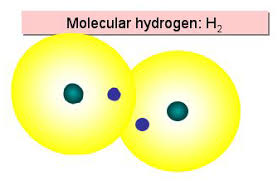
Hydrogen, in its molecular form, is the primary way that hydrogen exists, as a biatomic couple, H2: the pair. The lightest and simplest element, with the symbol H, has an atom with only one electron and one proton, making it colorless, odorless, and tasteless. It may seem like an underwhelming presence, but molecular hydrogen is actually the essential component of our current cosmological model, which gave rise to life.
Molecular hydrogen plays a crucial role in various biological processes, including energy production, cellular respiration, and the synthesis of biomolecules. Its unique properties make it an attractive alternative to traditional fuels, offering a cleaner and more sustainable source of energy. In this article, we will explore the world of molecular hydrogen, its potential applications, and the ongoing research efforts aimed at unlocking its secrets.
The Rare Atomic Hydrogen
Before we dive into the molecule, let’s understand the individual atomic hydrogen. This rare form of hydrogen only exists as a single atom, as it has an unpaired electron. However, once produced through electrolysis, it reacts quickly with another hydrogen atom to form stable molecular hydrogen.
Atomic hydrogen is created when hydrogen gas is subjected to high temperatures and pressures, causing the electrons to become ionized. The resulting atoms then react with other atomic hydrogen molecules to form hydrides, which can be used as a source of energy.
Molecular Hydrogen: The Ultimate Bond
Now that we’ve grasped why molecular hydrogen is the primary form of hydrogen, let’s explore how and why two atoms come together and what “combines” them for us, at a human level, planetary, and environmental scale. The bond between the two atoms forming molecular hydrogen is covalent, creating a molecule with numerous therapeutic effects resulting from its reduced dimensions.
The covalent bond in molecular hydrogen allows it to be highly reactive, making it an ideal candidate for various applications, including energy production, medical treatments, and industrial processes. This reactivity also makes molecular hydrogen prone to oxidation, which can lead to its degradation and loss of potency.
Molecular Hydrogen and Energy
Beyond being the lightest element in the universe and the base of stars, hydrogen also serves as a secondary source of energy, such as electricity. A secondary source means it can store and transport energy produced by primary sources, like fossil fuels, renewable resources, or biomasses.
When discussing molecular hydrogen as an energy vector, we refer to its potential to carry energy. The concept is simple: it provides the key that unlocks energy production. However, the issue is that producing molecular hydrogen is still expensive compared to other energy sources.
Molecular hydrogen can be produced through various methods, including electrolysis, steam methane reforming, and biogas upgrading. These processes involve the use of energy-intensive technologies, which contribute to greenhouse gas emissions and environmental pollution.
A Promise Unfulfilled
Despite this cost constraint, cells using hydrogen as fuel could revolutionize the world of cellular biology and power our vehicles. In fact, research has shown that a better method of producing molecular hydrogen could make the transition much easier.
The potential benefits of molecular hydrogen-powered systems are vast, including:
- Zero greenhouse gas emissions
- Reduced dependence on fossil fuels
- Increased energy efficiency
- Improved air quality
However, there are still significant challenges to overcome before molecular hydrogen can become a viable alternative to traditional fuels. These include the high cost of production, storage, and transportation.
The Research Breakthrough from Milan
Recently, a groundbreaking discovery was made in Milan by researchers Claudio Greco and Luca De Gioia from the Department of Biotechnology and Bioscience at the University of Milan Bicocca. Alongside Swedish scientist Ulf Ryde from Lund University, they successfully defined the mechanisms behind producing molecular hydrogen using iron ions.
These scientists have essentially “unlocked” molecular hydrogen by understanding how to produce it efficiently, utilizing ferro-idrogenase enzymes that can reverse-oxidize the molecule and convert it into energy.
Unlocking Molecular Hydrogen’s Potential
Further research has revealed that these ferro-idogenases contain a specific nitrogen atom positioned in a particular way, which facilitates proton transfer towards an enzyme where the reaction occurs, thus aiding molecular hydrogen production. Furthermore, they found that there is a strong dependency on the presence of cyanide ions for both energy transformation and efficiency of molecular hydrogen production.
The discovery of these enzymes has significant implications for the future of molecular hydrogen production. By understanding how to harness their power, scientists may be able to create more efficient and cost-effective methods for producing molecular hydrogen.
The Current State: A Step Backward
However, while research advances our understanding of molecular hydrogen’s potential, we still face challenges. Our current reality involves cells combustible made from rare metals like Platinum and Palladium, which are already expensive to produce and extract, causing environmental pollution during their extraction.
This makes it difficult for these cell combustible vehicles powered by hydrogen to replace the existing transportation systems.
A New Path Forward
Research from the University of Bicocca offers hope for a future where we can design cells combustible using abundant and inexpensive metals. In this scenario, we are talking about iron.
The journey to making hydrogen more accessible and affordable is crucial. It’s only when this becomes possible that our hopes for a hydrogen-powered world will become a reality.
Conclusion
As you continue to follow me on Twitter, Facebook, Google+, Pinterest, and other platforms, I hope you’ll stay engaged with my content. If you found this article interesting, explore these related articles: Orbital Molecules, Biologically Produced Hydrogen, Solar Thermal Energy: How It Works, and DIY Hydrogen.
By understanding the science behind molecular hydrogen and its potential applications, we can begin to envision a future where this molecule plays a central role in our energy landscape. While there are still many challenges to overcome, the progress being made is promising, and it’s clear that molecular hydrogen has the potential to revolutionize the way we think about energy.
As we move forward, it’s essential to continue funding research into molecular hydrogen and its applications. By doing so, we can unlock its full potential and create a cleaner, more sustainable future for generations to come.
The journey to a hydrogen-powered world is long and challenging, but with dedication, hard work, and the right scientific understanding, we can make it a reality. The future of energy has never looked brighter.


