
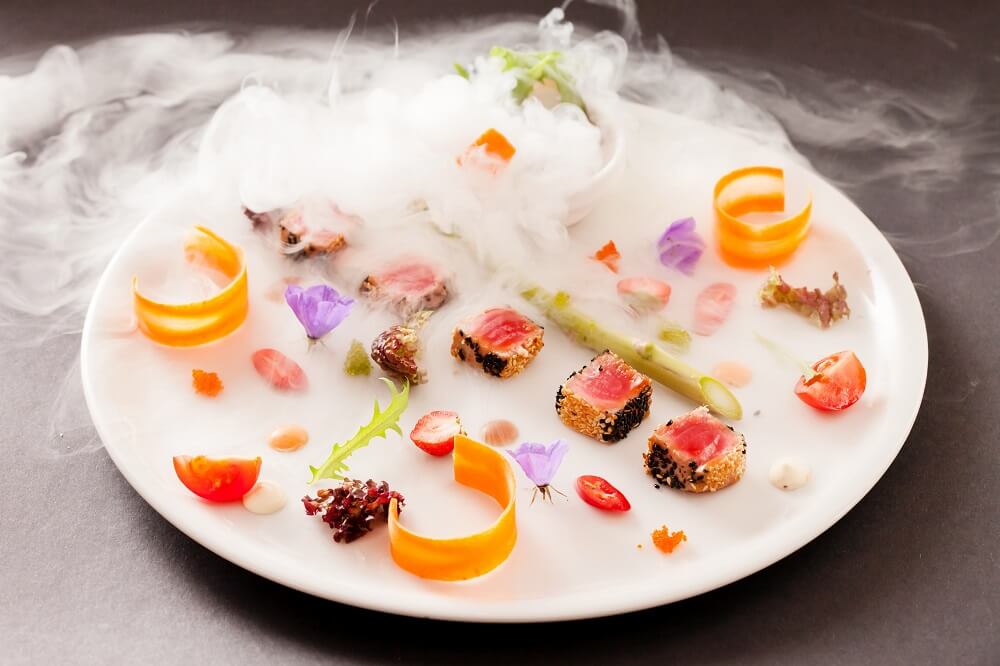
Molecular gastronomy, also known as molecular cooking or culinary physics, is a subdiscipline of food science that applies scientific principles to the preparation and presentation of food. It involves using chemistry, biology, and physics to transform ingredients into new forms and flavors.
What is Molecular Gastronomy?
Molecular gastronomy originated in the 1980s with the work of chefs like Hervé This and Nicholas Kurti. The term was coined by Kurti and This, who used it to describe a style of cooking that involved using scientific techniques to create new textures and flavors. Today, molecular gastronomy is a popular culinary movement that involves experimentation with new ingredients and techniques.
Molecular gastronomy combines the art of cooking with the science of food chemistry, biology, and physics. It uses various technologies, such as sous vide machines, centrifuges, and vacuum pumps, to create unique and innovative dishes. The aim of molecular gastronomy is not just to cook food but to understand its chemical and physical properties and use that knowledge to create new and exciting flavors.
The History of Molecular Gastronomy
To understand the history of molecular gastronomy, we need to go back to the 18th century when scientists like Marie-Antoine Careme began studying the chemistry of food. Careme was a French chef who is often credited with being one of the first chefs to use scientific principles in his cooking. He wrote about the importance of temperature control and the use of ingredients that could be transformed through chemical reactions.
In Italy, the birth of molecular gastronomy is linked to 1990 when the first International Gastronomy Laboratory was held in Erice, Sicily. This laboratory brought together chefs, scientists, and food experts from around the world to discuss the potential of using scientific principles in cooking. The workshop was led by Hervé This and Nicholas Kurti, who are often credited with popularizing the term “molecular gastronomy.”
Today, molecular gastronomy has become a global culinary movement that involves experimentation with new ingredients and techniques. It is practiced by chefs and food scientists around the world, from high-end restaurants to small catering services.
Techniques Used in Molecular Gastronomy
One of the most well-known techniques used in molecular gastronomy is spherification. This technique involves using a liquid ingredient to create small, round balls that can be eaten like caviar. The process involves mixing the liquid ingredient with a thickening agent, such as alginate or agar, and then forming it into small spheres.
Other techniques used in molecular gastronomy include foamification, gelification, and emulsification. These techniques involve creating new textures and flavors by manipulating ingredients at different temperatures and pH levels.
Foamification
Foamification is a technique that involves using a liquid ingredient to create a light and airy texture. This is achieved by whipping the liquid with an electric mixer or by using a specialized machine called a foamifier. The whipped liquid can then be flavored with various ingredients, such as herbs, spices, or flavorings.
Gelification
Gelification is a technique that involves creating a gel-like substance from a liquid ingredient. This is achieved by mixing the liquid with a thickening agent, such as agar or carrageenan, and then heating it until it reaches a specific temperature. The resulting gel can be flavored and shaped into various forms.
Emulsification
Emulsification is a technique that involves combining two liquids that are normally immiscible, such as oil and water. This is achieved by adding an emulsifier to the mixture, which helps to stabilize the two liquids together. Emulsification is used in many food products, including mayonnaise, salad dressings, and sauces.
Molecular Mixology
Molecular mixology is a subdiscipline of molecular gastronomy that involves using scientific principles to create new cocktails. This technique involves using ingredients like sodium alginate and calcium chloride to create foams, spherifications, and other unique textures in drinks.
To try out molecular mixology, you can buy kits online that contain the necessary ingredients and equipment to make “cocktail molecolari” (molecular cocktails). These kits usually include pipettes, spoons, and other laboratory tools that are used to create the desired textures and flavors.
The Science Behind Molecular Mixology
So, how does molecular mixology work? It all starts with understanding the properties of different ingredients. Sodium alginate, for example, is a thickening agent that can be used to create foams and spherifications. When mixed with calcium chloride, it forms a gel-like substance that can be shaped into small balls or spheres.
The process of creating molecular cocktails involves using a combination of ingredients, including sodium algine, calcium chloride, and other substances like lecithin or glycerol. These ingredients are combined in specific ratios to create the desired textures and flavors.
Conclusion
Molecular gastronomy is a fascinating culinary movement that combines science, art, and creativity to create new and exciting dishes. Whether you’re a professional chef or just an adventurous foodie, molecular gastronomy offers endless possibilities for experimentation and innovation.
If you’re interested in trying out molecular mixology at home, be sure to check out online kits and tutorials that provide detailed instructions on how to make “cocktail molecolari” (molecular cocktails). With a little practice and patience, you can create unique and delicious drinks that will impress your friends and family.
Frequently Asked Questions
- What is the difference between molecular gastronomy and traditional cooking?
Molecular gastronomy involves using scientific principles to transform ingredients into new forms and flavors. Traditional cooking, on the other hand, relies on manual techniques and recipes. - Is molecular mixology safe to drink?
Yes, when done properly, molecular mixology can be safe to drink. However, it’s essential to follow proper food safety guidelines and use clean equipment to avoid contamination. - Can I make molecular cocktails at home?
Yes, you can buy kits online that contain the necessary ingredients and equipment to make “cocktail molecolari” (molecular cocktails). - What are some common mistakes to avoid when making molecular mixology?
Common mistakes include using too much or too little of a specific ingredient, not following proper safety protocols, and over-mixing or under-mixing the ingredients. - Is molecular gastronomy only for professional chefs?
No, molecular gastronomy is accessible to anyone who wants to experiment with new techniques and ingredients. You don’t need to be a professional chef to try out molecular mixology at home.
Additional Resources
- Hervé This: The Father of Molecular Gastronomy
- Nicholas Kurti: The Scientist Behind the Term “Molecular Gastronomy”
- The International Association of Culinary Professionals: Molecular Gastronomy
- Food52: Tips for Making Molecular Mixology
Innovations in Molecular Gastronomy
Molecular gastronomy has led to many innovations in the culinary world. Some examples include:
- Foie Gras Lollipops: These are small, bite-sized foams of foie gras that are flavored with various ingredients.
- Spherical Ravioli: These are ravioli filled with a liquid ingredient and shaped into small spheres.
- Molecular Soups: These are soups made from pureed vegetables or meat that are then reformed into various shapes using molecular gastronomy techniques.
- Foam-Infused Drinks: These are drinks that have been infused with foams of flavorings, such as herbs or spices.
Challenges and Limitations
While molecular gastronomy has led to many innovations in the culinary world, there are also some challenges and limitations to consider. Some examples include:
- Expensive Ingredients: Many ingredients used in molecular gastronomy, such as sodium alginate and calcium chloride, can be expensive.
- Time-Consuming Techniques: Molecular gastronomy techniques, such as foamification and gelification, can be time-consuming and require specialized equipment.
- Safety Concerns: Some molecular gastronomy techniques, such as spherification, can create food safety concerns if not done properly.
Despite these challenges and limitations, molecular gastronomy continues to evolve and innovate in the culinary world. It has opened up new possibilities for chefs and food scientists to experiment with new ingredients and techniques, leading to a more creative and diverse culinary landscape.


