
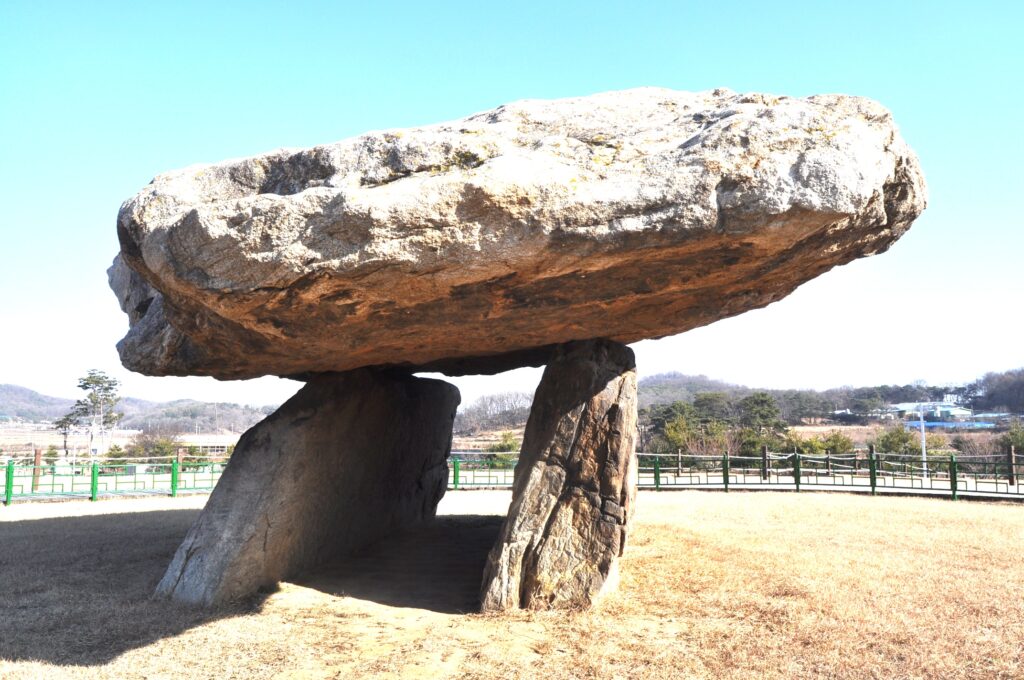
What are Megaliths?
Megaliths are massive, ancient stone structures that have fascinated people for centuries. While some may view them as simple stones, they hold significant meaning and can be classified into two main types: Dolmen and Menhir. Understanding their origins and purpose is crucial to unraveling the mystery of these enigmatic structures.
Dolmen vs. Menhir
The distinction between Dolmen and Menhir lies in their structure and purpose. A Dolmen consists of multiple stone blocks supporting a larger stone, often used as a tomb for individuals or groups. In contrast, a Menhir is a single, upright stone that can be found standing alone or grouped with others, representing humanity’s desire to connect with the sky.
Famous Examples
Two notable examples of Megaliths are Stonehenge in England and the Dolmen of Motorra in Sardinia. Stonehenge, dating back around 3000 BC, is one of the most recognizable Megalithic structures in the world, featuring a circular arrangement of stones that may have served as an ancient observatory or ceremonial site.
The Origins of Megaliths
Recent studies from the University of Gothenburg, Sweden, have shed light on the origins of Megaliths. According to these researchers, the concept of constructing these structures was initiated by navigators in Brittany around 7,000 years ago. This theory suggests that the first Megaliths were built in northern France, eventually spreading throughout Europe via maritime trade routes.
Early Examples: Carnac Stones
The Carnac stones, situated in northwestern France, are among the oldest known Megalithic structures, dating back to around 4700 BC. These stones, carved with marine animals and other symbols, provide insight into the lives of ancient hunter-gatherer societies, showcasing their advanced knowledge of navigation, astronomy, and social organization.
Diffusion of Megaliths
Megaliths spread throughout Europe in three distinct phases:
- Initial appearance in France
- Spread to Spain and Portugal
- Development in northern regions, including the British Isles and Scandinavia
Notably, Megalithic structures are often found near bodies of water, supporting the theory that maritime trade played a significant role in their dissemination.
Recreating Stonehenge
For those fascinated by these enigmatic structures, creating a miniature version of Stonehenge at home can be a fun and educational project. By replicating the layout and structure of this iconic Megalithic site, one can gain a deeper understanding of its purpose and significance.
Understanding Menhir Purpose
The purpose of Menhir structures remains unclear, with various theories attempting to explain their function. Some believe that Menhirs were used for astronomical observations, while others propose that they served as ritualistic expression or symbols of human connection with the sky.
Dolmen Function
In contrast, Dolmen structures have been found in association with ancient burials, suggesting that they may have served as tombs for individuals or groups. However, other theories propose that Dolmens were used for ceremonial purposes or even as markers for hunting grounds.
Megalithic Significance
The significance of Megaliths lies not only in their construction but also in the insights they provide into ancient cultures and societies. By studying these structures, researchers can gain a deeper understanding of human history, technological advancements, and the environmental conditions that shaped it.
Environmental Impact
The construction of Megalithic structures had significant environmental impacts on the regions where they were built. The extraction of stone blocks from quarries and the transportation of these massive stones required extensive resources and labor. This has led some researchers to question whether the construction of Megaliths was a sustainable practice, or if it had long-term consequences for the ecosystems in which they were situated.
Conservation Efforts
As Megalithic structures continue to be built and discovered, conservation efforts become increasingly important. Many sites are threatened by human activities such as tourism, development, and environmental degradation. Organizations and governments have established programs to protect these historical sites and ensure their preservation for future generations.
Modern Interpretations
Recent interpretations of Megaliths have challenged traditional views on their purpose and significance. Some researchers propose that these structures were not solely used for ceremonial or astronomical purposes but also served as a means of communication, social organization, or even as part of ancient agricultural practices.
Conclusion
Megaliths continue to captivate our imagination with their mystique and historical significance. By exploring their origins, purpose, and spread throughout Europe, we can uncover the secrets behind these ancient structures. Whether as a testament to human ingenuity or an expression of spiritual connection, Megaliths remain an enduring enigma that continues to inspire wonder and awe.
Frequently Asked Questions (FAQs)
- Q: What is the average age of Megalithic structures?
A: Most Megalithic structures date back between 3,000 and 7,000 years. - Q: Which regions in Europe are most abundant with Megaliths?
A: France, Spain, Portugal, and the British Isles have the highest concentration of Megalithic sites. - Q: What is the purpose of Menhir structures?
A: While their exact function remains unclear, Menhirs may represent humanity’s desire to connect with the sky or serve as a form of ritualistic expression. - Q: How did Megaliths spread throughout Europe?
A: Maritime trade and cultural exchange are believed to have played a significant role in the dissemination of Megalithic structures across Europe. - Q: What can we learn from studying Megalithic structures?
A: By examining these ancient structures, researchers can gain insights into the lives, beliefs, and technological advancements of past civilizations. - Q: Are all Megaliths created equal?
A: No, while some structures serve as tombs or ceremonial sites, others may represent astronomical observations or artistic expressions. - Q: Can anyone recreate a Megalithic structure at home?
A: Yes, with careful planning and attention to detail, individuals can create their own miniature versions of these enigmatic structures. - Q: Why are Megaliths still relevant today?
A: By exploring the history and significance of Megalithic structures, we can deepen our understanding of human culture and the environment that shaped it.
Additional Resources
- For those interested in learning more about Megaliths, recommended books include “The Megalithic Temples of Malta” by Paul Brindley and “Megalithic Monuments: A Guide to Britain’s Ancient Stone Circles” by Mike Parker Pearson.
- Online resources such as the National Trust and the British Museum provide valuable insights into Megalithic structures and their significance in European history.
- Documentaries such as “The Megaliths of Brittany” and “Stonehenge: The Story So Far” offer a comprehensive look at these ancient structures and their mysteries.


