
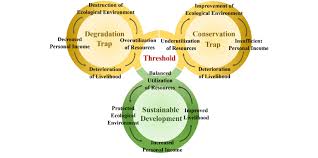
As Federico Butera, a professor at the Politecnico di Milano, explains, “the economy of maturity is an economic system that aims to produce goods and services that minimize exploitation of natural capital.” By connecting Gross Domestic Product (GDP) to well-being and environmental impact, we can see how this approach differs from traditional models.
The Relationship Between GDP Growth and Environmental Impact
Using the GDP as a measure of national wealth is misleading. In fact, it often corresponds to increased “malaise”: more traffic leads to increased fuel consumption, while natural disasters require rebuilding, which in turn increases the GDP. However, there is a clear correlation between GDP growth and environmental degradation. As economies grow beyond certain limits, they exploit natural resources at unsustainable rates.
For instance, when a country’s economy grows rapidly, it often leads to an increase in energy consumption, deforestation, and pollution. This can have devastating effects on the environment and human health. On the other hand, sustainable economic growth that prioritizes environmental protection can lead to long-term benefits such as improved air quality, reduced greenhouse gas emissions, and increased biodiversity.
What Does an Economy of Maturity Look Like?
An economy of maturity focuses on producing goods and services that minimize exploitation of natural capital, rather than maximizing economic growth at all costs. This approach involves reducing consumption and promoting a “circular economy” where products and services are designed to be recycled, reused, and restorative.
For example, companies like Patagonia and REI have adopted sustainable practices by using environmentally-friendly materials, reducing waste, and designing products that can be recycled or reused. These businesses prioritize the needs of consumers and reduce waste, which in turn contributes to a more sustainable economy.
Challenges in Convincing Businesses and Governments
Convincing businesses and governments to adopt a more sustainable approach requires a shift in mindset. Companies must prioritize the needs of consumers and reduce waste. Some companies have already made this transition, such as Loccioni, which has developed an energy-efficient building system.
However, there are still many challenges that need to be addressed. For instance, many businesses are driven by short-term profits rather than long-term sustainability goals. Governments also often prioritize economic growth over environmental protection, which can make it difficult to implement policies that support sustainable development.
The Role of Technology
Technology plays a crucial role in implementing an economy of maturity. By “repurposing” existing technologies to meet new sustainability goals, we can achieve significant improvements in efficiency and reduce waste. For example, integrating renewable energy sources into buildings can create energy-zero buildings that produce more energy than they consume.
Additionally, technology can help businesses and governments make data-driven decisions about sustainability. By using data analytics and other tools, companies can identify areas where they can improve their environmental performance and implement changes to reduce waste and increase efficiency.
Examples of Sustainable Practices
One notable example is the development of energy-zero buildings. These buildings use only renewable energy sources to meet their energy needs, reducing greenhouse gas emissions and dependence on non-renewable energy sources.
Another example is the shift towards circular economy business models. Companies like H&M and Nike are adopting circular economy practices by designing products that can be recycled or reused, reducing waste, and promoting sustainable consumption patterns among consumers.
The Impact of Ethical Businesses
Ethical businesses are increasingly recognizing the importance of sustainability in their operations. Companies like SAP and Loccioni are taking steps towards a more sustainable future by promoting environmentally-friendly practices and reducing waste.
By adopting sustainable practices, these companies can not only reduce their environmental impact but also improve their brand reputation and increase customer loyalty. This demonstrates that sustainability is not just a moral imperative but also a business opportunity.
Microfinance as a Tool for Sustainable Development
Microfinance can play a significant role in sustainable development, particularly in developing countries. By providing small loans to local communities, microfinance initiatives can promote entrepreneurship and economic growth while reducing dependence on corrupt elites.
However, the effectiveness of microfinance depends on its association with projects that provide training and education, enabling individuals to make informed financial decisions. Additionally, microfinance initiatives should prioritize sustainability by promoting environmentally-friendly practices and reducing waste.
Conclusion
An economy of maturity offers a promising approach to sustainable development by prioritizing environmental protection and resource efficiency. By adopting this approach, businesses, governments, and individuals can work together to create a more sustainable future for all.
Ultimately, the transition towards an economy of maturity will require a fundamental shift in our values and priorities. We need to recognize that economic growth is not the only measure of success and that environmental protection is essential for long-term sustainability.
FAQs
- What is the relationship between GDP growth and environmental impact?
There is a clear correlation between GDP growth and environmental degradation. As economies grow beyond certain limits, they exploit natural resources at unsustainable rates. - How can businesses adopt an economy of maturity?
Businesses must prioritize sustainability by reducing waste, promoting recycling and reuse, and designing products and services that are restorative. - What role does technology play in implementing an economy of maturity?
Technology plays a crucial role in repurposing existing technologies to meet new sustainability goals, such as integrating renewable energy sources into buildings. - How can governments support the adoption of sustainable practices?
Governments can implement policies that promote sustainable development, such as providing incentives for businesses to adopt eco-friendly practices and investing in education and training programs. - What is microfinance and how can it contribute to sustainable development?
Microfinance provides small loans to local communities, promoting entrepreneurship and economic growth while reducing dependence on corrupt elites. - How can individuals contribute to an economy of maturity?
Individuals can make conscious choices about their consumption patterns, prioritize sustainability in their daily lives, and support businesses that adopt eco-friendly practices. - What are the benefits of adopting an economy of maturity?
An economy of maturity offers a range of benefits, including reduced environmental degradation, increased resource efficiency, and improved human well-being.
By working together to adopt an economy of maturity, we can create a more sustainable future for all.


