
Introduction
Deep in the heart of Central and South America, there exists a cat species that is as elusive as it is fascinating. The margay, also known as the gato di Wied, is a small, solitary feline with a distinctive appearance and unique characteristics. In this article, we will delve into the world of the margay, exploring its habits, habitats, and the challenges it faces in the wild.
The Margay’s Unique Appearance
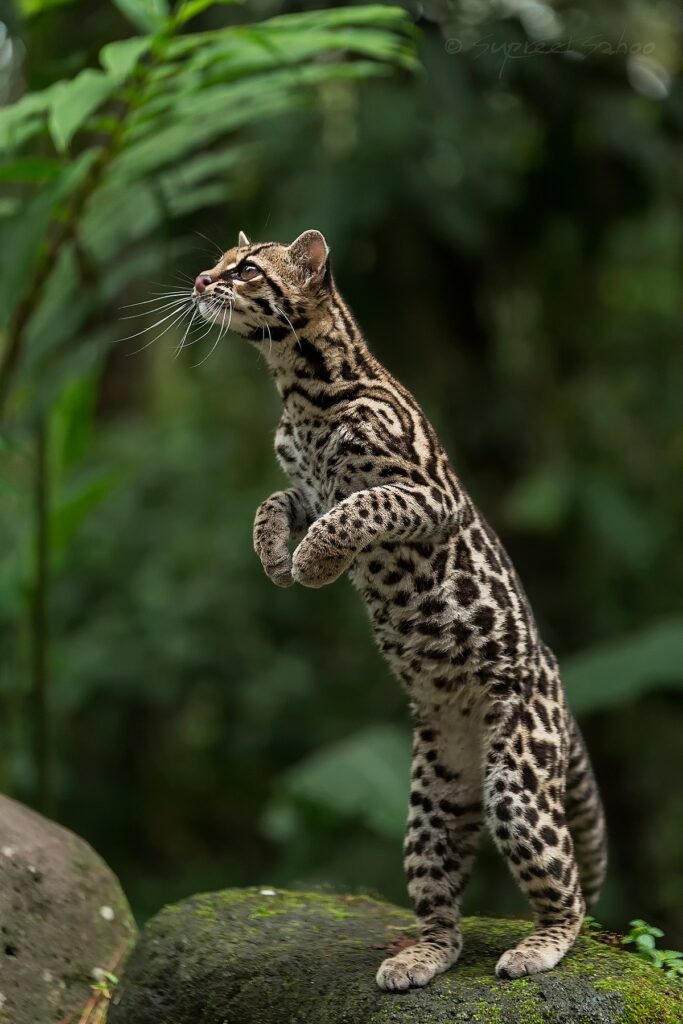
The margay is a medium-sized cat with a stocky build and a short, rounded head. Its fur is mottled brown and gray, with distinctive rosette-shaped markings on its back. The cat’s eyes are large and round, giving it an endearing appearance. One of the most striking features of the margay is its tail, which is long and slender, with a black tip.
The margay’s coat coloration varies depending on the region, but it is generally characterized by a mix of brown and gray hues. The cat’s fur is also longer around the neck and shoulders, giving it a distinctive ruff-like appearance. In addition to its striking appearance, the margay has several unique physical features, including its flexible joints and retractable claws.
Habitat and Distribution
The margay is found in the forests and woodlands of Central and South America, from Mexico to Argentina. It is a solitary animal that prefers to live in dense, tropical forests, where it can hunt for small prey such as birds, lizards, and rodents. The cat’s habitat is characterized by a mix of deciduous and evergreen trees, with an understory of shrubs and vines.
The margay is most commonly found in the rainforests of Central America, particularly in countries such as Costa Rica, Panama, and Ecuador. However, it can also be found in South American countries, including Colombia, Venezuela, and Peru. The cat’s habitat ranges from lowland forests to montane forests, and it has been known to adapt to a variety of environments.
Behavior and Diet
Margays are nocturnal animals that spend most of their time alone, only coming together to mate. They are skilled hunters that use their agility and stealth to catch their prey. The margay’s diet consists mainly of small mammals, birds, reptiles, insects, and fruit. In captivity, the cat is known to thrive on a diet of commercial cat food and fresh meat.
One of the most interesting aspects of the margay’s behavior is its use of vocalizations to communicate with other margays. The cat makes a variety of sounds, including chirps, squeaks, and hisses, which are used for different purposes such as attracting mates or warning off predators.
Reproduction and Lifespan
Margays are relatively long-lived animals, with an average lifespan of 10-12 years in the wild and up to 20 years in captivity. The female margay gives birth to a single kitten after a gestation period of about 80 days. The kitten is born blind and helpless, but develops quickly, opening its eyes at around two weeks old.
Newborn margay kittens weigh between 85-170 grams, which is relatively small compared to other cat species. However, they grow rapidly, doubling their weight within the first few months of life. Margays typically reach sexual maturity at around one year of age, although some individuals have been known to mature earlier or later.
Conservation Status
Unfortunately, the margay is listed as Near Threatened on the IUCN Red List due to habitat loss and fragmentation. The cat’s habitat is being cleared for agriculture, urbanization, and logging, leaving the margay with limited space to live and hunt. Additionally, the cat is often persecuted by humans who view it as a pest or a threat to livestock.
Efforts are underway to protect the margay’s habitat and reduce human-margay conflict, including conservation programs aimed at restoring degraded habitats and educating local communities about the importance of preserving this unique species. However, more needs to be done to address the growing threats facing the margay in the wild.
Interesting Facts
- Margays are known for their ability to climb trees using their flexible joints, which allow them to rotate their ankles up to 180 degrees.
- The margay’s tail is highly flexible and can be used as an additional limb to balance while climbing.
- Margays have excellent night vision due to the reflective layer in the back of their eyes.
Conservation Efforts
Several organizations are working tirelessly to protect the margay and its habitat. Some of these efforts include:
- The Wildlife Conservation Society (WCS): The WCS is a leading conservation organization that works to protect wildlife habitats around the world, including those of the margay.
- The International Union for Conservation of Nature (IUCN): The IUCN is a global authority on species conservation and provides critical support to organizations working to protect endangered species such as the margay.
- The Cat Conservation Network: This organization aims to conserve and manage wild cat populations, including those of the margay.
Conclusion
The margay is a fascinating and elusive cat species that is facing numerous threats in the wild. Efforts must be made to protect its habitat and reduce human-margay conflict, ensuring the survival of this unique and captivating animal. By learning more about the margay’s habits, habitats, and behaviors, we can gain a deeper appreciation for this remarkable creature and work towards its conservation.
FAQs
- What is the average lifespan of a margay?
The average lifespan of a margay in the wild is 10-12 years, while in captivity it can reach up to 20 years. - How long does a margay’s gestation period last?
A margay’s gestation period lasts approximately 80 days. - What is unique about a margay’s tail?
A margay’s tail is highly flexible and can be used as an additional limb to balance while climbing. - Is the margay endangered?
The margay is listed as Near Threatened on the IUCN Red List due to habitat loss and fragmentation. - Can margays be kept in captivity?
Yes, margays can be kept in captivity with proper care and attention. - What do margays eat in the wild?
Margays primarily feed on small mammals, birds, reptiles, insects, and fruit. - How big are margay kittens?
Newborn margay kittens weigh between 85-170 grams. - Can margays climb trees?
Yes, margays are excellent climbers due to their flexible joints, which allow them to rotate their ankles up to 180 degrees.
Conclusion
In conclusion, the margay is a unique and fascinating cat species that is facing numerous threats in the wild. By learning more about its habits, habitats, and behaviors, we can gain a deeper appreciation for this remarkable creature and work towards its conservation. Efforts must be made to protect its habitat and reduce human-margay conflict, ensuring the survival of this captivating animal.


