
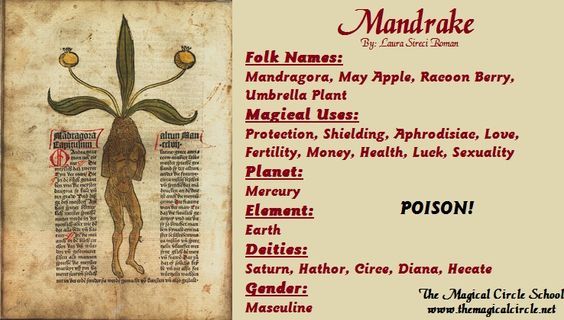
Mandragora, often referred to as “witch’s herb,” has been a subject of fascination for centuries. Its use in potion-making and unguents is said to be magical, but what makes this plant so unique? In this article, we’ll delve into the world of Mandragora officinarum, exploring its properties, effects, and uses.
What is Mandragora?
Mandragora officinarum, commonly known as mandrake or mandrake root, is a member of the Solanaceae family. It’s characterized by its distinctive appearance: almost devoid of a stem, with rosette-like leaves at the base, and ovate-lanceolate foliage. The plant’s color is dark green, while its flowers have a calice-like shape, and its fruit are yellow, measuring 2-4 cm in diameter.
History and Folklore
Mandragora has been used for various purposes throughout history, from medicine to magic. In ancient Greece and Rome, the plant was believed to be the body of Hermes Trismegistus, a god associated with wisdom and alchemy. The plant’s unique shape and supposed magical properties led people to believe that it could grant fertility, protection, and immortality.
In medieval Europe, mandrake was used in traditional medicine for various ailments, including epilepsy, toothaches, and rheumatism. However, its toxicity made it a highly sought-after ingredient for potions and unguents, leading to allegations of witchcraft and black magic.
Where is Mandragora Found?
Despite its toxicity, mandrake has been used in traditional medicine for various purposes. However, it is not commonly found in herbalism or medicine today due to its toxicity. The plant’s active compounds, such as tropane alkaloids, can be extracted and used in pharmaceutical applications.
Mandragora officinarum is native to the Mediterranean region, but it has been naturalized in other parts of Europe and Asia. It grows in deciduous forests, often near streams and rivers, where its roots absorb moisture and nutrients.
The Properties of Mandragora
Mandragora contains a range of toxic substances, including L-iosciamine, Atropina (a racemic mixture), and Scopolamina (also known as L_ioscina). These compounds have a similar effect to Atropa belladonna, acting on muscarinic receptors in the central nervous system, gastrointestinal tract, and cardiovascular system.
When these alkaloids enter the body, they block the action of acetylcholine, leading to various symptoms. These can include dry mouth, blurred vision, dilated pupils, increased body temperature, drowsiness, constipation, tachycardia, vertigo, and headaches.
The Effects of Mandragora
While mandrake has been used in traditional medicine for various purposes, its effects are often misunderstood. In reality, it’s more of a “maledicta” (cursed) plant due to its toxic properties. The plant can be easily confused with edible plants like spinach, beetroot, or lettuce, leading to cases of poisoning.
To explore the effects of mandrake and other herbs, consider consulting “The New Encyclopedia of Herbs.” This comprehensive guide provides valuable information on various plants and their uses.
Mandragora Radice: A Look at its Toxicity
Mandrake root is also toxic, containing the same range of alkaloids as the leaves. The root has a characteristic appearance, being ramified and reaching significant sizes, with a brown color and an anthropomorphic shape.
In conclusion, Mandragora officinarum is a fascinating plant with unique properties and effects. While its toxicity should be taken seriously, it also holds potential for pharmaceutical applications. When exploring the world of herbs, it’s essential to approach them with caution and respect their power.
Frequently Asked Questions (FAQs)
- Is mandrake safe to consume?
No, mandrake is highly toxic and should not be ingested. - What are the effects of mandragora on the central nervous system?
Mandragora’s active compounds can cause damage to muscarinic receptors in the CNS, leading to symptoms like drowsiness and confusion. - Can I use mandrake for medicinal purposes?
While mandrake contains useful compounds, its toxicity makes it unsuitable for direct medical application. However, some pharmaceutical companies may extract these compounds for therapeutic use. - How can I identify mandragora in the wild?
Mandragora is recognizable by its dark green foliage and ovate-lanceolate leaves. Be cautious when approaching any plant with similar characteristics. - Can I grow mandrake at home?
Mandragora officinarum is a challenging plant to cultivate due to its toxicity and specific growing requirements. - What are the potential risks of using mandrake for potion-making or unguents?
Mandragora’s toxic properties can lead to serious health complications if not handled properly. - Can I use mandrake in traditional medicine?
No, due to its toxicity, mandrake should not be used as a treatment for any medical condition. - What are some alternative herbs with similar effects to mandragora?
Traditional Uses of Mandragora
Mandragora has been used for various purposes throughout history, including:
- Medicinal uses: Mandrake was believed to have antispasmodic and analgesic properties, making it a treatment for epilepsy, toothaches, and rheumatism.
- Potion-making: Mandrake was used in traditional medicine to create potions that were believed to grant fertility, protection, and immortality.
- Witchcraft: Mandragora was associated with witchcraft due to its toxic properties and supposed magical powers.
Mandragora’s Role in Modern Medicine
While mandrake is not commonly used in modern medicine, some of its active compounds have been extracted and used in pharmaceutical applications. For example:
- Atropine: Mandrake contains Atropina, a racemic mixture that has similar effects to atropine. Atropine is a widely used medication for various conditions, including bradycardia and urination disorders.
- Scopolamine: Scopolamina (also known as L-ioscina) is another compound found in mandrake. It’s been used to treat nausea, vomiting, and motion sickness.
Cultivation and Propagation
Mandragora officinarum is a challenging plant to cultivate due to its toxicity and specific growing requirements. However, with proper care and attention, it can be grown successfully in controlled environments.
To grow mandrake, you’ll need:
- Well-draining soil: Mandrake prefers well-draining soil that’s rich in organic matter.
- Shade: Mandrake requires partial shade to full sun, depending on the climate.
- Moisture: Mandrake needs consistent moisture, especially during its germination phase.
- Temperature: Mandrake thrives in temperatures between 15°C and 25°C (59°F and 77°F).
Conclusion
Mandragora officinarum is a fascinating plant with unique properties and effects. While its toxicity should be taken seriously, it also holds potential for pharmaceutical applications. When exploring the world of herbs, it’s essential to approach them with caution and respect their power.
In conclusion, Mandragora has been used for various purposes throughout history, from medicine to magic. Its toxic properties make it a challenging plant to cultivate, but its unique effects have captivated humans for centuries.


