
Introduction
Manatees and dugongs, affectionately known as “sea cows,” have long been a subject of fascination for marine enthusiasts. These large, gentle creatures are often mistaken for other mammals, but in reality, they belong to a unique family of aquatic animals called Sirenids. In this article, we will delve into the world of manatees and dugongs, exploring their physical characteristics, habits, habitats, diets, and more.
Physical Characteristics
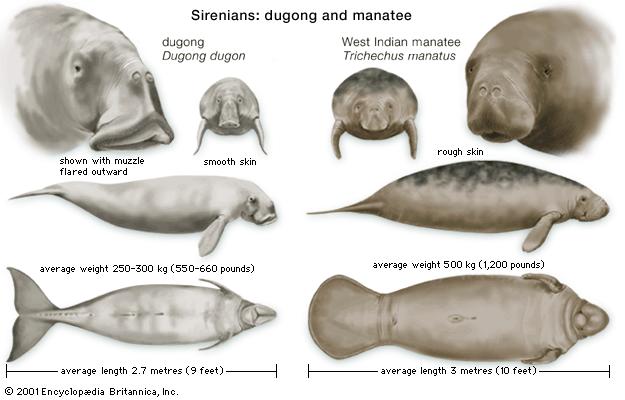
At first glance, manatees and dugongs resemble each other, with stout bodies, flippers, and paddle-like tails. However, a closer inspection reveals distinct differences between the two species. Manatees have rounded flippers, whereas dugongs have longer, thinner flippers. Additionally, manatees have a distinctive split upper lip, while dugongs do not.
Habitats and Distribution
Manatees and dugongs inhabit both freshwater and brackish environments, with three distinct subspecies of manatees found in Africa, Florida, the Caribbean, and South America. Dugongs, on the other hand, are primarily found in the coastal waters of Australia and Southeast Asia.
Behavior and Social Interactions
Manatees are known for their social nature, often gathering in groups of up to 100 individuals. In contrast, dugongs are more solitary creatures, with a wider distribution across their habitats. Despite their differences, both species have been observed engaging in affectionate behavior, such as embracing each other or nuzzling.
Diet and Feeding Habits
Manatees and dugongs are herbivores, feeding on aquatic plants and algae. In addition to these plant-based foods, manatees also eat seagrass, which is abundant in their habitats. Dugongs, too, consume seagrass, as well as other marine vegetation.
Conservation Status
Unfortunately, both manatees and dugongs are threatened by human activities, such as habitat destruction, entanglement in fishing nets, and boat collisions. As a result, they are protected by conservation efforts aimed at preserving their habitats and reducing human impact.
Historical Significance
One of the earliest recorded encounters with Sirenids was made by Christopher Columbus in 1493, while sailing off the coast of Haiti. While Columbus was initially frightened by the creatures’ massive size and unusual appearance, we now know that they pose no threat to humans.
Physiological Adaptations
Manatees and dugongs have several physiological adaptations that enable them to thrive in aquatic environments. These include:
- Blubber: Both species have thick layers of blubber, which provide insulation against cold temperatures.
- Thick skin: Manatees and dugongs have tough, leathery skin that protects them from the wear and tear of their aquatic lifestyle.
- Streamlined bodies: Their streamlined bodies allow them to swim efficiently through the water, conserving energy.
Unique Features
Manatees and dugongs possess several unique features that set them apart from other marine mammals. These include:
- Flippers: Both species have flippers, which they use for propulsion and steering.
- Paddle-like tails: Manatees and dugongs have paddle-like tails, which enable them to maneuver through shallow waters.
- Unique dental structure: Both species have distinctive dental structures that allow them to grind and crush plant material.
Reproduction and Life Cycle
Manatees and dugongs exhibit unique reproductive strategies. These include:
- Slow growth rate: Manatees and dugongs grow slowly, which allows them to invest energy in developing robust bodies.
- Long gestation period: Both species have long gestation periods, with manatees experiencing a 13-month pregnancy and dugongs having a 14-month pregnancy.
- Protective maternal instincts: Female manatees and dugongs are fiercely protective of their young, often forming close bonds with them.
Disease and Parasites
Manatees and dugongs are susceptible to various diseases and parasites, including:
- Bacterial infections: Both species can develop bacterial infections, which can be life-threatening.
- Parasitic infestations: Manatees and dugongs are often infected by parasitic organisms, such as tapeworms and fleas.
Conservation Efforts
To mitigate the threats faced by manatees and dugongs, conservation efforts are underway. These include:
- Habitat preservation: Organizations are working to protect and restore habitats for both species.
- Reducing human impact: Conservationists are promoting responsible fishing practices, reducing boat traffic, and educating the public about the importance of these creatures.
Interesting Facts
- Manatees can hold their breath for up to 20 minutes.
- Dugongs have been on the planet for over 40 million years.
- Manatees are actually more closely related to elephants than they are to whales or dolphins.
By learning more about these incredible creatures, we can work together to ensure the long-term survival of manatees and dugongs. By understanding their unique characteristics, habitats, and behaviors, we can better appreciate the importance of preserving these aquatic wonders.
Frequently Asked Questions
- What is the difference between a manatee and a dugong?
While both species belong to the same family (Sirenidae), they exhibit distinct physical characteristics, such as flipper shape and upper lip structure. - Where are manatees and dugongs found in the wild?
Manatees inhabit freshwater and brackish environments across Africa, Florida, the Caribbean, and South America, while dugongs are primarily found in coastal waters of Australia and Southeast Asia. - What do manatees and dugongs eat?
Both species are herbivores, feeding on aquatic plants, algae, seagrass, and other marine vegetation. - Are manatees and dugongs endangered?
Yes, both species are threatened by human activities, such as habitat destruction, entanglement in fishing nets, and boat collisions. - Can I interact with manatees and dugongs in the wild?
It is essential to exercise caution when approaching these creatures, as they can be injured or killed if handled improperly. It’s recommended to observe them from a safe distance.
Conclusion
Manatees and dugongs are fascinating creatures that continue to captivate our imagination. By delving deeper into their world, we can gain a greater appreciation for the importance of preserving aquatic ecosystems and protecting these incredible animals. As we strive to ensure the long-term survival of manatees and dugongs, we must also recognize the unique challenges they face in modern times.


