
Introduction
Deep in the heart of Asia, a fascinating creature has been thriving for centuries. The macac, also known as monkeys, are one of the most widespread primate species after humans, with a distribution that spans across large parts of the continent. But what sets these creatures apart from their human cousins? Let’s embark on a journey to explore the world of macac and uncover the secrets behind their remarkable adaptability.
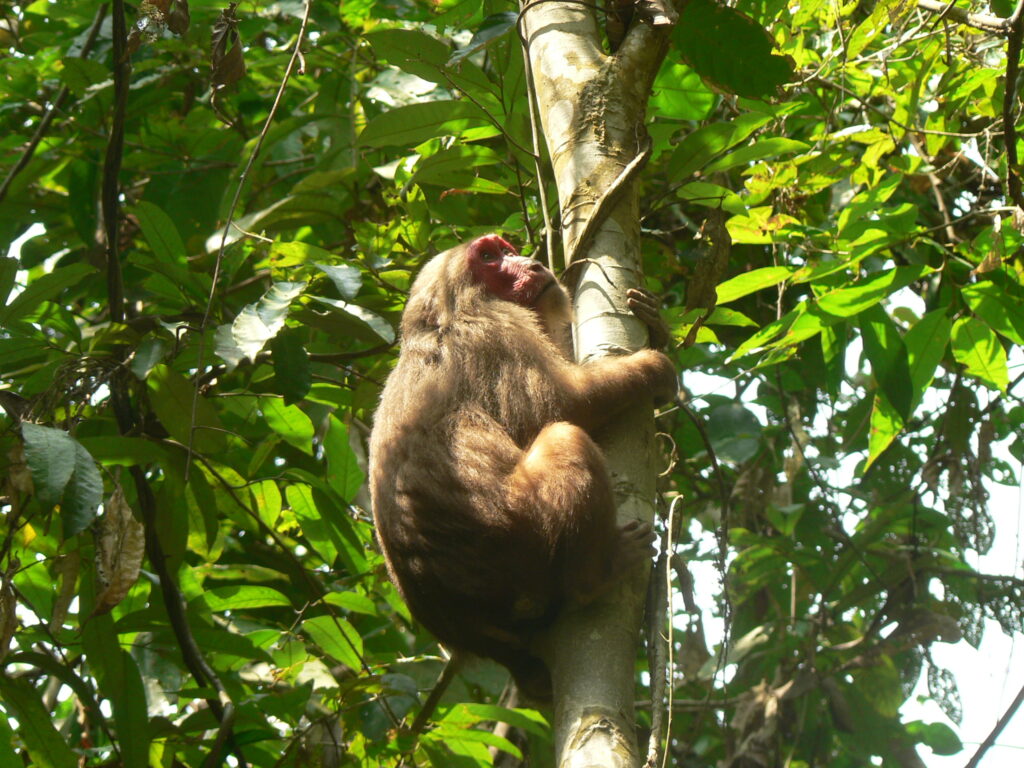
The macac is a member of the Cercopithecidae family, characterized by robust forms, short and long limbs, and broad callosities on their buttocks. Despite their rugged appearance, they are surprisingly agile climbers, often swinging through trees with ease during the day. But when it comes to living in groups, macac take a cue from humans – they congregate in communities of varying sizes, from 10 to 100 individuals.
One of the most fascinating aspects of macac is their diverse diet. While fruit makes up the bulk of their meals, they also snack on insects, bird eggs, small vertebrates, and even crustaceans when the opportunity arises. This adaptability has allowed them to thrive in a wide range of habitats, from tropical rainforests to mountainous regions.
Characteristics and Origins
The macac’s origins date back to the Pleistocene era, around 2-3 million years ago. They are believed to have evolved from smaller primate species that inhabited the Indian subcontinent. Over time, they spread throughout Asia, adapting to various environments and developing unique characteristics.
Studies have shown that different macac species have distinct genetic markers that reflect their evolutionary history. For example, the Macaca mulatta (rhesus macaque) is thought to have originated in southern China, while the Macaca fuscata (Japanese macaque) is believed to have emerged in Japan around 200,000 years ago.
Weight and Length
Measuring the macac’s size can be a bit tricky, as it varies depending on their environment. On average, the body length ranges from 40 to 75 cm, with weight fluctuating accordingly. Female macacs tend to weigh half of what their male counterparts do, making them a striking example of sexual dimorphism.
Their tails are another interesting feature – some species have very short, almost vestigial, while others have longer tails than their bodies. In extreme cases, the tail may not be present at all! These tiny details offer a glimpse into the intricate world of macac biology.
Behavior and Reproduction
One of the most intriguing aspects of macac behavior is their social structure. Female macacs form the majority of groups, while males often wander on their own or join smaller male-only communities. When it comes to reproduction, one waiting period of around 160-170 days precedes the arrival of young Macac.
Sexual maturity hits at varying ages – females at 4 years old and males at 7 years old. This remarkable level of sexual maturity is a testament to their adaptability in the wild. In some species, females have been observed forming long-term monogamous relationships with males, while others engage in more fluid mating systems.
Habitat and Distribution
The macac’s range spans from Afghanistan to China, covering much of Asia. They inhabit local forests or rock areas, often venturing into human-dominated landscapes. The Macaco reso (Macaca mulatta) is one of the most widespread species, with a presence in Pakistan, India, and northern China.
In southern China, they are also found, particularly in areas with dense vegetation. In Japan, Macaca fuscata thrives in colder climates, often taking refuge in hot springs to maintain their bodily temperature. The Indian subcontinent is home to several macac species, including the Rhesus macaque (Macaca mulatta) and the Bonnet macaque (Macaca radiata).
Conservation Status
Unfortunately, many macac populations are threatened or endangered due to habitat loss, hunting, and human-wildlife conflict. The Macaco reso is listed as “Least Concern” on the IUCN Red List, but other species, such as the Japanese macaque (Macaca fuscata), are classified as “Vulnerable”.
Efforts to conserve macac populations include habitat restoration, research programs, and education initiatives aimed at reducing human-wildlife conflict. Organizations like the World Wildlife Fund (WWF) and the International Union for Conservation of Nature (IUCN) are working tirelessly to protect these incredible creatures.
Conclusion
As we’ve explored the world of macac, it’s become clear that these creatures are remarkably similar to us – even if they live on different continents and have distinct adaptations. By delving into their behavior, biology, and habitats, we gain a deeper understanding of what makes them tick.
So next time you’re strolling through a forest or observing primates in the wild, remember the fascinating world of macac waiting for your discovery!
Frequently Asked Questions
- What is the average lifespan of a macac?
The average lifespan of a macac is 15-20 years when living freely. - How many species of macac are there?
There are currently 22 recognized species of macac, with numerous subspecies. - What do macacs primarily eat?
Macacs mainly consume fruit, but their diet also includes other plant-based ingredients like insects and bird eggs. - Can macacs climb trees?
Yes, macacs are skilled climbers and often spend their days swinging through the branches of trees. - How long does it take for a macac to reach sexual maturity?
Female macacs reach sexual maturity at around 4 years old, while males mature at 7 years old. - Are there any macacs that live in hot springs?
Yes, Macaca fuscata in Japan is known to thrive in colder climates and often takes refuge in hot springs to maintain their bodily temperature. - Can macacs be domesticated?
While it’s possible to keep macacs as pets or in captivity, they are generally not considered suitable for domestication due to their wild nature. - Are there any conservation efforts in place for macac populations?
Yes, various organizations and governments are working together to protect and conserve macac habitats, particularly in areas where they face threats from deforestation and human-wildlife conflict.
Recommended Reading
If you’re fascinated by the world of macac and want to learn more, consider checking out Dario Maestripieri’s book “Machiavellian Intelligence – How monkeys and humans conquered the world.” This thought-provoking read offers insights into the intricate relationships between monkeys, humans, and their environments.
Additionally, for those interested in exploring the science behind macac biology, “Primates: The Fossil Record of Human Evolution” by David Pilbeam is an excellent resource.


