
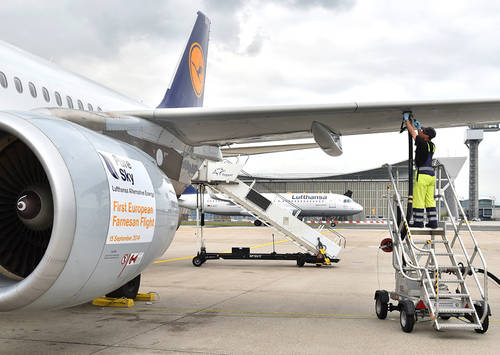
As the world grapples with climate change, airlines are under pressure to reduce their carbon footprint. Lufthansa, Germany’s largest airline, has taken a significant step towards sustainability by introducing biofuel-powered flights. But what exactly is biofuel, and how does it work? Let’s dive into the world of sustainable aviation and explore the possibilities of biofuels in flight.
The Rise of Biofuel
Biofuels have been around for decades, but their use in commercial aviation is a relatively new development. The concept is simple: plants absorb CO2 from the atmosphere through photosynthesis, which is then converted into a fuel that can be used by aircraft engines. This process reduces greenhouse gas emissions and provides a cleaner alternative to fossil fuels.
The rise of biofuels can be attributed to growing concerns about climate change and the need for sustainable aviation fuels. In 2019, the International Air Transport Association (IATA) set a goal to reduce net carbon emissions from commercial aviation by 50% by 2050. To achieve this, airlines must explore alternative fuels and technologies.
Lufthansa’s Biofuel Experiment
In 2011, Lufthansa launched its burnFAIR project, a six-month experiment using biofuels on flights between Hamburg and Frankfurt. The results were impressive: over 1,187 flights reduced CO2 emissions by 1,471 tons. But what made this project successful? According to Joachim Buse, Vice President of Aviation Biofuel at Lufthansa, the key was the development of synthetic bios fuel.
Synthetic bios fuel is a type of biofuel that’s produced from renewable sources such as biomass or algae oil. It’s converted into a fuel that can be used by aircraft engines, reducing greenhouse gas emissions and providing a cleaner alternative to traditional fossil fuels.
The Science Behind Biofuels
So, how does the process work? When plants absorb CO2 through photosynthesis, they convert it into organic compounds. These compounds are then converted into biofuel through a fermentation process. The resulting fuel is a mixture of hydrocarbons that can be used by aircraft engines.
Here’s a simplified overview of the biofuel production process:
- Crops: Crops such as corn, sugarcane, or switchgrass are grown specifically for their ability to absorb CO2.
- Harvesting: The crops are harvested and processed into a biomass feedstock.
- Conversion: The biomass is converted into biofuels through various processes, including anaerobic digestion or fermentation.
- Refining: The biofuels are refined into a usable fuel that can be used by aircraft engines.
A Promising Solution to Climate Change
But what about the impact on food security? This is where things get complicated. Experts have been opposing the cultivation of crops suitable for biofuel production, as it could compromise traditional agricultural practices and lead to food shortages.
However, researchers are exploring alternative approaches to sustainable aviation fuels, such as:
- Algae-based biofuels: Algae can be grown in open ponds or photobioreactors, providing a low-carbon feedstock for biofuel production.
- Food waste-based biofuels: Food waste can be converted into biofuels through anaerobic digestion or fermentation.
- Advanced biofuels: Advanced biofuels are produced from non-food biomass sources such as agricultural waste or municipal solid waste.
The EU Emissions Trading System: A Complex Issue
Lufthansa’s use of biofuels raises questions about the airline’s future in the EU Emissions Trading System (EU ETS). The system allows airlines to buy “authorizations to pollute” if they exceed their emission limits, with prices set at 10 euros per ton of CO2. However, the current valuation sets a free allocation of greenhouse gas permits until 2020.
This raises concerns about the feasibility of sustainable aviation fuels in the short term. However, as demand for biofuels increases and production costs decrease, the EU ETS may need to be revised to ensure that airlines can continue to adopt these technologies.
Unlocking Potential: What’s Next?
The problem is that biofuels are still relatively expensive and difficult to produce in large quantities. But what if governments and industries worked together to create more sustainable aviation fuels?
According to Connie Hedegaard, EU climate commissioner, potential revenues from greenhouse gas permits could enable airlines to modernize their fleets and switch to non-fossil fuels.
To unlock this potential, governments and industries must work together on several fronts:
- Research and development: Continued research and development are needed to improve the efficiency and cost-effectiveness of biofuel production.
- Policy support: Governments must provide policy support for sustainable aviation fuels, including subsidies or other incentives.
- Infrastructure development: The development of infrastructure for sustainable aviation fuels, such as fueling stations and storage facilities, is crucial.
Conclusion
Lufthansa’s biofuel-powered flights mark a significant step towards a more sustainable future in aviation. While challenges remain, the technology has shown promise, and it’s up to governments and industries to support its development.
As we look to the skies of 2050, will biofuels be the solution to our climate crisis? Only time will tell. But one thing is certain: sustainable aviation fuels have a bright future ahead, and it’s worth exploring every possibility to reduce greenhouse gas emissions from commercial aviation.
Frequently Asked Questions
Q: What is biofuel, and how does it work?
A: Biofuel is a fuel made from organic matter such as plants, algae, or agricultural waste. It’s converted into a fuel that can be used by aircraft engines, reducing greenhouse gas emissions.
Q: How do Lufthansa’s biofuel-powered flights impact the environment?
A: By reducing CO2 emissions by 1,471 tons over six months, these flights demonstrate the potential for sustainable aviation fuels to make a real difference in reducing climate change.
Q: What is synthetic bios fuel, and how does it compare to traditional fossil fuels?
A: Synthetic bios fuel is as reliable as traditional fossil fuels but has lower environmental impacts. It’s also more energy-dense, allowing airlines to reduce fuel consumption and emissions.
Q: Can biofuels compromise food security?
A: The cultivation of crops suitable for biofuel production can lead to food shortages if done on a large scale. Efforts must be made to balance sustainable aviation fuels with traditional agricultural practices.
Q: What role does the EU Emissions Trading System play in regulating CO2 emissions from airlines?
A: The system allows airlines to buy “authorizations to pollute” if they exceed their emission limits, with prices set at 10 euros per ton of CO2. However, current valuation sets a free allocation of greenhouse gas permits until 2020.
Q: Can biofuels be produced in large quantities and made more affordable?
A: If governments and industries work together to create more sustainable aviation fuels, potential revenues from greenhouse gas permits could enable airlines to modernize their fleets and switch to non-fossil fuels.
Q: What’s the future of biofuel-powered flights in commercial aviation?
A: With ongoing research and development, biofuels have the potential to play a significant role in reducing emissions from aviation. As technology improves and economies of scale are achieved, we can expect to see more widespread adoption.
Q: Can biofuels be used in all types of aircraft engines?
A: Currently, most commercial aircraft engines are not compatible with biofuel. However, manufacturers are working on developing new engines that can run on sustainable aviation fuels.
Q: What’s the impact of climate change on air travel?
A: Climate change is projected to have a significant impact on air travel, with rising temperatures and extreme weather events affecting flight routes and schedules.


