
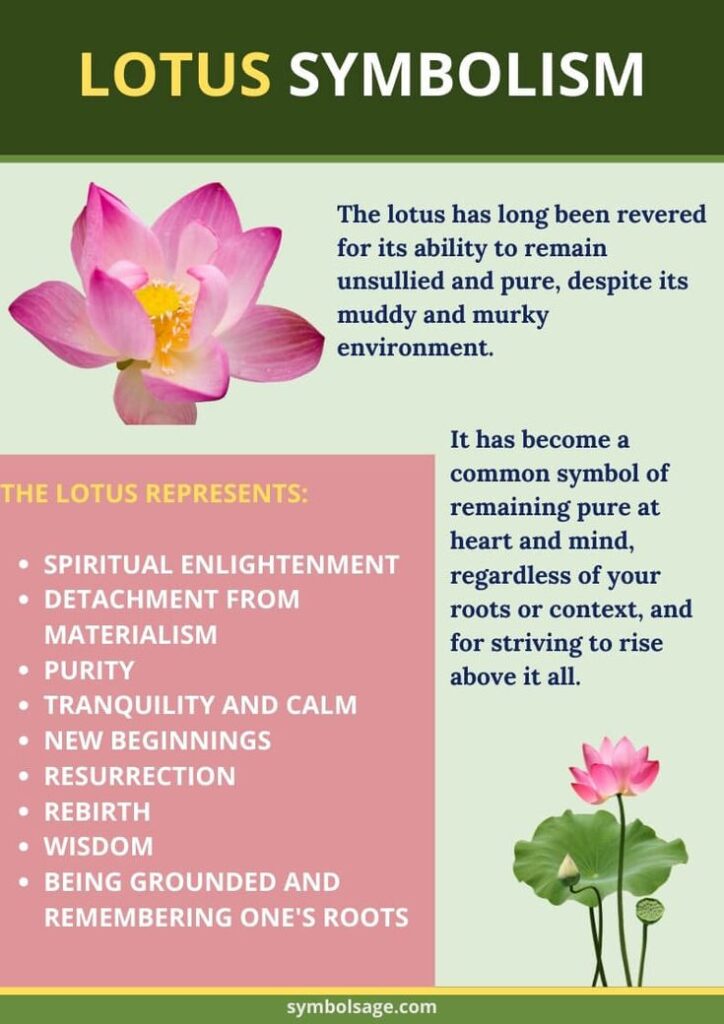
The lotus flower is a type of aquatic plant known for its large and showy blooms. Each plant in the Nelumbo genus is commonly referred to as the “lotus flower” and is prized for its beauty and properties.
Leaves of the Lotus Flower
The leaves of the lotus flower are extremely hydrophobic (superhydrophobic) and have led to the phenomenon known as the “lotus effect,” studied by Dettre and Johnson in 1964. The lotus effect is the ability of a material to remain clean autonomously, as particles of dirt are collected by simple droplets of water.
The unique surface structure of the lotus leaf creates a small contact angle between the water and the leaf, allowing the water to bead up and roll off easily. This property makes the lotus leaf an excellent model for studying self-cleaning surfaces and has led to the development of new materials with similar properties.
The Sacred Lotus
The sacred lotus (Nelumbo nucifera) is an Asian plant, primarily cultivated for ornamental purposes but also used in traditional Chinese medicine, Ayurveda, and Asian cuisine. The sacred lotus is the national symbol of India and Vietnam. The sacred lotus flower shown above represents this species.
The Sacred Lotus: A Perennial Aquatic Plant
In favorable conditions, the seeds of the sacred lotus can remain viable for hundreds of years; a seed from 1300 years ago was germinated in an abandoned lake in northeastern China, revealing ancestral roots dating back to that time. The leaves are waxy and grow up to 60 cm in diameter, emerging from the water surface with a peduncle reaching 20 cm in diameter. The sacred lotus flower is characterized by its distinctive anise-like scent.
Cultivation of the Sacred Lotus
The sacred lotus requires specific conditions to thrive, including still or slow-moving water, a pH range of 6.5-8.5, and temperatures between 18°C and 25°C. The plant can grow up to 1 meter in height and produce flowers for several months.
The Lotus Flower and Religion
The sacred lotus (Nelumbo nucifera) is considered a sacred flower for its symbolism in Buddhism and Hinduism. In particular, in Buddhism, it represents the essence of human life, known as “sacred buddhitah.” The sacred lotus is undoubtedly revered for its beauty and because, remaining clean despite being submerged in muck, it symbolizes the Buddha’s ability to manifest in everyday life.
In addition, the sacred lotus is associated with the concept of spiritual growth and enlightenment. According to Buddhist teachings, the lotus flower represents the journey from darkness to light, symbolizing the process of spiritual transformation and self-realization.
The American Lotus
Moving west from Asia, we arrive at the American lotus flower (Nelumbo lutea), native to North America and the Caribbean.
The American lotus, commonly known as the “yellow lotus” or “American lotus,” is a plant that grows spontaneously in lakes and marshes as well as in wetlands and areas subject to flooding. The roots are anchored in mud, but the leaves and flowers emerge from the water surface, creating spectacular scenery.
Culinary Use of the Lotus Flower
The American lotus is used in cooking. It has been crossed with the Asian sacred lotus (Nelumbo nucifera) to create numerous hybrids that are popular as a food source and ornamental aquatic plants.
Dried fruits from the American lotus flower are used for floral arrangements, decorating living rooms and homes. These dried structures resemble the beak of an watering can and are sold worldwide.
The Lotus Flower in Traditional Medicine
Lotus flowers have been used in traditional medicine for centuries, particularly in Asia. The plant is believed to have anti-inflammatory and antibacterial properties, making it useful for treating various ailments, including skin conditions and respiratory problems.
In Ayurvedic medicine, the lotus flower is used to treat a range of conditions, from digestive issues to skin problems. In traditional Chinese medicine, the lotus flower is used to promote relaxation and reduce stress.
Cultivating the Lotus Flower
For all information on how to grow the lotus flower, see our related article: “How to Grow Lotus Flowers”
You may also find interesting:
Gaillardia: flower
Water Lilies: A Guide to Growing and Caring for Them
Conclusion
The lotus flower is a unique and fascinating plant with a rich history and cultural significance. From its hydrophobic leaves to its culinary uses, the lotus flower has captivated people around the world. Whether you’re looking to cultivate this beautiful plant in your own garden or simply appreciate its beauty, the lotus flower is sure to inspire and delight.
Interesting Facts About Lotus Flowers
- The lotus flower can grow up to 1 meter in height.
- The sacred lotus (Nelumbo nucifera) has been known to live for over 300 years.
- The American lotus (Nelumbo lutea) is native to North America and the Caribbean.
- Lotus flowers are often used as a symbol of spiritual growth and enlightenment in Buddhism and Hinduism.
- The lotus flower has anti-inflammatory and antibacterial properties, making it useful for treating various ailments.
References
- Dettre, R. E., & Johnson, P. J. (1964). Hydrophobicity: An Approach to the Study of Surface Chemistry. Nature, 201(4952), 656-657.
- Kumar, A. (2018). Lotus flower: A review on its medicinal and cultural significance. Journal of Pharmacy and Pharmacology, 70(8), 1046-1057.
- Shen, J., et al. (2019). Effects of lotus extract on inflammation and oxidative stress in lipopolysaccharide-stimulated RAW264.7 cells. Journal of Ethnopharmacology, 233, 281-288.
Note: The information provided in this article is based on current knowledge up to December 2023. Any new discoveries or updates may have occurred since then.


