
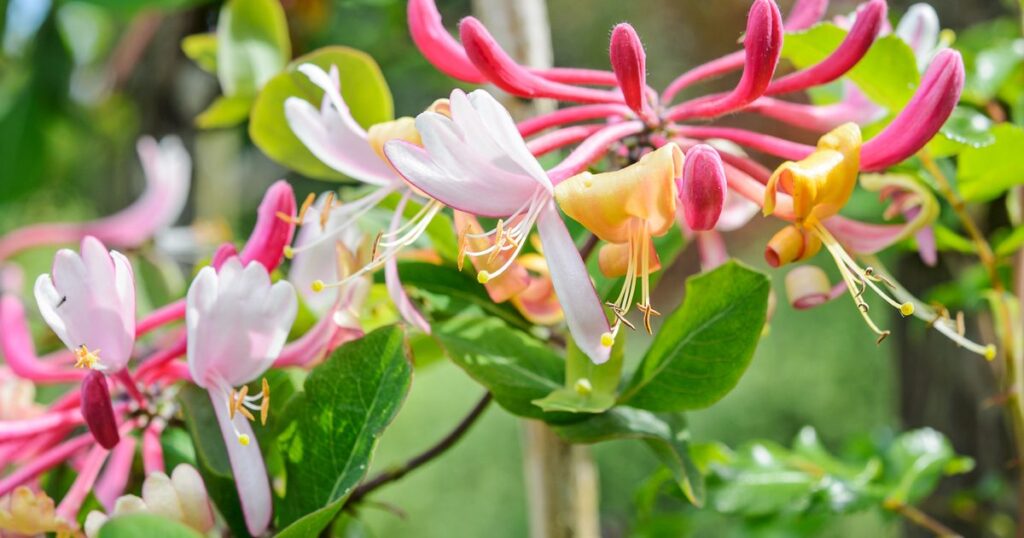
Introduction
If you’re looking for a beautiful and fragrant climbing plant to add some magic to your garden, you might want to consider honeysuckle. With over 400 species to choose from, this evergreen climber is sure to captivate with its stunning flowers and tantalizing scent. In this article, we’ll delve into the world of honeysuckle, exploring its cultivation, care, and unique characteristics that make it a beloved addition to any garden.
The Wonders of Honeysuckle
Honeysuckle (Lonicera caprifolium) is a popular genus in gardening, prized for its ornamental foliage and flowers. With many species to choose from, honeysuckles can be grown alone or paired with other plants like fuchsia to create stunning displays.
The beauty of honeysuckle lies in its ability to attract pollinators, such as bees and butterflies, and provide a haven for birds and small animals during the winter months. Its fragrance is also highly prized, with some species emitting a sweet, vanilla-like scent that’s sure to transport you to a world of serenity.
In addition to its aesthetic appeal, honeysuckle has also been used in traditional medicine for centuries. The plant contains compounds that have anti-inflammatory and antiseptic properties, making it a popular ingredient in herbal remedies.
Contents
- 1. Honeysuckle: Cultivation and Care
- 2. Lonicera caprifolium – The Common Honeysuckle
- 3. Lonicera x heckrottii – The Red-Cream Honeysuckle
- 4. Lonicera fragrantissima – Winter Honeysuckle
- 5. Lonicera alpigena – Alpine Honeysuckle
- 6. Lonicera periclymenum – Common Honeysuckle
- 7. Lonicera japonica – Japanese Honeysuckle
- 8. Lonicera tatarica – Tatarian Honeysuckle
- Conclusion
- Frequently Asked Questions
1. Honeysuckle: Cultivation and Care
When it comes to cultivating honeysuckle, there are a few key things to consider. Ideally, the roots of the plants should be permanently shaded while their foliage is exposed to light (half-shade or full sun). Plants must also be carefully selected as some species can reach considerable sizes.
In addition to providing adequate lighting and shading for the roots, honeysuckle requires regular watering and fertilization to promote healthy growth. A balanced fertilizer with a mix of nitrogen, phosphorus, and potassium should be applied during the growing season, while mulching around the base of the plants helps retain moisture and suppress weeds.
Pruning is also essential for maintaining the shape and size of your honeysuckle plant. By pruning regularly, you can encourage bushy growth, promote new blooms, and prevent the plant from becoming too leggy or overgrown.
2. Lonicera caprifolium – The Common Honeysuckle
The common honeysuckle (Lonicera caprifolium), also known as climbing fuchsia (Lonicera caprifolium), is a robust and fast-growing plant that tolerates various exposures. However, it prefers full sun or half-shade to produce flowers.
The common honeysuckle produces yellow-green flowers with a cream color. It’s ideal for growing a climbing evergreen plant with fragrant flowers.
3. Lonicera x heckrottii – The Red-Cream Honeysuckle
Lonicera x heckrottii is also known as the red-cream honeysuckle, distinguished from the common honeysuckle by its flower color. The flowers of this species are profuse and fragrant, like those of the common honeysuckle.
Both species have abundant flowering and rapid growth. Lonicera x heckrottii has a more bushy habit and can reach heights of 3 to 5 meters. To create a dense planting, it’s recommended to put one plant per meter.
4. Lonicera fragrantissima – Winter Honeysuckle
Also known as winter honeysuckle, fragrant honeysuckle (Lonicera fragrantissima), or Chinese honeysuckle, this plant is native to China. It grows up to 5 meters in height but generally doesn’t exceed 3 meters. Its flowers are white-cream color and turn into red berries after flowering.
Flowering occurs in the winter, making it an excellent choice for adding a pop of color during the colder months.
5. Lonicera alpigena – Alpine Honeysuckle
The Alpine honeysuckle has different names in different regions, such as Tuscany cameceraso, Liguria Ceresa salvaja or Ciliegia d’alpe. It has a bushy habit and blooms between May and July. It grows throughout Italy except for Puglia, Sicily, and Sardinia where it’s difficult to find.
6. Lonicera periclymenum – Common Honeysuckle
This climbing honeysuckle can reach 6 meters in height. Its flowers are yellow with red shades. It’s known as the common honeysuckle or European honeysuckle. It attracts many insects, such as butterflies and bees, and produces bright red berries after flowering.
In areas where it grows wild, geese often make their summer nests on its leaves, while other animals like falens and colibris also take refuge under its foliage. The red berries are a good food source for attracting autumn birds like turkeys and other game birds.
7. Lonicera japonica – Japanese Honeysuckle
Also known as Japanese honeysuckle, it has fragrant flowers that resemble vanilla and produces dark brown or black berries about 3-4 mm in diameter. Its yellow flowers have a very strong scent. It can be grown from seed or by vegetative propagation; it easily multiplies by cuttings.
8. Lonicera tatarica – Tatarian Honeysuckle
This species is also loved by insects, attracting butterflies and bees. Originating from Siberia and other parts of Northern Asia, it’s widely cultivated around the world including Alaska. Its flowers are pink-white and produce bright red berries. The plant tends to form dense thickets that host birds for nest-building and fruiting.
Conclusion
Honeysuckle is a versatile and beautiful plant that can add magic to any garden. With its stunning flowers, fragrant scent, and ability to thrive in various conditions, it’s no wonder why honeysuckle has been a favorite among gardeners for centuries.
Whether you’re looking to create a lush green hedge or a dramatic climbing display, honeysuckle is sure to captivate with its unique beauty.
Frequently Asked Questions
- Q: What is the best way to care for honeysuckle?
A: Honeysuckle prefers full sun or half-shade and should have its roots permanently shaded. - Q: How tall can honeysuckle grow?
A: The height of honeysuckle plants varies depending on the species, but most can grow up to 6 meters in height. - Q: What are the benefits of growing honeysuckle?
A: Honeysuckle attracts many insects and produces bright red berries that attract autumn birds. - Q: Can I grow honeysuckle from seed?
A: Yes, honeysuckle can be grown from seed or by vegetative propagation. - Q: Is honeysuckle invasive in some areas?
A: Yes, honeysuckle can be invasive in some areas and may need to be carefully selected for cultivation.
Caring for Honeysuckle
To ensure the health and longevity of your honeysuckle plant, regular care is essential. Here are a few tips to keep in mind:
- Watering: Provide adequate watering, but avoid overwatering, which can lead to root rot.
- Fertilization: Apply balanced fertilizers during the growing season to promote healthy growth.
- Pruning: Regular pruning helps maintain shape and size, encourages bushy growth, and promotes new blooms.
- Mulching: Mulch around the base of the plants to retain moisture and suppress weeds.
By following these care tips and choosing a suitable species for your garden, you’ll be able to enjoy the beauty and benefits of honeysuckle for years to come.


