
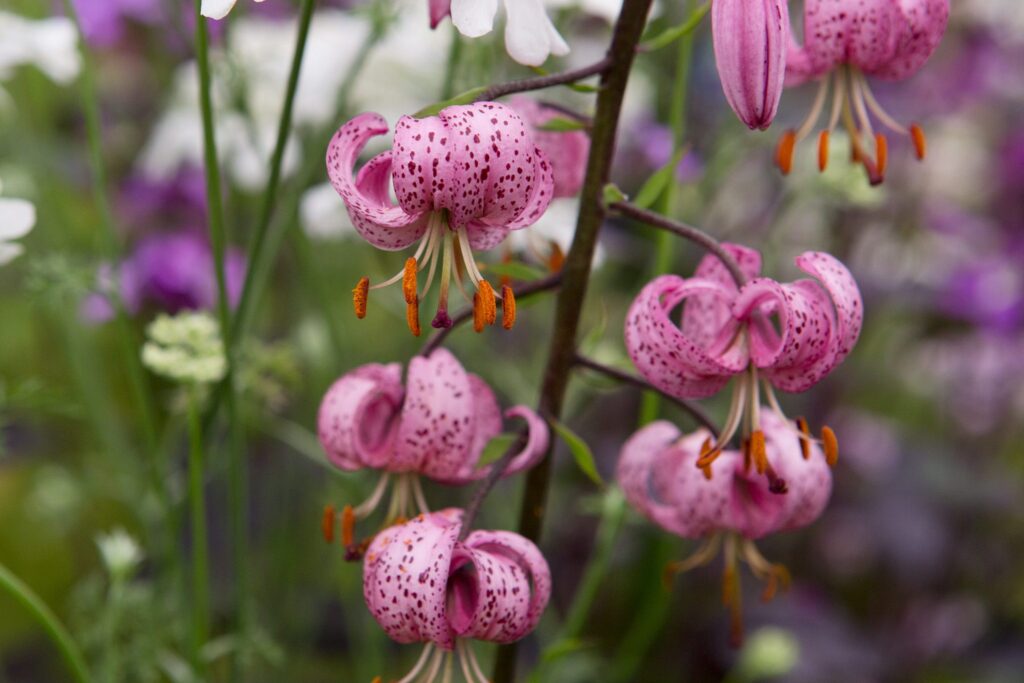
Lilium martagon, commonly known as the Martagone Lily or the Dame’s Helmet, is a fascinating perennial bulbous plant that produces stunning pendulous flowers with striking violet or reddish striations. The bulb itself is oval in shape, ranging from 10-15 cm in length and featuring an intense yellow color.
The Unique Characteristics of Lilium martagon
- Flower Description: The Martagone Lily’s flowers are pendant-like, measuring up to 5 cm in diameter, with a strong stem that supports their weight. The petals are thin and delicate, with a subtle texture that catches the light.
- Leaves: The leaves are elongated, reaching widths of 3 cm at the base and tapering as they grow along the stems. As new shoots emerge, the leaves shrink in size, creating a dramatic effect as the plant grows.
- Habitat: This plant thrives in shaded areas with acidic, nutrient-rich soils, typically found in grasslands and mountainous regions. Lilium martagon is often found growing in association with other plants that provide beneficial companionship.
The Meaning Behind the Name
Lilium martagon has multiple interpretations of its name. The Greek word “crinon” is believed to be the origin of the scientific name Lilium, while the epithet martagon may refer to the hair-like structure resembling a turban or the coloration of the flower.
Historical Significance and Folklore
In ancient alchemy practices, the Martagone Lily was associated with the planet Mars. This connection has been interpreted by some as a symbol of power and glory. In modern times, the plant’s properties have been utilized in traditional medicine to treat various ailments, including mastitis and urinary issues.
Variations: Lilium martagon Rosa and Arancione
While the Martagone Lily is most commonly associated with its yellow coloration, there are other varieties featuring shades of pink and orange. These include the Rose Martagone and the Orange Martagone, which exhibit unique characteristics such as increased acidity and a distinctive fragrance that only becomes apparent at night.
The Rose Martagone (Lilium martagon Rosa) is a beautiful variation with soft pink petals and a delicate yellow center. This variety is particularly popular among gardeners due to its elegant appearance and ability to attract pollinators.
The Orange Martagone (Lilium martagon Arancione) boasts vibrant orange flowers with subtle striations, creating a striking contrast against the green foliage. This variety is less common than others but offers an attractive alternative for those seeking something unique.
Cultivation and Care
To successfully cultivate Lilium martagon, one must ensure that the plant receives sufficient sunlight (at least 2 hours of direct sunlight) and well-draining acidic soil. The bulb should be isolated and provided with organic fertilizer to promote healthy growth. When grown in pots, the Martagone Lily can thrive quickly, blooming within 5 months.
Sowing Seeds
Due to its protected status, sowing seeds for Lilium martagon can be challenging. However, autumn is the ideal time for planting. Burying the bulbs 3-4 times their height and spacing them at least 3 times their diameter ensures optimal growth.
It’s essential to note that seedlings may take several years to mature, making it more practical to propagate Lilium martagon through division or underground rhizomes.
Growing Tips and Variations
To promote healthy growth, plant the Martagone Lily in a shaded area with well-draining acidic soil. Provide regular watering and fertilization to encourage blooming. The plant can be grown as a standalone specimen or in clusters to create colorful displays.
One popular technique for growing Lilium martagon is to use a combination of shade cloth and mulch to create an optimal microclimate. This approach helps regulate soil temperature, retain moisture, and reduce soil compaction.
Combining Lilium martagon with Other Plants
Lilium martagon can be paired with other plants to create stunning combinations that showcase its unique features. Some popular pairing options include:
- Hellebores: These winter-flowering plants complement the Martagone Lily’s spring blooms, creating a beautiful succession of color.
- Ferns: Delicate fern fronds add texture and depth to arrangements featuring Lilium martagon.
- Hostas: Shade-loving hostas provide a natural backdrop for the Martagone Lily’s showy flowers.
Additional Resources
If you enjoyed this article, follow me on Twitter, Facebook, Google+, Instagram for more content about plants, gardening, and related topics.
Frequently Asked Questions
- What is the meaning of the name Lilium martagon?
Lilium martagon has multiple interpretations, including its association with the planet Mars in ancient alchemy practices. - Where can I find Lilium martagon seeds?
Due to its protected status, finding genuine seeds for Lilium martagon can be challenging. Online marketplaces like Amazon may offer seeds, but ensure you purchase from reputable sources. - How do I care for a Martagone Lily plant?
Provide the plant with sufficient sunlight (at least 2 hours of direct sunlight), well-draining acidic soil, and regular watering and fertilization to encourage healthy growth. - Can I grow Lilium martagon in pots?
Yes, Lilium martagon can thrive in pots if provided with a deep enough container and regular care. - What are the benefits of using Lilium martagon bulbs for medicinal purposes?
The bulbs have been used traditionally to treat various ailments, including mastitis and urinary issues. - How often does Lilium martagon bloom?
The plant blooms in late spring or early summer, typically producing flowers for 4-6 weeks. - Can I grow multiple varieties of Lilium martagon together?
While possible, it’s recommended to grow different varieties separately to avoid overcrowding and promote healthy growth. - Are there any specific growing conditions required for Lilium martagon?
Yes, the plant prefers shaded areas with acidic, nutrient-rich soils and temperatures between 15-25°C (59-77°F).


