
In a world where luxury often comes with a hefty price tag and an environmental cost, one young entrepreneur is challenging the status quo. Meet Marta Antonelli, co-founder of MyMantra and creator of Ligneah, a sustainable luxury brand that’s redefining the way we think about fashion and design.
From Leather to Ligneah
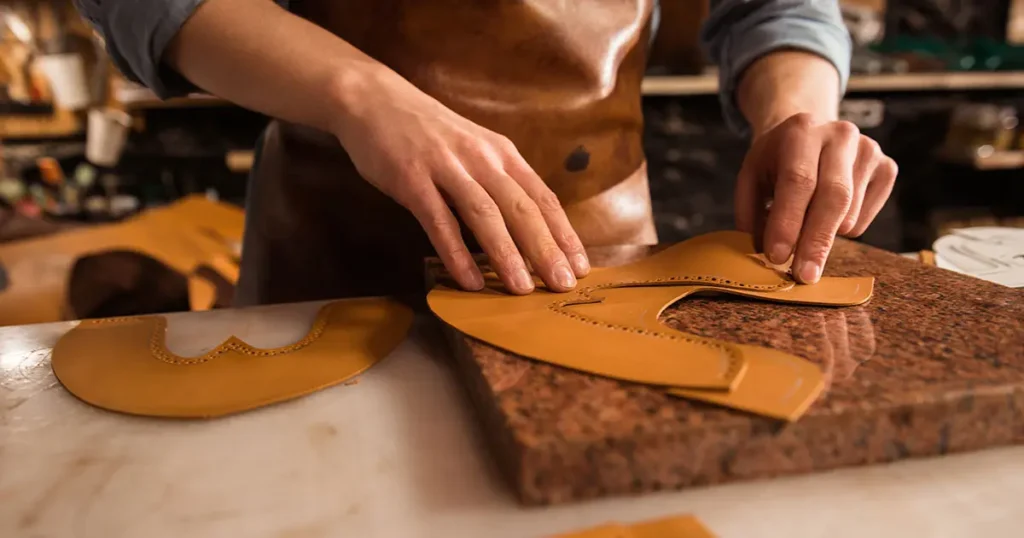
Ligneah may look like leather, but it’s not – it’s made from wood, laser-cut to perfection, and paired with cotton for a softness that rivals its animal-based counterpart. The result is a product that’s both cruelty-free and sustainable, with a price tag that’s surprisingly competitive.
For Marta and her father Aldo, the idea was born out of a desire to create something better – something that would allow them to pursue their passion for design while also making a positive impact on the environment. As vegetarians, they were looking for an alternative to animal skin that was both sustainable and cruelty-free.
The Materials Matter
So, what makes Ligneah tick? Marta is quick to explain: “We use cotton, wood, and eco-friendly adhesives to combine the two.” The wood is sourced from certified companies like FSC (Forest Stewardship Council), ensuring that it’s harvested responsibly and with minimal impact on the environment.
The process of creating Ligneah is a labor-intensive one, involving careful selection of materials and attention to detail. “We’re not just looking for sustainability – we’re also committed to quality,” Marta explains. “That means using natural-dyed fabrics in the future, too.”
Certification and Compliance
But what does it mean for Ligneah to be certified by FSC? In simple terms, it means that the wood has been harvested responsibly and with minimal environmental impact. It’s a crucial step towards ensuring that their products meet the highest standards of sustainability.
Of course, certification comes at a cost – one that Marta is willing to pay in order to prioritize her values. “Sustainability may require more economic expenditure upfront,” she acknowledges, “but we believe it’s worth it in the long run.”
Patents and Innovation
Marta and Aldo are also working on developing patents for their unique process of combining fabric and wood through eco-friendly adhesives. The result is a smooth, worked wood that resembles leather – a true innovation in sustainable luxury.
Their next venture? Metal Textile, a project that aims to use recycled metals in a similar way. “We’re excited to explore new possibilities and push the boundaries of what’s possible,” Marta says with a smile.
Made in Italy
For Marta and Aldo, there’s no question about where their products will be made – or who they’ll work with. “We’re proud to say that our production process, manufacturing, and supply all happen in Italy,” Marta explains. “We love working with small family-owned businesses and collaborating on a local level.”
This approach allows them to maintain a high level of quality while also ensuring that their products meet the highest standards of sustainability.
Designing for Sustainability
When it comes to design, Marta is clear about her vision: “I think about simple, sinuous lines that bring back the essence and forms of nature.” She’s committed to using this approach in every aspect of Ligneah’s production process – from material selection to product design.
This attention to detail allows them to limit waste and eliminate it entirely in some cases. The advantage of producing their materials themselves is a key part of their strategy: “We’re proud of what we’ve achieved so far,” Marta says with pride.
Changing Consumer Behavior
But how do consumers respond to sustainable luxury? According to Marta, there’s been a significant shift in recent years – one that reflects a growing awareness of the environmental impact of our choices. “Buyers are getting more and more interested in sustainable products they buy,” she explains. “We see this as an opportunity to share our values with the world.”
Of course, there’s still work to be done – particularly when it comes to scaling up production and making Ligneah accessible to a wider audience. But Marta is confident that their commitment to quality and sustainability will ultimately pay off.
The Market for Sustainable Luxury
So, what does the future hold for sustainable luxury? According to industry experts, there’s been a growing demand for eco-friendly products in recent years – and this trend shows no signs of slowing down.
In fact, a report by Grand View Research predicts that the global sustainable luxury market will reach $10.6 billion by 2025, driven by increasing consumer awareness of environmental issues and a desire to support companies that prioritize sustainability.
Challenges Ahead
Of course, there are still many challenges ahead for Ligneah – from scaling up production to ensuring that their products meet the highest standards of quality and sustainability.
But Marta is undeterred, confident that her commitment to sustainable luxury will ultimately drive growth and success. “We’re not just making products – we’re creating a better future,” she says with conviction.
Conclusion
In a world where luxury often comes at a cost, MyMantra’s Ligneah is a breath of fresh air. This sustainable luxury brand is redefining the way we think about fashion and design – and challenging us to rethink our values in the process.
As Marta puts it so simply: “We’re not just making products – we’re creating a better future, one that’s more sustainable and more beautiful than ever before.”
The Future of Sustainable Luxury
So what does the future hold for sustainable luxury? According to industry experts, there are several key trends that will shape the market in the years to come.
Firstly, there will be a growing demand for products made from recycled materials – as consumers become increasingly aware of the environmental impact of their choices.
Secondly, there will be a rise in the use of biodegradable materials – such as plant-based fabrics and natural dyes – which are not only more sustainable but also offer improved performance and durability.
Thirdly, there will be an increasing focus on circular economy principles – where products are designed to be recycled, reused, or upcycled at the end of their life cycle.
And finally, there will be a growing demand for transparent supply chains – as consumers become increasingly aware of the environmental and social impact of their purchasing decisions.
The Role of Technology
Technology will also play an increasingly important role in shaping the future of sustainable luxury. From 3D printing to digital textile printing, new technologies are offering innovative solutions to traditional problems.
For example, 3D printing is allowing companies to create complex designs with minimal waste and energy consumption – while digital textile printing is enabling companies to produce high-quality fabrics with reduced environmental impact.
The Impact of Social Media
Social media will also continue to play an important role in shaping the future of sustainable luxury. From influencer marketing to social media campaigns, companies are using these platforms to raise awareness about sustainability and drive engagement.
For example, MyMantra’s Ligneah has been featured on several influential blogs and websites – helping to spread the word about their commitment to sustainability and driving interest in their products.
Conclusion
In conclusion, the future of sustainable luxury is bright – with a growing demand for eco-friendly products, increasing awareness of environmental issues, and innovative technologies offering new solutions to traditional problems.
As Marta puts it so simply: “We’re not just making products – we’re creating a better future.”


