
As Christmas approaches, a familiar tradition emerges in Italy – decorating the Christmas tree. While many Italians may not be Christians, this practice has become an integral part of their holiday season. But have you ever wondered where this tradition originated? Let’s embark on a journey through time and explore the fascinating history behind the Christmas tree.
Ancient Origins: The Symbolism of Trees
In ancient cultures, trees were often associated with spiritual and mystical significance. For example, in Egypt, the cedar tree (Cedrus libani) was revered as a symbol of rebirth and renewal, while in Greece and Rome, it represented eternal life. Similarly, the ancient Celts saw the white fir tree (Abies alba) as a symbol of the birth of the divine child.
The symbolism of trees can be attributed to several factors, including:
- Evergreen nature: Trees that remained green throughout the winter months were seen as symbols of eternal life and rebirth.
- Shelter and protection: Trees provided shelter and protection from harsh weather conditions, making them a symbol of safety and security.
- Fertility and abundance: Some trees, like oak and beech, were associated with fertility and abundance due to their ability to produce acorns and other nuts.
The Early History of Christmas Trees
Fast-forward to medieval Europe, where the tradition of decorating trees began to take shape. The evergreen fir tree was seen as a symbol of life and hope during the harsh winter months. People would decorate their homes with candles, fruits, and other ornaments to celebrate the festival of Yule.
The earliest recorded evidence of Christmas tree decorating comes from 16th-century Germany, where Christians decorated trees with fruits, nuts, and candles to commemorate the birth of Jesus Christ.
The Spread of Christmas Trees Across Europe
As Christianity spread throughout Europe, the tradition of decorating trees became more widespread. The evergreen fir tree was seen as a symbol of eternal life and rebirth, which resonated with Christian teachings about the resurrection of Jesus Christ.
By the 17th century, Christmas trees had become a staple in many European households. The tradition was adopted by various cultures, each adding their unique twist to the custom.
The Role of Royal Patronage
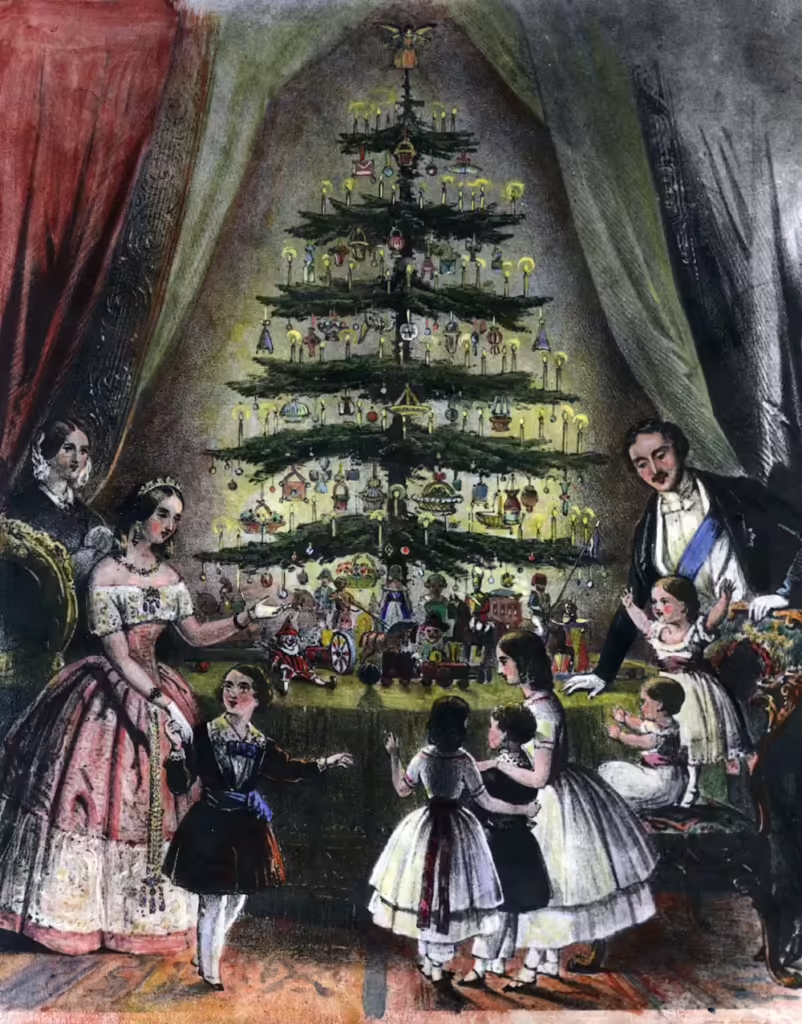
The modern Christmas tree tradition owes a great debt to royal patronage. In the 19th century, Queen Victoria and Prince Albert introduced the custom to Britain, where it quickly gained popularity among the upper class.
The Illustrated London News published an image of the royal family around a decorated tree in 1848, which helped spread the trend across Europe. This exposure played a significant role in popularizing the Christmas tree tradition among the British aristocracy.
The American Connection
Interestingly, Christmas trees were first brought to America by German immigrants in the late 18th century. However, it wasn’t until the 19th century that the tradition gained widespread acceptance.
The first American Christmas tree was set up in 1777 by German settlers in Pennsylvania. The tradition gained popularity over time, with the first recorded American Christmas tree being erected in New York City in 1823.
A Symbol of Hope and Renewal
Today, Christmas trees continue to evoke feelings of hope and renewal during the darkest time of the year. Whether decorated with traditional lights or modern ornaments, the evergreen fir tree remains a powerful symbol of eternal life and rebirth.
The symbolism behind Christmas trees can be attributed to several factors:
- Renewal and rejuvenation: Christmas trees represent the promise of new beginnings and renewal.
- Community and gathering: Christmas trees often serve as a focal point for social gatherings and family reunions.
- Spiritual significance: Christmas trees are often seen as a symbol of faith, hope, and joy.
Conclusion: The Enduring Legacy of the Christmas Tree
As we conclude our journey through the history of the Christmas tree, it becomes clear that this tradition is rooted in ancient symbolism and royal patronage. From its origins in ancient Egypt to its modern-day popularity worldwide, the Christmas tree remains a powerful symbol of hope and renewal.
Whether celebrated by Christians or non-Christians alike, the Christmas tree has become an integral part of holiday traditions around the world. Its enduring legacy serves as a reminder of the importance of community, spirituality, and renewal during the darkest time of the year.
Frequently Asked Questions:
- Q: Where did the tradition of decorating Christmas trees originate?
A: The tradition of decorating Christmas trees originated in ancient cultures such as Egypt, Greece, and Rome. - Q: When did the modern Christmas tree tradition emerge?
A: The modern Christmas tree tradition emerged in medieval Europe, where it became a staple in many households by the 17th century. - Q: Who introduced the Christmas tree tradition to America?
A: German immigrants brought the tradition of decorating Christmas trees to America in the late 18th century, although it didn’t gain widespread acceptance until the 19th century. - Q: What role did royal patronage play in popularizing the Christmas tree tradition?
A: Royal patronage played a significant role in popularizing the Christmas tree tradition, particularly through Queen Victoria and Prince Albert’s introduction of the custom to Britain in the 19th century. - Q: How has the Christmas tree tradition evolved over time?
A: The Christmas tree tradition has evolved significantly over time, with changes in decorations, ornaments, and lighting reflecting changing cultural and social norms.
The Christmas tree tradition is a powerful symbol of hope and renewal during the darkest time of the year. Whether celebrated by Christians or non-Christians alike, this tradition continues to bring people together and inspire new beginnings.


