
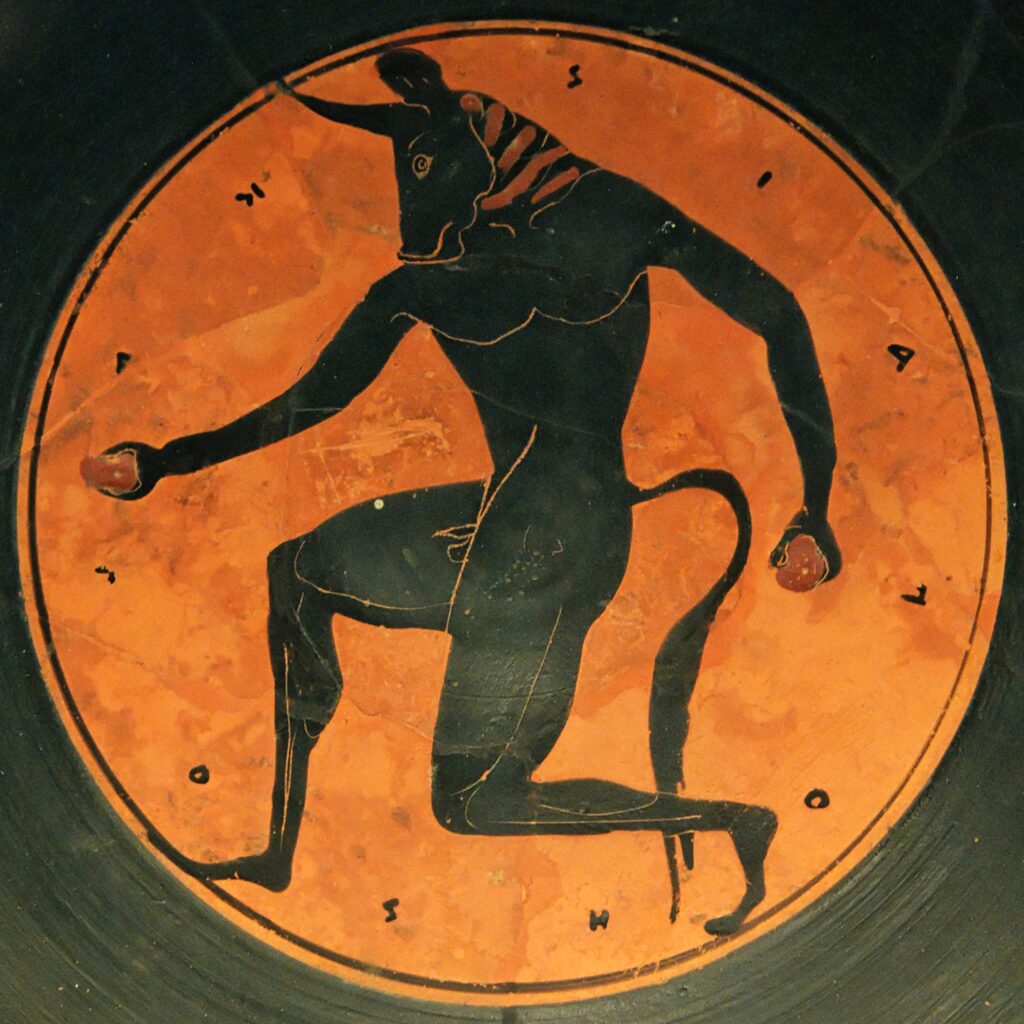
As one of the most fascinating myths in Greek mythology, the legend of the Minotaur has captivated people of all ages. Who is this creature, and what does it represent? Let’s delve into the story of the Minotaur and explore its significance.
Who was the Minotaur?
The term “Minotaur” originates from the Greek word “Μινώταυρος,” meaning “bull-man.” According to myth, the Minotaur was born from the union between Pasiphae, the wife of King Minos of Crete, and a majestic white bull. The offspring was a monstrous creature with the body of a man and the head, horns, and hide of a bull.
The Birth of the Minotaur
King Minos had received a magnificent white bull from the god Poseidon as a gift to appease his father-in-law’s displeasure. However, instead of sacrificing the bull as promised, Minos kept it for himself and eventually used it to sire the Minotaur with Pasiphae. The creature was so terrifying that Minos hid it in the Labyrinth of Knossos, a complex maze designed by Daedalus.
The Labyrinth: A Symbol of Confusion
The Labyrinth, also known as the Maze of Knossos, was an architectural wonder and a testament to human ingenuity. Its complexity and intricacy were so great that even the bravest warriors were unable to find their way out once they entered. The Minotaur’s confinement in this labyrinthine structure represented the chaos and disorder that lay within the human psyche.
The Story of Theseus
Enter the legendary hero, Theseus, who was determined to defeat the Minotaur and escape the Labyrinth. With the help of Ariadne, the daughter of King Minos, Theseus successfully navigated the maze and killed the Minotaur with his bare hands. However, the story doesn’t end there. Theseus’s victory led to a series of events that would shape the course of Greek history.
The Significance of the Minotaur
So, what does this mythological creature represent? The Minotaur is often seen as a symbol of the human struggle with our own darker impulses and desires. Its existence in the Labyrinth serves as a reminder that we are all trapped within our own personal labyrinth, struggling to find our way out.
The Influence of the Minotaur on Art and Literature
From ancient Greek pottery to modern-day video games, the Minotaur has been depicted in various forms of art and literature. Its enduring popularity testifies to its timeless appeal as a symbol of power, strength, and the human condition.
Exploring Other Aspects of the Minotaur Legend
The story of the Minotaur is also intertwined with other aspects of Greek mythology, such as the legend of Ariadne’s thread and the myth of Theseus’s victory. Understanding these connections can provide a deeper insight into the cultural and historical context in which this myth was created.
Ariadne’s Thread: A Symbol of Hope
Ariadne’s thread, also known as the “golden thread,” played a crucial role in Theseus’s journey through the Labyrinth. By providing a clear path for him to follow, Ariadne’s thread represented hope and guidance in times of darkness and uncertainty.
The Myth of Theseus’s Victory
Theseus’s victory over the Minotaur marked the beginning of his legendary career as a hero. His bravery and cunning were celebrated throughout ancient Greece, inspiring generations to come.
The Symbolism of the Bull
The bull that sired the Minotaur was a powerful symbol in Greek mythology. Representing fertility, strength, and masculinity, the bull was often associated with the god Poseidon. The Minotaur’s fusion of human and bull characteristics made it a unique and complex creature, embodying both the creative power of nature and the destructive forces that lie within.
The Labyrinth as a Reflection of the Psyche
The Labyrinth has been interpreted in various ways over the centuries. Some see it as a physical representation of the mind, with its twists and turns symbolizing the complexities of human thought. Others view it as a metaphor for the journey through life, where one must navigate through challenges and obstacles to reach enlightenment.
The Role of Daedalus
Daedalus, the ingenious architect who designed the Labyrinth, played a crucial role in the myth of the Minotaur. His genius and creativity were often seen as a reflection of the divine, highlighting the human potential for innovation and problem-solving.
The Cultural Significance of the Minotaur
The Minotaur legend has had a profound impact on Western culture, influencing art, literature, and film for centuries. From ancient Greek pottery to modern-day video games, the Minotaur’s image has been used to convey power, strength, and the human condition.
Conclusion
In conclusion, the legend of the Minotaur offers a rich tapestry of symbolism, historical significance, and artistic inspiration. Its enduring appeal lies in its ability to capture our imagination and reflect our own struggles with the human condition.
Frequently Asked Questions (FAQs)
- Who was Pasiphae?
Pasiphae was the wife of King Minos of Crete, and she played a crucial role in the creation of the Minotaur. - What is the significance of the Labyrinth?
The Labyrinth represents the complexity and chaos that lies within the human psyche. - Who was Ariadne?
Ariadne was the daughter of King Minos and the one who provided Theseus with a thread to navigate the Labyrinth. - Why did Theseus kill the Minotaur?
Theseus killed the Minotaur in order to escape the Labyrinth and fulfill his heroic destiny. - What does the Minotaur represent?
The Minotaur represents the human struggle with our own darker impulses and desires, as well as the power of human ingenuity and bravery.
Additional Resources
For those interested in learning more about Greek mythology and its significance, we recommend checking out “The Great Book of Greek Myths” by Edith Hamilton. This comprehensive guide explores the fascinating world of Greek mythology, including the legend of the Minotaur.
We also suggest visiting the Museum of Archaeology at Knossos on Crete, which houses an extensive collection of artifacts related to the myth of the Minotaur and the Labyrinth. The museum provides a unique opportunity to explore the historical context in which this myth was created and to gain a deeper understanding of its significance.
The Enduring Legacy of the Minotaur
The legend of the Minotaur continues to captivate audiences around the world, inspiring new adaptations and interpretations. Its enduring legacy lies in its ability to capture our imagination and reflect our own struggles with the human condition.
As we continue to explore the myth of the Minotaur, we are reminded of the power of storytelling and the importance of understanding the cultural and historical context in which myths were created. By delving into the world of Greek mythology, we can gain a deeper appreciation for the complexities of human nature and the enduring appeal of timeless stories like the legend of the Minotaur.
The Future of the Minotaur Legend
As technology continues to evolve, new forms of storytelling will emerge, reimagining the myth of the Minotaur in innovative ways. From virtual reality experiences to video games, the Minotaur’s image will continue to captivate audiences, inspiring new adaptations and interpretations.
However, it is essential to remember that the true value of the Minotaur legend lies not in its modern-day adaptations but in its timeless appeal as a symbol of power, strength, and the human condition. By understanding the cultural and historical context in which this myth was created, we can appreciate its enduring significance and continue to explore its many facets.
The Minotaur: A Legacy of Inspiration
As we reflect on the legend of the Minotaur, we are reminded of the power of mythology to inspire and captivate audiences. Its enduring legacy lies not only in its cultural significance but also in its ability to capture our imagination and reflect our own struggles with the human condition.
Whether through art, literature, or film, the Minotaur’s image continues to inspire new generations, reminding us of the importance of courage, determination, and ingenuity in the face of adversity. As we continue to explore the world of Greek mythology, we are reminded of the timeless appeal of this iconic mythological creature and its lasting impact on Western culture.
The Minotaur: A Symbol of Human Resilience
At its core, the legend of the Minotaur represents the human struggle with our own darker impulses and desires. Its existence in the Labyrinth serves as a reminder that we are all trapped within our own personal labyrinth, struggling to find our way out.
However, the myth also offers a message of hope and resilience, reminding us that even in the darkest of times, there is always a path forward. The Minotaur’s defeat by Theseus represents the triumph of human ingenuity and bravery over the forces of chaos and disorder.
As we reflect on the legend of the Minotaur, we are reminded of the power of mythology to inspire and captivate audiences, offering a deeper understanding of the complexities of human nature and the enduring appeal of timeless stories.


