
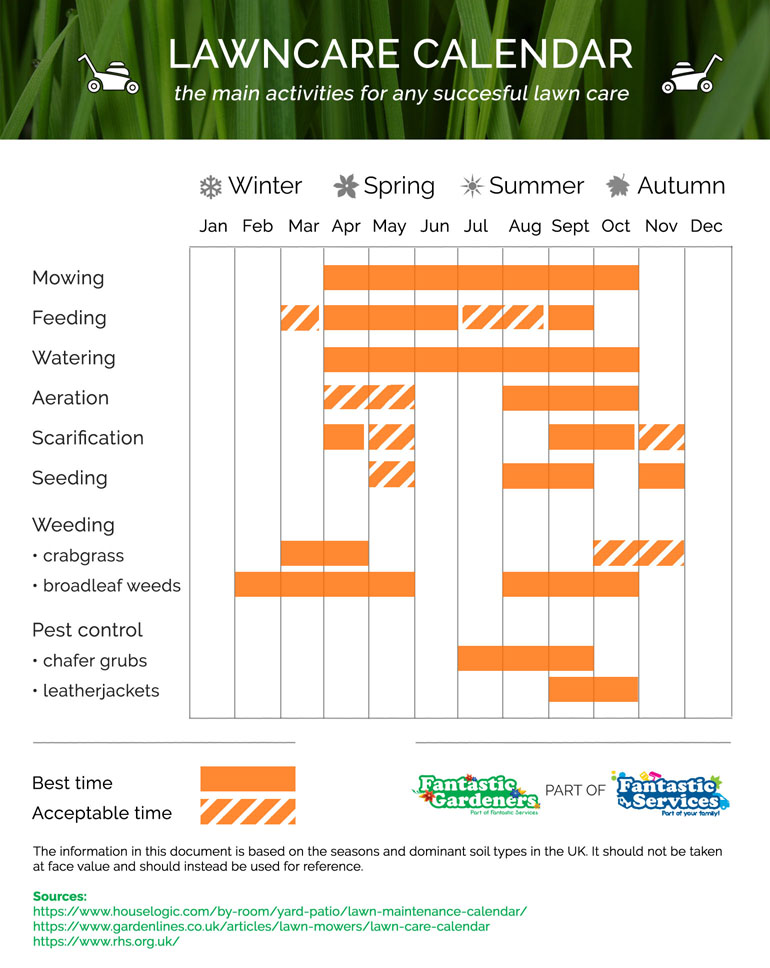
Maintaining a lush and healthy lawn is an ongoing process that requires attention throughout the year. While it’s often associated with spring and summer, proper lawn care involves a range of activities that cater to different seasons. In this article, we’ll delve into the essential maintenance and care practices for each season, ensuring your lawn remains in top condition.
Spring Lawn Maintenance and Care
As we begin the spring season, our focus shifts to planting new grass or maintaining existing lawns. The ideal time for sowing seeds is during March-April, when temperatures are mild (around 15°C) and there’s ample rainfall. For best results, use Lolium and Festuca varieties, which offer attractive growth but can be sensitive to thermal and hydraulic stresses.
If you already have a lawn, start mowing in early spring, aiming for regular intervals of two to three weeks. The ideal height for your grass is between 2-4 inches (5-10 cm), with occasional trimming until autumn. Avoid over-mowing, as this can lead to weakened growth and increased susceptibility to pests.
In addition to regular mowing, use a rake or scarifier in the spring to restore any bare patches and clear out winter weeds. This process also prepares the soil for new seed germination, allowing air and light to reach the growing roots.
Spring Lawn Tips
- Apply a starter fertilizer (high-nitrogen) after sowing seeds to promote rapid growth.
- Maintain proper mowing height to prevent excessive stress on the grass.
- Use a lawn aerator or dethatcher in late spring to improve drainage and reduce thatch buildup.
- Inspect your lawn for signs of pests, such as white grubs, chinch bugs, or billbugs.
Summer Lawn Maintenance and Care
During the hot summer months, your lawn will need regular watering and fertilization. As grass grows quickly, it acts as a natural fertilizer, providing essential nutrients like nitrogen, phosphorus, and potassium (8:1:5 ratio). However, be cautious not to overwater or apply too much fertilizer, as this can lead to an accumulation of salts and potential damage.
It’s also important to avoid watering during the hottest part of the day, as this can cause stress to the grass. Instead, aim for early morning or late afternoon/ evening watering sessions. Make sure to store water in a bucket or irrigation system to allow it to reach ambient temperature before use.
As a general rule, provide approximately 4-6 liters (1-2 gallons) of water per square meter daily during the summer months, taking into account other plant life present on your lawn.
Summer Lawn Tips
- Water your lawn deeply but infrequently to encourage deep root growth and drought resistance.
- Apply a balanced fertilizer (e.g., 10-10-10 NPK) in mid-summer to promote healthy growth and color.
- Monitor for signs of drought stress, such as yellowing or wilting grass.
- Use mulch around plants and trees to retain moisture and suppress weeds.
Autumn Lawn Maintenance and Care
The autumn season brings another opportunity for sowing new grass or transplanting existing lawns. The ideal time for planting seeds is from late September to early October, before temperatures drop too low.
In addition to planting, perform a thorough fertilization program, focusing on potassium (slow-release) in the autumn. This will provide essential nutrients during the dormant winter months.
As leaves fall from trees, it’s crucial to remove them regularly using a rake or leaf blower. Piled leaves can shade out your grass, causing yellowing and potential death. Clear your lawn of fallen debris to ensure optimal growth and health.
Autumn Lawn Tips
- Apply a pre-emergent herbicide in early autumn to prevent crabgrass and other weeds.
- Use a fall fertilizer (e.g., 5-10-10 NPK) to promote root growth and prepare the soil for winter.
- Monitor for signs of disease, such as powdery mildew or rust, and take prompt action if necessary.
- Consider aerating your lawn in autumn to improve drainage and reduce thatch buildup.
Winter Lawn Maintenance and Care
During the cold winter months, it’s essential to maintain a healthy lawn by removing any debris, such as dead grass or branches, to prevent damage from foot traffic. Water your lawn sparingly, as excessive moisture can lead to waterlogged soil conditions.
To provide protection against extreme temperatures, apply a lightweight covering of compost, straw, and well-rotted manure (20-30% sand added for better drainage). This layer should be approximately 2.5-3 meters cubed per 100 square meters of lawn area.
Winter Lawn Tips
- Apply a pre-emergent herbicide in early winter to prevent weeds from germinating.
- Use a dormant fertilizer (e.g., 10-0-10 NPK) to promote root growth and prepare the soil for spring.
- Inspect your lawn for signs of damage, such as bare spots or compaction, and take prompt action if necessary.
- Consider using snow mold fungicides in early winter to prevent this common disease.
Frequently Asked Questions
Q: When is the best time to mow my lawn?
A: The ideal mowing schedule varies depending on the season, but a general rule is to maintain an even height throughout the year, with more frequent mowing during spring and summer.
Q: How often should I water my lawn in the summer?
A: Provide 4-6 liters (1-2 gallons) of water per square meter daily, taking into account other plant life present on your lawn.
Q: What’s the best fertilizer to use in autumn?
A: Focus on slow-release potassium fertilizers to provide essential nutrients during the dormant winter months.
Q: How can I protect my lawn from extreme temperatures?
A: Apply a lightweight layer of compost, straw, and well-rotted manure (20-30% sand added for better drainage) to shield your lawn from frost and freezing temperatures.
Q: Can I use the same fertilizer for both spring and autumn applications?
A: No, as fertilizers designed for different seasons often have varying nutrient levels. Stick to seasonal fertilizers to ensure optimal growth and health.
Q: How do I prevent weeds from taking over my lawn?
A: Regular mowing, proper watering, and targeted weed control measures (such as hand-pulling or using herbicides) can help maintain a healthy, weed-free lawn.
Q: Can I plant new grass in the winter months?
A: While it’s technically possible to sow seeds during winter, the ideal time for planting is from late September to early October, when temperatures are mild and rainfall is more consistent.


