
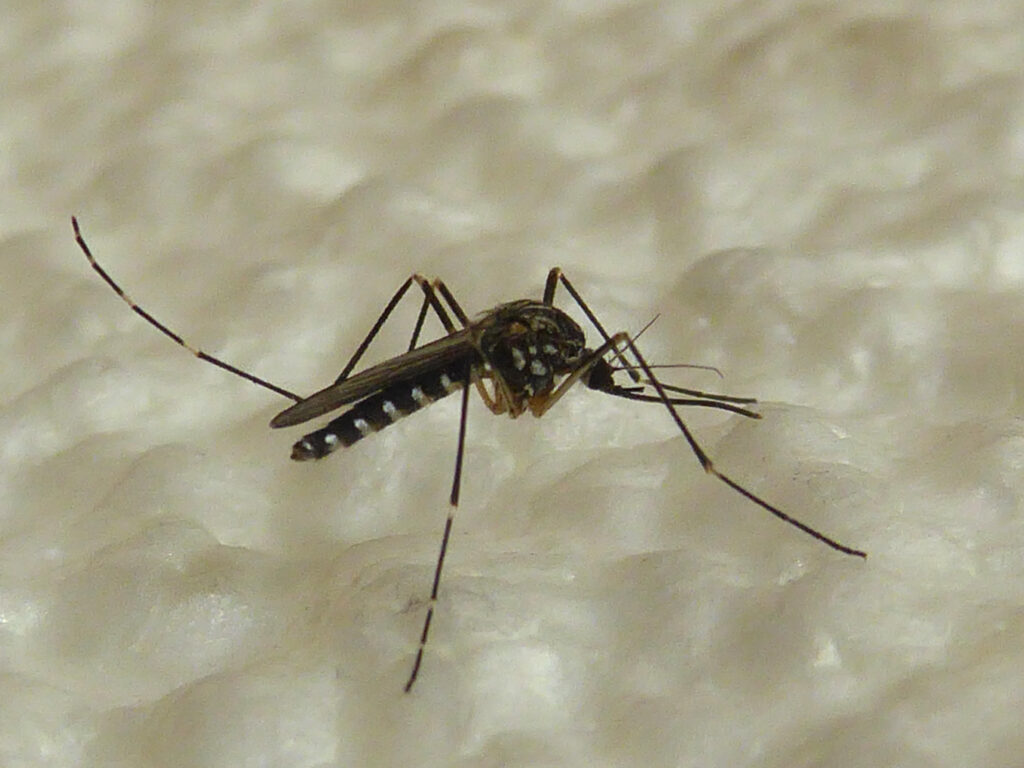
The Korean mosquito, scientifically known as Aedes koreicus, has arrived in Italy. Its presence has been confirmed in Veneto, Trentino-Alto Adige, and Lombardy. In this article, we will explain how to identify it, its characteristics, and why it can be a threat.
Table of Contents
- Origins of the Korean Mosquito
- Spread of the Korean Mosquito in Italy
- Characteristics of the Korean Mosquito
- Why the Korean Mosquito Can Be Perilous
- Habitat of the Korean Mosquito and Reproduction
- What to Do Against the Korean Mosquito
- Puncture of the Korean Mosquito
- Symptoms of a Korean Mosquito Bite
- Spread of the Korean Mosquito in Europe
Origins of the Korean Mosquito
The Aedes koreicus is an insect native to Korea, specifically South Korea. The first specimens were introduced to China, Japan, and some areas of the former Soviet Union (source: https://www.ncbi.nlm.nih.gov/pmc/articles/PMC4739402/).
Spread of the Korean Mosquito in Italy
The Korean mosquito was first detected in Italy in 2011, at Sospirolo, a town in Veneto, during a monitoring activity for the tiger mosquito (Aedes albopictus). It is likely that the first specimens were introduced to Italy via air travel with imported exotic plants. As of October 2021, the Korean mosquito has rapidly spread throughout northern Italy, causing concern.
Characteristics of the Korean Mosquito
The Korean mosquito measures approximately 7-10 mm in length, slightly larger than the tiger mosquito (Aedes albopictus), which ranges from 5 to 8 mm. The key distinction between the two species is the coloration: the Korean mosquito has yellow stripes behind its head, whereas the tiger mosquito has white stripes on its legs.
Although these details can be challenging to discern due to the insects’ small size, it’s essential to note that both mosquitoes exhibit distinct characteristics.
Why the Korean Mosquito Can Be Perilous
Like other mosquitoes, the Aedes koreicus is a vector of serious diseases, including:
- Japanese encephalitis (JEV) virus
- Filariasis
The latter can also affect domestic animals, such as dogs. The filarial linfaticia can lead to severe consequences, including elephantiasis, particularly affecting the lower limbs.
Habitat of the Korean Mosquito and Reproduction
The Aedes koreicus thrives in stagnant water environments, where it breeds:
- Vases with flowers
- Puddles
- Drains
- Waste containers
Removing standing water from these areas can help prevent the mosquito’s reproduction. Scientists will need to identify effective countermeasures to limit its spread.
What to Do Against the Korean Mosquito
Our primary action against the Korean mosquito is to eliminate conditions that favor its growth, starting with draining sumps and properly disposing of waste materials.
Puncture of the Korean Mosquito
The puncture produced by the Korean mosquito does not differ significantly from those caused by other common mosquitoes. The primary concern lies in the agents transmitted through the bite, which can be deadly.
Symptoms of a Korean Mosquito Bite
Identifying symptoms related to the Korean mosquito’s bite is challenging, but you might experience:
- Pruritus (itching)
- Swelling around the puncture site
- More severe symptoms from diseases like filariasis: fever, swelling of lymph nodes, pain in limbs and groin area
If these symptoms appear, a medical examination can confirm the presence of the microfilariae (larvae) in your blood. A treatment plan based on dietilcarbamazina will then be provided to eliminate the parasites.
Spread of the Korean Mosquito in Europe
Climate changes causing extreme weather events have led to an inevitable spread of the Korean mosquito throughout Europe.
Here is the updated map of the Korean mosquito’s distribution in Europe, as of March 2021:
[Insert Mapped Data]
Sources: https://www.ecdc.europa.eu/en/publications-data/aedes-koreicus-current-known-distribution-march-2021
FAQs
Q: How can I identify the Korean mosquito?
A: Due to its small size, distinguishing between the Korean mosquito and other species can be challenging. Look for yellow stripes behind its head.
Q: What diseases are transmitted by the Korean mosquito?
A: The Korean mosquito transmits Japanese encephalitis (JEV) virus and filariasis.
Q: How do I prevent the spread of the Korean mosquito?
A: Eliminate stagnant water environments, dispose of waste properly, and remove standing water from around your home.
Q: What symptoms should I look for after a Korean mosquito bite?
A: Pruritus (itching), swelling, and fever are possible symptoms. If severe symptoms occur, seek medical attention immediately.
Q: How can I treat filariasis caused by the Korean mosquito?
A: A treatment plan based on dietilcarbamazina will be provided to eliminate microfilariae from your blood.
Q: Can the Korean mosquito transmit diseases to animals?
A: Yes, it can also affect domestic animals like dogs.
Q: What is being done to prevent the spread of the Korean mosquito in Europe?
A: Scientists are identifying effective countermeasures to limit its spread.
Prevention Strategies
Several measures should be implemented to slow down the spread of the Korean mosquito:
- Remove standing water from around your home, including clogged drains and flower vases.
- Eliminate sources of food, such as decaying organic matter, bird droppings, and animal waste.
- Use mosquito repellents containing DEET, picaridin, or oil of lemon eucalyptus to protect yourself from bites.
- Wear protective clothing, including long sleeves, pants, and socks, when outdoors during peak mosquito hours (dawn and dusk).
- Install window screens on windows and doors to prevent mosquitoes from entering your home.
Conclusion
The Korean mosquito poses a significant threat to public health due to its ability to transmit serious diseases. It is crucial that we take proactive measures to identify the insect, eliminate its breeding sites, and protect ourselves against its bites. By understanding the characteristics of the Korean mosquito and implementing effective prevention strategies, we can mitigate its spread and prevent further outbreaks.
Recommendations for Local Authorities
Local authorities should:
- Establish a surveillance system to monitor the distribution of the Korean mosquito in their area.
- Conduct public awareness campaigns to educate citizens on the risks associated with the Korean mosquito and how to prevent its spread.
- Collaborate with healthcare professionals to develop treatment plans for individuals infected by the Korean mosquito.
Recommendations for Healthcare Professionals
Healthcare professionals should:
- Provide patients with accurate information about the Korean mosquito, its diseases, and prevention strategies.
- Conduct thorough medical examinations to confirm the presence of microfilariae in patients’ blood.
- Prescribe treatment plans based on dietilcarbamazina to eliminate parasites.
Recommendations for Researchers
Researchers should:
- Conduct further studies on the behavior, ecology, and genetics of the Korean mosquito to better understand its biology and spread.
- Develop effective countermeasures, such as insecticides or genetic engineering techniques, to control the Korean mosquito population.
- Collaborate with public health officials to inform policy decisions and allocate resources for mosquito control efforts.
By working together, we can mitigate the spread of the Korean mosquito and protect public health.



