
Kokedama, also known as “mini bonsai without a pot” or “volant bonsai,” is an ancient Japanese planting technique that has gained popularity in recent years. This technique is a great alternative to traditional bonsai cultivation, as it eliminates the need for a pot and allows plants to thrive in a unique, outdoor environment.
What are Kokedama?
Kokedama is a Japanese term that literally means “ball of moss.” It refers to a type of planting method where the roots of a plant are wrapped in a mixture of soil, moss, and other materials, creating a spherical shape. This technique has been used for centuries in Japan, particularly among bonsai enthusiasts.
Origins of Kokedama
The origins of kokedama date back to the 17th century in Japan. The term “kokedama” was first coined during this time period, and it is believed that this technique was developed as a way to create miniature bonsai trees without the need for a pot.
History of Kokedama
Kokedama has a long history in Japan, dating back to the Edo period (1603-1868). During this time, Japanese gardeners began experimenting with different methods of plant cultivation, including the use of moss and other materials to create miniature plants. Over time, kokedama evolved into a distinct technique that emphasized the use of natural materials and the creation of unique, three-dimensional shapes.
How are Kokedama Made?
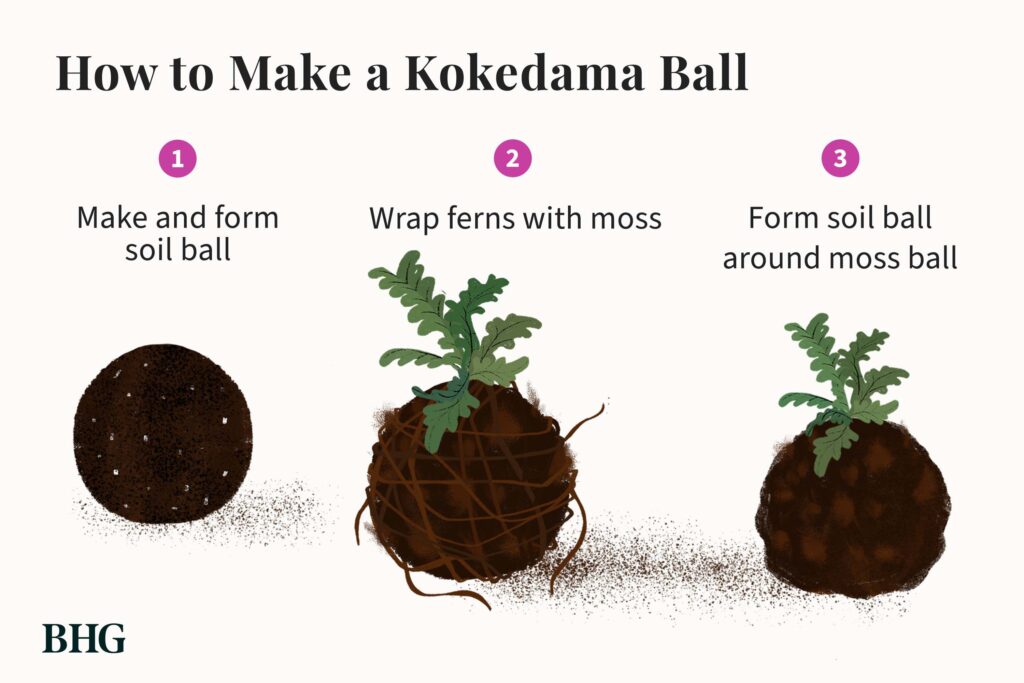
To make a kokedama, you will need to prepare a mixture of soil, moss, and other materials. The most common ingredients used in kokedama production are akadama (a type of clay), keto (torba), and muschio verde (green moss). To create the substrate, mix together equal parts of akadama and keto, adding water as needed to achieve a workable consistency.
Preparing the Plant
Once you have prepared the substrate mixture, it’s time to prepare your plant. Choose a small tree or shrub with a well-developed root system, and gently remove any existing soil from the roots. Be careful not to damage the roots during this process.
Assembling the Kokedama
To assemble the kokedama, start by placing the prepared substrate mixture around the base of the plant. Make sure to leave enough space in the center for the roots to grow. Gently wrap the substrate mixture around the plant, making sure to cover all of the roots.
Adding Muschio Verde
Once you have wrapped the substrate mixture around the plant, it’s time to add the muschio verde (green moss). This will help to retain moisture and create a natural barrier against pests. Gently press the muschio verde onto the surface of the substrate mixture, making sure to cover all areas evenly.
Final Touches
To complete the kokedama, you may want to add some decorative elements, such as small rocks or shells, to the surface of the moss. You can also use a piece of twine or wire to suspend the kokedama from a tree branch or other support structure.
Types of Plants Suitable for Kokedama
Kokedama is suitable for a wide range of plants, including bonsai species, shrubs, and small trees. Some popular options include:
- Bonsai species (e.g., ficus, juniper)
- Shrubs (e.g., azalea, camellia)
- Small trees (e.g., maple, pine)
Benefits of Kokedama
Kokedama offers several benefits over traditional bonsai cultivation. Some of the most significant advantages include:
- Reduced maintenance: Kokedama plants require less water and pruning than traditional bonsai plants.
- Increased flexibility: Kokedama plants can be easily moved or repotted, making them ideal for gardeners with limited space.
- Unique appearance: Kokedama plants have a unique, moss-covered appearance that is unlike any other type of plant.
Caring for Kokedama Plants
To care for your kokedama plant, make sure to water it regularly, but avoid overwatering. Prune the plant as needed to maintain its shape and promote healthy growth. Also, keep an eye out for pests and diseases, such as spider mites and root rot.
Propagation of Kokedama Plants
Yes, you can propagate kokedama plants by dividing the roots or taking cuttings from the existing plant. This is a great way to create new kokedama plants without having to start from seed.
Maturity of Kokedama Plants
The time it takes for a kokedama plant to mature depends on the type of plant and growing conditions. Some kokedama plants may take several years to reach maturity, while others may be ready in just a few months.
Displaying Kokedama Plants
Yes, you can display your kokedama plant indoors, but make sure it receives sufficient light and is kept at a consistent temperature. You can also use a decorative pot or container to add a touch of elegance to your kokedama plant.
Conclusion
Kokedama is an ancient Japanese planting technique that has gained popularity in recent years. This unique method allows plants to thrive in a natural, outdoor environment without the need for a pot. With its numerous benefits and ease of maintenance, kokedama is an excellent choice for gardeners looking to create a stunning, low-maintenance plant display.
FAQs
Q: What are the ingredients used to make kokedama?
A: The most common ingredients used in kokedama production are akadama (a type of clay), keto (torba), and muschio verde (green moss).
Q: How do I prepare the substrate mixture for kokedama?
A: To prepare the substrate mixture, mix together equal parts of akadama and keto, adding water as needed to achieve a workable consistency.
Q: Can I use any type of plant for kokedama?
A: Kokedama is suitable for a wide range of plants, including bonsai species, shrubs, and small trees. Some popular options include ficus, juniper, azalea, camellia, maple, and pine.
Q: How do I care for my kokedama plant?
A: To care for your kokedama plant, make sure to water it regularly, but avoid overwatering. Prune the plant as needed to maintain its shape and promote healthy growth.
Q: Can I propagate kokedama plants?
A: Yes, you can propagate kokedama plants by dividing the roots or taking cuttings from the existing plant.
Q: How long does it take for a kokedama plant to mature?
A: The time it takes for a kokedama plant to mature depends on the type of plant and growing conditions. Some kokedama plants may take several years to reach maturity, while others may be ready in just a few months.
Q: Can I display my kokedama plant indoors?
A: Yes, you can display your kokedama plant indoors, but make sure it receives sufficient light and is kept at a consistent temperature.


