
Introduction
Deep in the forests of Japan, there lives a small but fascinating creature that has captured the hearts of many. The flying squirrel, also known as the “scoiattolo volante” in Italian, is a unique animal that has adapted to its environment in remarkable ways. In this article, we will delve into the world of these incredible creatures and explore their behavior, habitat, diet, and more.
What is a Flying Squirrel?
The flying squirrel is not actually capable of true flight, but rather glides through the air using a membrane called a patagium that stretches from its wrists to its ankles. This membrane allows it to cover long distances with ease, making it one of the most fascinating creatures in the animal kingdom.
Types of Flying Squirrels
There are several species of flying squirrels found around the world, but two of the most well-known are the Japanese flying squirrel and the Siberian flying squirrel. Both species have adapted to their environments in unique ways, with distinct physical characteristics and behaviors.
Japanese Flying Squirrel
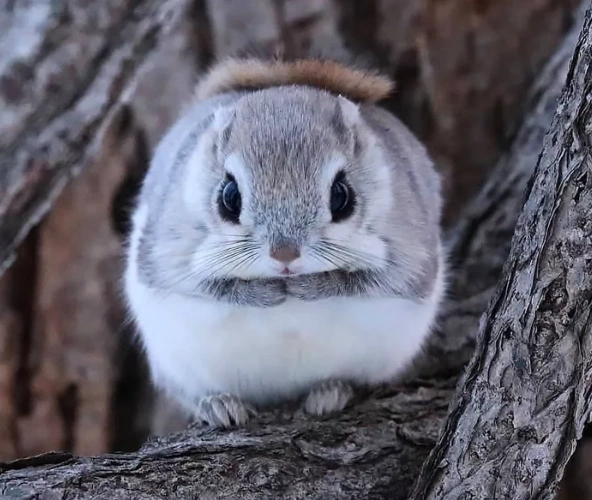
The Japanese flying squirrel is a small creature that measures between 12 and 23 cm in length, with a tail of similar size. Its fur is gray or white, allowing it to blend in with its surroundings, and it has large eyes that are said to be one of the most striking features of the species.
Siberian Flying Squirrel
The Siberian flying squirrel is smaller than its Japanese counterpart, measuring approximately 10-15 cm in length. Its body is more slender and elongated, with a gray or brown fur coat that helps it blend in with the forest surroundings. The Siberian flying squirrel also has larger eyes than other species of flying squirrels.
Habitat and Behavior
Flying squirrels are found in forests throughout Japan, particularly in the northern regions where the climate is cooler. They are arboreal creatures that spend most of their time in trees, where they forage for food and shelter.
Diet
Flying squirrels are primarily omnivores, feeding on a variety of fruits, nuts, and insects. They also consume plant material, such as bark and leaves, which provide them with essential nutrients.
Conservation Status
The Japanese flying squirrel is considered to be a species at low risk of extinction due to its widespread distribution in Japan’s forests. However, the Siberian flying squirrel is listed as a vulnerable species, primarily due to habitat loss and fragmentation.
Unique Adaptations
Flying squirrels have several unique adaptations that allow them to thrive in their environments. One of the most notable is their patagium, which allows them to glide through the air with ease. This membrane is made up of skin and other tissues, and it stretches from the squirrel’s wrists to its ankles.
Patagium Structure
The patagium is a complex structure that allows flying squirrels to generate lift and thrust when gliding through the air. It is made up of several layers, including a thin layer of skin and a thicker layer of connective tissue. The patagium also has a network of blood vessels that help to regulate temperature and provide oxygen to the squirrel’s muscles.
Social Structure
Flying squirrels are primarily solitary creatures, but they do come together during mating season or to care for young. Female flying squirrels give birth to litters of 2-4 young after a gestation period of approximately 40 days. The young squirrels stay with their mothers for several months before becoming independent.
Intelligence and Problem-Solving
Flying squirrels are known for their intelligence and problem-solving abilities, which help them adapt to their environments in remarkable ways. They have been observed using tools, such as sticks, to gather food or defend themselves from predators.
Fascinating Facts
Here are some fascinating facts about flying squirrels that you may not know:
- Flying squirrels can cover distances of up to 100 meters in a single glide.
- The longest recorded gliding distance by a flying squirrel is approximately 400 meters.
- Flying squirrels have been observed using their patagium to “fly” from tree to tree, allowing them to traverse large distances with ease.
- Some species of flying squirrels are known to be seed dispersers, helping to spread plant seeds throughout the forest.
Conclusion
In conclusion, the flying squirrel is a unique and fascinating creature that has adapted to its environment in remarkable ways. With their incredible ability to glide through the air, these animals are truly one of the most interesting creatures in the animal kingdom. By learning more about flying squirrels, we can gain a deeper appreciation for the natural world and work towards preserving these incredible species.
Frequently Asked Questions
- Q: Can I have a flying squirrel as a pet?
A: No, flying squirrels are wild animals that belong in their natural habitats, not in domestic environments. - Q: What do flying squirrels eat?
A: Flying squirrels primarily feed on fruits, nuts, and insects, as well as plant material such as bark and leaves. - Q: Are flying squirrels endangered?
A: The Japanese flying squirrel is considered to be a species at low risk of extinction, while the Siberian flying squirrel is listed as vulnerable due to habitat loss and fragmentation. - Q: Can I see flying squirrels in person?
A: Yes, flying squirrels can be seen in their natural habitats throughout Japan’s forests, particularly in the northern regions. - Q: Are flying squirrels social animals?
A: Flying squirrels are primarily solitary creatures, but they do come together during mating season or to care for young. - Q: Can I help protect flying squirrel populations?
A: Yes, by supporting conservation efforts and protecting their habitats, we can help ensure the long-term survival of these incredible species. - Q: How fast can flying squirrels glide?
A: Flying squirrels can cover distances of up to 100 meters in a single glide, making them one of the most impressive gliders in the animal kingdom.


