
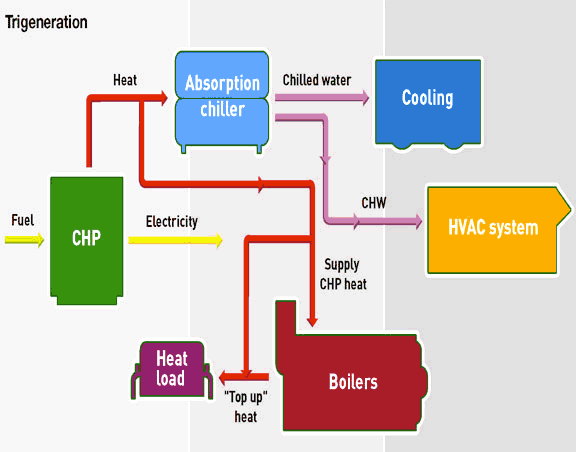
The old saying “two birds with one stone” comes to mind when thinking about co-generation. The value added by a co-generation system lies in its ability to produce electricity and simultaneously recover the heat that would otherwise be wasted and dispersed into the air. It’s all about maximizing efficiency, getting more out of what you have.
However, there are some nuances to consider before deciding if co-generation is worth it for your business or organization.
How Co-Generation Works
A typical co-generation system integrates a combustion engine fueled by a gas like methane, an electrical generator, and a heat recovery system. Here’s how 100 units of energy from the fuel break down:
- 55% becomes thermal energy: This is the amount that would otherwise be wasted.
- 35% becomes electrical energy: The amount that can be sold back to the grid or used on-site.
- 10% is lost: Unfortunately, this is an inevitable part of the process.
In terms of efficiency, a co-generation system typically has a combined overall efficiency rating around 80-90%. This means it’s about 30-40% more efficient than producing separate electricity and heat. But when does it make sense to invest in such technology?
Who Benefits from Co-Generation?
Co-generation is particularly beneficial for large industrial facilities, especially those with high energy consumption. These businesses can reap the most benefits from co-generation.
However, smaller companies, service providers, and residential buildings may not see as much value from this technology due to their lower energy demands and less favorable economic conditions.
Despite these limitations, there are alternative solutions for domestic applications in some countries like Japan, where Panasonic’s Ene-Farm has successfully implemented co-generation systems.
The Benefits of Connecting to the Grid
One of the key advantages of connecting a co-generation system to the grid is that you can sell or exchange electricity, reducing energy waste and shortening the payback period for your investment. The generated electricity can be fed into the grid, providing a reliable source of power while also earning revenue.
However, when it comes to heat recovery, things are a bit more complicated. In a co-generation system, thermal energy is primarily used for on-site consumption, rather than being sold back to the grid. This makes sense, given that heating systems tend to be more energy-intensive and harder to recover.
That being said, there are ways to make heat recovery work in your favor. For instance, you can store excess thermal energy in insulated water tanks, which can then be used as needed or even supplemented with additional heat sources like solar panels or boilers.
Challenges of Co-Generation Implementation
While co-generation offers numerous benefits, its implementation is not without challenges. Some common issues include:
- High upfront costs: Co-generation systems are typically capital-intensive, requiring significant investments in equipment and infrastructure.
- Maintenance requirements: Combustion engines and other components in a co-generation system require regular maintenance to ensure optimal performance and efficiency.
- Integration with existing facilities: Co-generation systems often need to be integrated with existing heating and cooling systems, which can be complex and time-consuming.
- Regulatory hurdles: Co-generation systems may be subject to varying regulations and permitting requirements, depending on the location and type of facility.
Maximizing Energy Savings through Co-Generation
To get the most out of a co-generation system, it’s essential to maximize energy savings. Here are some strategies for achieving this goal:
- Optimize system design: Work with an experienced engineer or consultant to design a co-generation system that meets your specific energy needs and facilities.
- Regular maintenance: Schedule regular maintenance checks to ensure optimal performance and efficiency of the system.
- Monitor energy usage: Keep track of energy consumption patterns in your facility to identify areas where energy waste can be minimized.
- Consider additional energy sources: Supplement your co-generation system with additional energy sources, such as solar panels or wind turbines, to reduce reliance on fossil fuels.
Conclusion
Co-generation is an efficient way to produce both electricity and heat while minimizing waste and optimizing resource utilization. However, its benefits are most pronounced in large-scale industrial settings, where high energy demands and favorable economic conditions make it a viable investment option.
While co-generation may not be suitable for every business or household, there are alternative solutions available for domestic applications in certain regions. Additionally, connecting to the grid can provide additional revenue streams through electricity sales and reduce waste.
Before deciding whether co-generation is right for you, weigh your specific energy needs against its advantages and limitations.
FAQs
- What is co-generation, and how does it work?
Co-generation is a process that simultaneously produces both electricity and heat from a single fuel source, maximizing efficiency. - Is co-generation only suitable for large industrial facilities?
No, while co-generation is most beneficial in large-scale industrial settings, its benefits can also be seen in smaller businesses with high energy demands and favorable economic conditions. - Can I use my excess thermal energy to generate electricity and sell it back to the grid?
Unfortunately, thermal energy is primarily used for on-site consumption in a co-generation system, rather than being sold back to the grid. - Are there any alternative solutions for domestic applications?
Yes, while co-generation may not be suitable for every household, some countries have successfully implemented domestic co-generation systems using innovative technologies like Japan’s Ene-Farm by Panasonic. - How can I maximize my energy savings and revenue through co-generation?
By connecting your co-generation system to the grid, you can sell or exchange electricity, reducing waste and shortening the payback period for your investment. - What are some common challenges associated with co-generation implementation?
Co-generation systems often face challenges related to heat recovery, which can be difficult to monetize due to higher energy consumption rates. - Can I use solar panels or other renewable energy sources to supplement my heat needs?
Yes, you can integrate additional heat sources like solar panels, pumps, or boilers into your co-generation system for enhanced efficiency and flexibility. - How do I determine whether co-generation is worth it for my business or organization?
Weigh your specific energy needs against the advantages and limitations of co-generation, considering factors like energy demand, economic conditions, and available resources.
By understanding the ins and outs of co-generation and its benefits, you can make an informed decision about whether this technology is right for your organization.


