
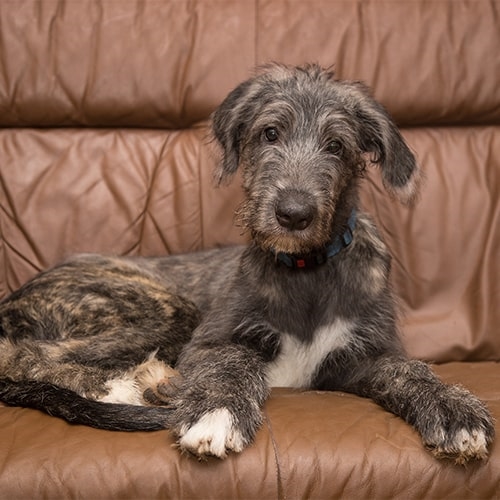
The Irish Wolfhound, also known as the Levriero Irlandese, is a breed that has gained recognition for its impressive size and gentle nature. With origins dating back to the first century AD, this breed is believed to be a revival of an ancient dog, known as the Irish Hound, which was revered by the ancient Celts.
Origins of the Breed
The earliest recorded evidence of large dogs in Ireland dates back to 50 BC. These massive canine companions were likely used for hunting and guarding, but their origins are shrouded in mystery. The most widely accepted theory is that the Irish Hound was a variant of the ancient dog known as the “Irish Giant Dog,” which was believed to be descended from the old Celtic dogs.
Over time, the Irish Hound evolved into a distinct breed, with characteristics such as its towering height, muscular build, and distinctive coat. Unfortunately, this breed’s history was nearly lost after the Norman invasion of Ireland in 1169 AD. However, in the late 19th century, a group of passionate enthusiasts set out to revive the breed, leading to the creation of the modern Irish Wolfhound.
Rebuilding the Breed
In the late 19th century, Captain George Augustus Graham crossed Deerhound with Alano Tedesco and Borzoi Russo to create the modern Irish Wolfhound. This groundbreaking breeding program not only ensured the survival of the breed but also set a new standard for its size, strength, and elegance.
The Kennel Club of Ireland recognized the breed in 1879, and the first Irish Wolfhound Club was established in 1885. The club’s founders worked tirelessly to promote the breed, establish breeding standards, and ensure that the Irish Wolfhound would be preserved as a purebred dog.
Characteristics of the Breed
The Irish Wolfhound is known for its gentle, tranquil, and intelligent nature. This breed is highly affectionate towards its family, particularly its owner, but can be reserved with strangers. With children, it’s a great companion, as long as you’re aware of its massive size and potential to accidentally harm them.
Their calm demeanor makes the Irish Wolfhound an ideal choice for families with young children or for those who want a low-maintenance companion. However, they are not suited for high-energy households or for owners who can’t provide adequate exercise and socialization.
Physical Characteristics
The Irish Wolfhound stands tall at over 80 cm (32 in), making it the tallest breed in the world. Its musculous build, combined with its striking head shape and characteristic coat, make it a stunning sight. Males typically weigh between 54 kg (119 lbs) and 86 kg (189 lbs), while females range from 40.5 kg (89 lbs) to 71 kg (156 lbs).
The Ideal Height
To achieve the breed’s ideal height, males should reach at least 81-86 cm (32-34 in), with a weight of 54 kg (119 lbs) or more. Females should measure between 71 cm (28 in) and 81 cm (32 in), weighing 40.5 kg (89 lbs) or less.
Coat Characteristics
The Irish Wolfhound’s coat is distinctive, with a rough, hard texture that requires regular grooming. The colors allowed for this breed are:
- Grigio
- Tigrato
- Rosso
- Nero
- Bianco
- Daino
Their coat can be short or long, depending on the individual dog. Regular brushing and grooming will help maintain their coat’s health and prevent matting.
Raising the Cocker Spaniel’s Cousin
Irish Wolfhound puppies grow rapidly, and it’s essential to provide them with proper training from an early age. Their robust build means they require a balanced diet, regular exercise, and sufficient socialization.
Proper nutrition is crucial for Irish Wolfhounds, as their massive size demands plenty of energy. A high-quality dog food that meets their nutritional needs will help support their growth and development.
Health and Wellness
The Irish Wolfhound is generally healthy, but like all breeds, it’s susceptible to certain health issues. Responsible breeding practices, genetic testing, and regular veterinary check-ups can help prevent or detect potential problems.
Some common health concerns for the breed include:
- Hip dysplasia: a genetic condition that affects the hip joint
- Eye problems: such as cataracts and progressive retinal atrophy
- Cardiac issues: such as dilated cardiomyopathy
Regular veterinary check-ups, genetic testing, and responsible breeding practices can help minimize these risks.
Price Range
Due to its size and robust build, the Irish Wolfhound commands a premium price. You can expect to pay anywhere from €800 to €1,500 for a well-bred puppy, depending on factors like pedigree, health clearances, and documentation.
While the initial investment may seem daunting, consider the benefits of owning an Irish Wolfhound. Their loyal nature, gentle disposition, and majestic appearance make them a worthwhile companion for many families.
Conclusion
The Irish Wolfhound is an impressive breed that exudes elegance and strength. With its rich history, gentle nature, and striking appearance, it’s no wonder this breed has captured the hearts of many dog enthusiasts.
Whether you’re a seasoned breeder or a first-time owner, understanding the Irish Wolfhound’s unique characteristics, needs, and history will help you provide a loving home for this magnificent breed. With proper care and attention, an Irish Wolfhound can become a beloved companion for years to come.
Frequently Asked Questions
- How tall can Irish Wolfhounds grow?
Irish Wolfhounds typically reach a height of over 80 cm (32 in), with males reaching up to 86 cm (34 in) and females measuring between 71 cm (28 in) and 81 cm (32 in). - What is the ideal weight for Irish Wolfhounds?
Males should weigh at least 54 kg (119 lbs) or more, while females should range from 40.5 kg (89 lbs) to 71 kg (156 lbs). - Do Irish Wolfhounds make good family pets?
Yes, they do! They are gentle and loving with their family, particularly their owner. However, it’s essential to consider their massive size and potential to accidentally harm children. - How much exercise does an Irish Wolfhound need?
Irish Wolfhounds require regular exercise to maintain their physical health and mental well-being. Aim for at least 30 minutes of moderate exercise per day. - Can Irish Wolfhounds be left alone for extended periods?
While they can adapt to apartment living, it’s best to provide them with regular attention and socialization to prevent boredom and destructive behavior. - Are Irish Wolfhounds easy to train?
Yes, they are relatively easy to train due to their intelligence, loyalty, and willingness to please. - Can I buy an Irish Wolfhound puppy from a breeder?
Yes, reputable breeders specialize in breeding healthy, well-socialized puppies. Make sure to research the breeder thoroughly and ask for health clearances and documentation. - What are some common health issues affecting Irish Wolfhounds?
Irish Wolfhounds can be prone to hip dysplasia, eye problems, and cardiac issues. Regular veterinary check-ups and responsible breeding practices can help minimize these risks.
By understanding the Irish Wolfhound’s unique characteristics, needs, and history, you’ll be better equipped to provide a loving home for this magnificent breed.


