
Introduction
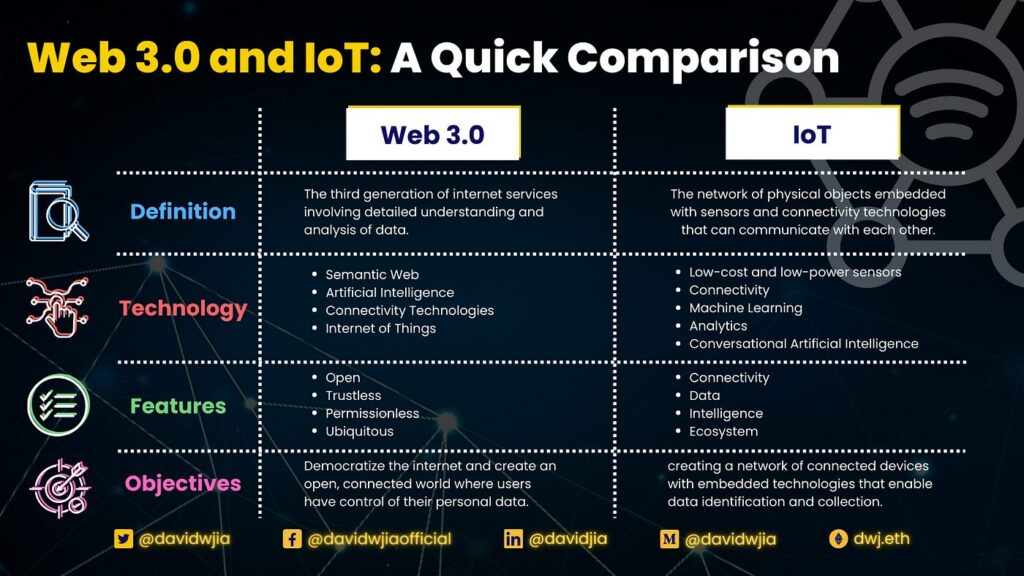
In today’s digital age, the internet has evolved from a simple web 2.0 platform to a more advanced and interconnected system known as the internet of things (IoT). In this article, we will delve into the world of IoT, exploring its definition, applications, and benefits.
What is the Internet of Things?
The internet of things refers to the network of physical devices, vehicles, home appliances, and other items embedded with sensors, software, and connectivity, allowing them to collect and exchange data. This has led to a more intelligent and interactive world, where objects can interact with each other and their surroundings.
From Web 2.0 to Web 3.0
The internet of things is the natural evolution of web 2.0 technology. Just as web 2.0 introduced user-generated content and social media, IoT introduces a new layer of intelligence and interconnectivity to devices and objects. This has enabled the creation of smart homes, cities, and industries, where data can be collected, analyzed, and used to improve efficiency and productivity.
IoT Examples: The Domotics Lab Project
To illustrate the concept of IoT, let’s consider the project carried out by the Domotics Lab at the Institute of Science and Technology for Information (ISTI) in Pisa. This project aimed to create a solution that would allow a heterogeneous network of smart home devices to be connected and controlled remotely.
The team analyzed existing smart home systems and created an interface web that could manage, monitor, and interact with all the devices on the network. This allowed users to control their devices from anywhere in the world, using features such as turning off lights and adjusting thermostats.
Applications of IoT
IoT has far-reaching applications across various industries, including:
- Biomedicine: Monitoring vital signs, tracking diseases, and improving patient care.
- Smart Grids: Optimizing energy distribution and consumption.
- Robotics: Enhancing automation and precision in manufacturing and logistics.
- Automotive Industry: Improving safety and efficiency through connected vehicles.
IoT in Home Automation
IoT has revolutionized home automation, enabling households to control their appliances, lighting, and security systems remotely. Devices such as the Ninja Sphere monitor and control energy usage, temperature, and occupancy, providing insights into household behavior and optimizing energy consumption.
Cost and Accessibility
While IoT devices are becoming increasingly affordable, some solutions require additional investments in hardware and software. For instance, a basic home automation system can cost around $230, while more comprehensive systems may require an additional $200-300 for sensors and monitoring equipment.
Communication Protocols
IoT devices primarily use Bluetooth and Wi-Fi for communication. However, other protocols such as Zigbee, Z-Wave, and LoRaWAN are gaining popularity due to their efficiency and low power consumption.
Challenges of IoT Security
As the internet of things grows in popularity, so do concerns about security. Since many IoT devices communicate directly with each other over the network, there is a high risk of potential vulnerabilities such as hacking, data breaches, and unauthorized access.
The solution can be found in implementing robust security measures to ensure the integrity of IoT systems. These include encryption protocols, secure authentication methods, and secure communication channels.
Conclusion
The internet of things has transformed the way we interact with technology and our surroundings. By harnessing the power of IoT, businesses and individuals can optimize productivity, improve safety, and enhance customer experiences. As IoT continues to evolve, it’s essential to stay informed about its applications, benefits, and potential challenges.
Benefits of IoT
The internet of things has numerous benefits across various industries, including:
- Efficiency: IoT enables real-time data collection and analysis, improving decision-making processes.
- Productivity: By automating tasks and monitoring performance, businesses can reduce waste and increase efficiency.
- Safety: IoT devices provide enhanced safety features such as alarm systems and motion sensors.
- Customer Experience: IoT enables personalized customer experiences through real-time data analysis.
Challenges of IoT
While the internet of things offers numerous benefits, it also presents several challenges. Some of these include:
- Security: The potential for hacking, data breaches, and unauthorized access poses significant security risks.
- Privacy: As IoT devices collect vast amounts of personal data, concerns about privacy and data protection arise.
- Interoperability: Ensuring seamless communication between different devices and systems is a complex challenge.
Future of IoT
The future of IoT holds great promise for businesses and individuals alike. By addressing the challenges associated with IoT security and interoperability, it’s possible to unlock its full potential.
Advancements in AI, machine learning, and edge computing will play key roles in shaping the future of IoT. These technologies will enable real-time data processing, improved decision-making, and enhanced customer experiences.
Conclusion
The internet of things is a rapidly evolving field that has transformed the way we interact with technology and our surroundings. By understanding its definition, applications, and benefits, businesses and individuals can harness its power to optimize productivity, improve safety, and enhance customer experiences.
As IoT continues to evolve, it’s essential to stay informed about its challenges and opportunities. By addressing these challenges and unlocking the full potential of IoT, we can unlock a brighter future for all.


