
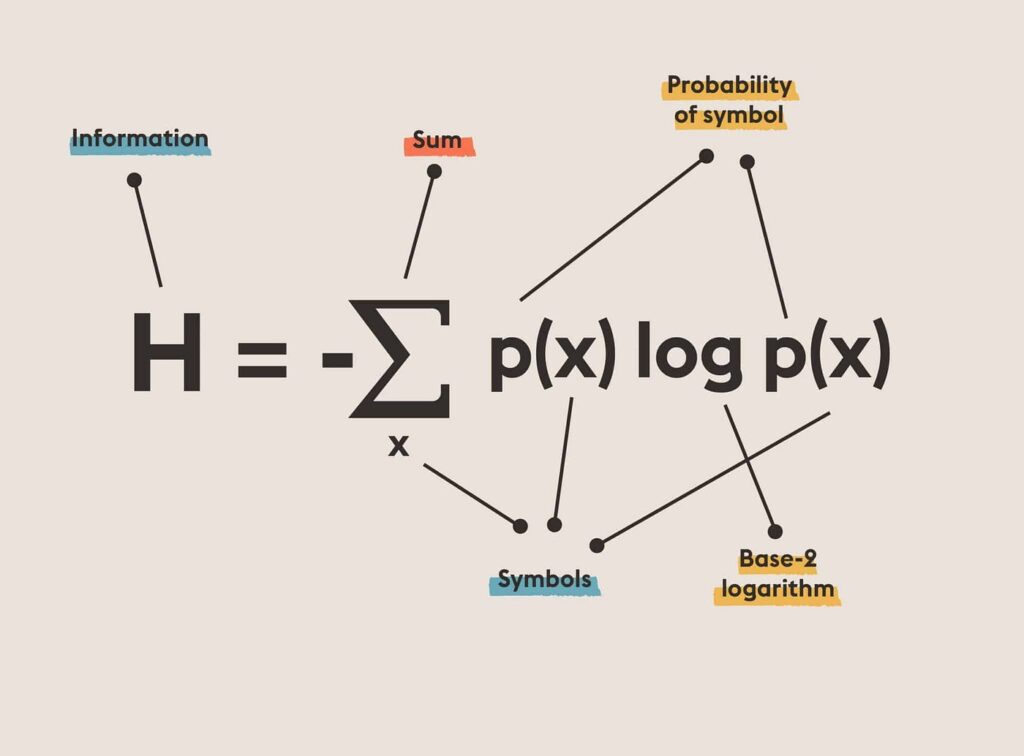
As we navigate the vast expanse of modern communication, it’s impossible to ignore the fundamental role that information plays in our daily lives. Whether it’s through the internet, social media, or traditional forms of messaging, information is the lifeblood of modern society. But where did this obsession with information originate? The answer lies in the theory of information, a discipline that seeks to analyze and understand the intricacies of data transmission on physical channels.
The Birth of Information Theory
One of the pioneers of information theory was Claude Shannon, who published a groundbreaking paper in 1948 titled “A Mathematical Theory of Communication.” This work laid the foundation for modern communication systems and introduced key concepts such as entropy, redundancy, and noise. Another notable figure was Alan Turing, who applied similar ideas to crack German codes during World War II.
At its core, information theory is rooted in mathematical statistics and probability. The work of Ludwig Boltzmann and Willard Gibbs on thermodynamics paved the way for understanding the relationships between energy, entropy, and information. The concept of entropia, or disorder, is a common thread between information theory and thermodynamics.
Shannon’s Contribution
Shannon’s seminal paper introduced quantitative models and qualitative approaches to communication analysis using statistical methods. His fundamental problem statement, “The objective of communication should be to convey one message through a noise channel,” still resonates today. Shannon also explored the concept of redundancy in sources, which remains an essential aspect of information theory.
Integrated Information Theory
A more recent development is Integrated Information Theory (IIT), which attempts to explain the nature of consciousness. IIT posits that consciousness arises from integrated information generated by the causal interactions within a system. This approach contrasts with traditional views that focus on the brain’s neural activity. To grasp IIT, one must first identify its core properties: experience, structure, informativeness, integration, and definition.
Information and Cryptography
One of the most visible applications of information theory is cryptography. Shannon’s work on the distance between uniqueness and redundancy remains crucial for secure communication. The idea is to minimize ciphertext while ensuring unambiguous decryption. This concept has far-reaching implications beyond espionage; it also informs our understanding of online security, data protection, and digital watermarking.
Beyond Espionage: Real-World Applications
Information theory’s influence extends beyond cryptography into various domains:
- Bioinformatics: Understanding genetic information and deciphering biological codes.
- Music: Analyzing patterns in sound waves to create music compression algorithms.
- Gaming: Developing strategies for maximizing data transmission while minimizing lag.
A Beginner’s Guide to Information Theory
To prepare young minds for the intricacies of information theory, a fun coding course could be an excellent starting point. For those already familiar with the subject, it’s essential to recognize the vast scope and interconnectedness of information theory in modern society.
Frequently Asked Questions (FAQs)
- What is the primary goal of information theory?
- To analyze and understand data transmission on physical channels.
- Who is Claude Shannon, and what contribution did he make to information theory?
- Shannon introduced quantitative models and qualitative approaches using statistical methods, laying the foundation for modern communication systems.
- What is Integrated Information Theory (IIT), and how does it relate to consciousness?
- IIT attempts to explain consciousness as integrated information generated by causal interactions within a system, contrasting with traditional views on brain activity.
- How can information theory be applied in cryptography?
- Shannon’s work on distance between uniqueness and redundancy remains crucial for secure communication, ensuring unambiguous decryption while minimizing ciphertext.
- What are some real-world applications of information theory beyond cryptography?
- Bioinformatics (genetic information), music analysis (sound wave patterns), and gaming strategies for maximizing data transmission.
Information Theory in the Digital Age
In today’s digital landscape, information theory plays a vital role in shaping our online experiences:
- Data Compression: Information theory helps us compress and store large datasets efficiently.
- Cryptography: Secure communication relies on information theory to ensure unambiguous decryption.
- Artificial Intelligence: IIT informs AI’s ability to process complex data and generate insights.
Real-World Examples
- GPS Navigation: GPS relies on information theory to provide accurate location information despite atmospheric noise.
- Image Compression: Image compression algorithms use information theory to reduce file size while maintaining image quality.
- Secure Online Transactions: Secure online transactions, such as those using HTTPS, rely on Shannon’s work on distance between uniqueness and redundancy.
Conclusion
Information theory is an intricate discipline that has far-reaching implications in various fields, from communication systems to cognitive science. As we continue to navigate the complexities of modern information age, understanding the foundations of this field will be essential for unlocking new technologies and innovations. By exploring the concepts and applications of information theory, we can gain a deeper appreciation for the role it plays in shaping our digital world.
Glossary
- Entropy: A measure of disorder or randomness in data.
- Redundancy: The presence of duplicate or unnecessary data.
- Noise: Random fluctuations in data transmission.
- Cryptography: The practice of secure communication through encryption and decryption methods.
- Integrated Information Theory (IIT): An approach to explaining consciousness as integrated information generated by causal interactions within a system.
Further Reading
- “A Mathematical Theory of Communication” by Claude Shannon
- “The Limits of Computation” by Alan Turing
- “Integrated Information Theory: From the Foundations to the Consequences” by Giulio Tononi
By exploring these resources, you can gain a deeper understanding of information theory and its far-reaching implications in modern society.


