
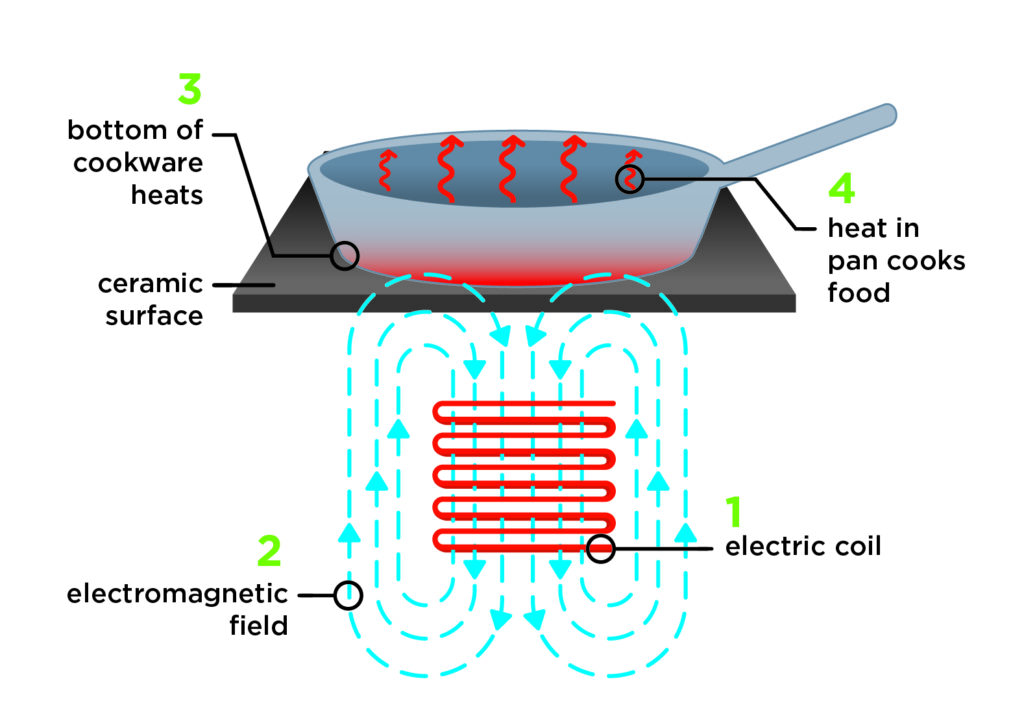
Induction cooking has taken the culinary world by storm, and for good reason. Not only is it an energy-efficient way to cook, but it also offers a range of benefits that make it a must-have for any serious home cook or professional chef. But what exactly makes induction cooking so special? Let’s dive in and explore the fascinating world of electromagnetic fields and heat transfer.
The Great Debate: Electricity vs. Induction
When it comes to cooking, many people assume that electricity is directly responsible for heating up your food. However, this couldn’t be further from the truth. In fact, induction cooking relies on a different principle altogether – one that harnesses the power of electromagnetic fields to generate heat.
So, how does it work? Let’s take a closer look at the science behind induction cooking and explore the various components involved in making it all happen.
The Anatomy of an Induction Cooktop
An induction cooktop is made up of several key components:
- A bobbin, or spiral-shaped coil of wire, which carries an alternating current (AC) electrical signal.
- A magnet, which generates a magnetic field when the AC current flows through the bobbin.
- A pan, which must contain ferromagnetic material (such as iron, nickel, or cobalt) to be induced by the magnetic field.
When you place a compatible pan on an induction cooktop, the magnetic field induces an electric current in the pan’s metal. This current then generates heat through electrical resistance, cooking your food evenly and efficiently.
The Science of Electromagnetic Induction
Electromagnetic induction is the process by which an electric current is generated in a conductor when it is exposed to a changing magnetic field. In the case of induction cooking, this means that the magnetic field created by the bobbin induces electrical currents in the pan’s metal, generating heat and cooking your food.
In other words, induction cooking works by using electromagnetic fields to transfer energy directly from the cooktop to the pan, without wasting any heat or energy as thermal radiation. This makes it an incredibly efficient way to cook, especially for tasks like sautéing or searing, where high temperatures are involved.
Common Features of Induction Cooktops
While each induction cooktop has its unique features and benefits, there are several common characteristics that you’ll often find:
- Multiple Cooking Zones: Most modern induction cooktops come with multiple cooking zones, which allow you to cook different types of food simultaneously.
- Adjustable Power Levels: Many induction cooktops feature adjustable power levels, allowing you to tailor the heat output to suit your specific cooking needs.
- Touch Control: Induction cooktops often come equipped with touch control interfaces, which make it easy to adjust cooking temperatures and monitor progress.
Real-World Applications of Induction Cooking
Induction cooking is not just limited to high-end professional kitchens or fancy restaurants. In fact, induction cooking can be a game-changer for home cooks as well.
Here are some real-world applications where induction cooking shines:
- Searing Meat: Induction cooking’s high heat output makes it an ideal choice for searing meat quickly and evenly.
- Cooking Large Quantities: With its multiple cooking zones, induction cooking can handle large quantities of food with ease.
- Energy Efficiency: By generating heat directly through electromagnetic induction, induction cooking reduces energy waste and saves you money on your utility bills.
Frequently Asked Questions
While induction cooking has become increasingly popular over the years, there are still some common misconceptions and questions surrounding this fantastic technology. Here are a few answers to get you started:
- Q: Is induction cooking safe?
- A: Absolutely! Induction cooking uses electromagnetic fields to generate heat, which makes it incredibly safe.
- Q: Do all pans work with induction cooking?
- A: No, only compatible pans that contain ferromagnetic materials will work properly with induction cooking. Check the manufacturer’s recommendations before purchasing a pan.
- Q: Can I use induction cooking for delicate foods?
- A: Yes! Induction cooking is perfect for delicate foods like fish or eggs because it allows you to maintain precise temperature control.
Advantages of Induction Cooking
In addition to its energy efficiency and precision, induction cooking also offers a range of other advantages that make it an attractive option for home cooks and professionals alike. Here are some of the key benefits:
- Fast Cooking Times: Induction cooking allows you to cook food quickly and efficiently, thanks to its high heat output.
- Precise Temperature Control: With induction cooking, you can maintain precise temperature control over your cooking process, ensuring that your dishes turn out perfectly cooked every time.
- Easy Cleaning: Induction cooktops are incredibly easy to clean, as they don’t produce any messy splatters or spills.
- Safety Features: Many modern induction cooktops come equipped with safety features like automatic shut-off and thermal cut-out, which help prevent accidents and ensure safe cooking.
Conclusion
Induction cooking has revolutionized the way we think about cooking and heat transfer. By harnessing the power of electromagnetic fields, induction cooktops offer a safe, efficient, and energy-saving alternative to traditional electric stoves. With its multiple cooking zones, adjustable power levels, and touch control interfaces, induction cooking is an indispensable tool for any serious home cook or professional chef.
Whether you’re looking to improve your culinary skills, save money on utility bills, or simply enjoy the thrill of cooking with advanced technology – induction cooking has got you covered!


